Pharmaceutical manufacturing has strict requirements for every component that contacts product, process water, or sterile gas. Filtration is no exception. While single-use polymer cartridges dominate many pharma filtration points, sintered stainless steel filters can be a practical alternative in applications where the filter must survive repeated sterilization, handle aggressive cleaning chemicals, and operate reliably for long service periods. This post covers where sintered metal filters fit in pharma processes, why they can outperform disposables in specific roles, and how the cost math works over a multi-year operating window.
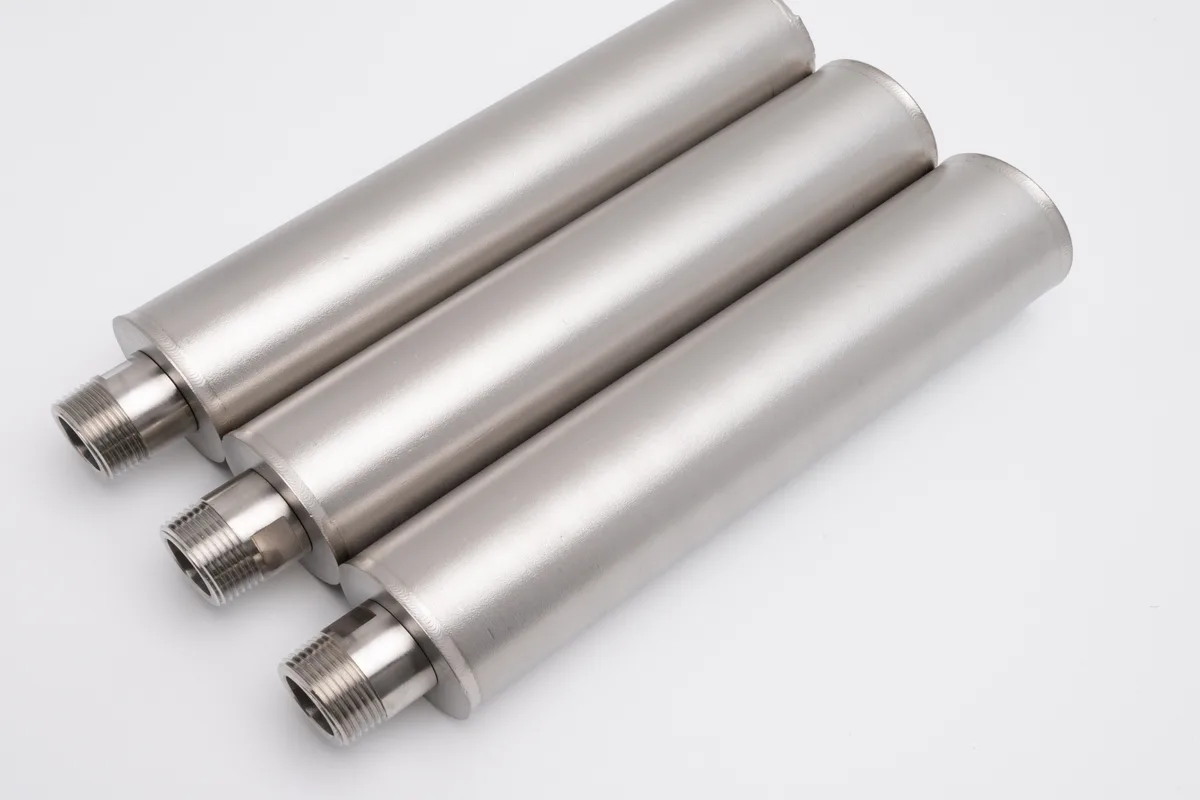
Where Sintered Metal Filters Are Used in Pharma
Water for Injection (WFI) Systems
WFI is the highest-purity water grade used in pharmaceutical production — it goes into injectable drug formulations, final rinse cycles, and equipment cleaning. WFI distribution loops typically operate at 80-85°C to maintain microbial control, with periodic sanitization at 121°C or higher. Sintered 316L stainless steel point-of-use filters at 0.22 µm rating can provide a final particulate and bioburden barrier at each use point when the system is designed and validated for that duty. The filters sit in the hot loop permanently and are sterilized in place along with the rest of the system. In these continuous hot-water conditions, metallic filter elements may offer a much longer service life than many polymer membrane alternatives.
Tank and Reactor Vent Filters
Every pharmaceutical vessel that breathes — mixing tanks, reactors, storage vessels, dryers — needs a vent filter to maintain sterility while allowing pressure equalization. When the vessel fills, air is displaced outward through the filter. When the vessel empties or cools, air is drawn inward through the same filter. This bidirectional airflow must be filtered to 0.22 µm to prevent microbial ingress.
Sintered stainless steel vent filters handle this job without some of the failure modes common to polymer alternatives. They are less affected by condensation than hydrophobic membrane vent filters, they tolerate repeated steam-in-place (SIP) cycles at 121-134°C, and they do not contain fibrous media layers that can shed material downstream.
Sterile Gas Filtration
Compressed air, nitrogen, and other gases used in pharmaceutical manufacturing must be filtered before contacting product or product-contact surfaces. Applications include tank blanketing, pneumatic conveying of powders, sparging in bioreactors, and supply gas for aseptic filling machines. Sintered metal gas filters at 0.22 µm rating are used for high-purity gas service where the filtration performance, seals, and housing design have been validated for the application. They also tolerate the pressure cycling inherent in compressed gas systems well.
Catalyst Recovery in API Synthesis
Active pharmaceutical ingredient (API) synthesis often uses heterogeneous catalysts — palladium on carbon, Raney nickel, platinum oxide — that must be completely removed from the product stream. Sintered metal filters in the 1-10 µm range capture catalyst fines from hot reaction mixtures without cooling the stream. The captured catalyst is recovered during backwash for reuse or precious metal reclamation. 316L handles most organic solvent environments encountered in API synthesis, including THF, ethanol, methanol, ethyl acetate, and toluene.
Why Metal Beats Polymer in These Applications
The advantages of sintered stainless steel over polymer cartridges in pharmaceutical service come down to five factors:
- Steam sterilization durability: Sintered 316L elements generally tolerate repeated SIP cycles at 121-134°C far better than most polymer cartridges. Polymer elements have finite steam-cycle limits, and retention performance must be verified against the manufacturer’s validation data.
- No extractables or leachables: Passivated 316L does not release organic compounds, plasticizers, or degradation products into the process stream. Polymer filters, particularly at elevated temperatures, can leach trace organics that must be identified, quantified, and justified to regulators.
- No fiber shedding: Sintered metal is a monolithic metallurgically bonded structure. No loose fibers, no binder materials, no support layers that can shed particles downstream.
- Validatable pore structure: Pore-size acceptance and any integrity requirement must be defined by the product specification and a validated method or related gas-liquid porometry methods, depending on the element design and the buyer’s validation protocol. Unlike nominal ratings on many depth-type polymer filters, this gives a measurable integrity parameter that can be trended over time.
- Cleaning cycle life: Sintered 316L elements can be cleaned 50-200 times using CIP (clean-in-place) procedures — caustic wash, acid rinse, hot water flush — before replacement. The cleaning restores close to the original flow rate each time. Disposable polymer cartridges, by definition, get one use.
Regulatory Compliance
316L stainless steel is a well-established material of construction in pharmaceutical equipment. Its suitability for product-contact service depends on the system design, surface finish, passivation state, cleaning procedure, and the user’s validation requirements. In practice, 316L remains one of the most common metallic materials used in pharmaceutical process equipment and filter housings.
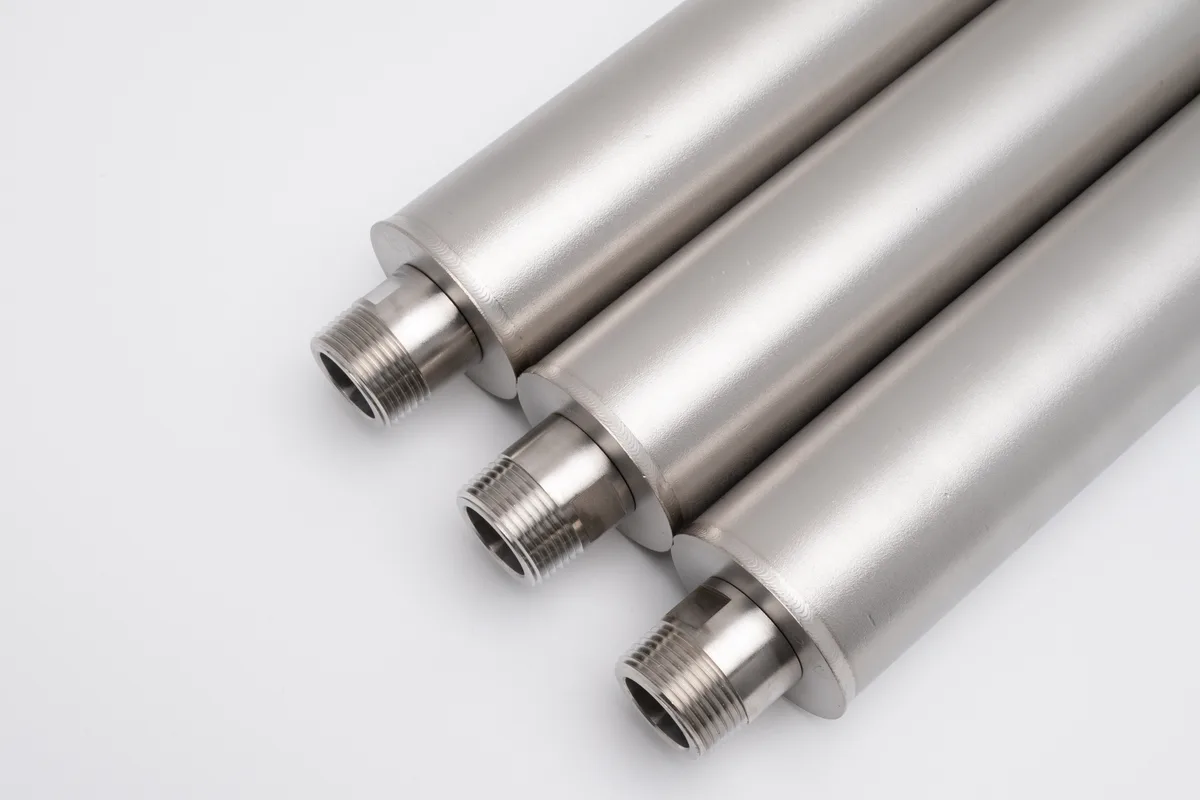
From a validation standpoint, sintered metal filters simplify qualification. The same physical element is sterilized, used, cleaned, and reused across batches. Initial qualification and periodic verification must follow the applicable product specification and validated method. The required records may include flow, extractables, dimensional, or other process-relevant evidence; no single test automatically establishes cartridge integrity. Disposable cartridges, by contrast, require incoming quality verification for each new lot.
Cost: Higher Upfront, Lower Over Time
A sintered 316L filter cartridge typically costs more upfront than a disposable polymer cartridge, although the exact difference depends on size, pore rating, hardware, and validation requirements. The economic comparison only becomes meaningful when service life, cleaning, changeout labor, and waste handling are included.
Consider a vent filter on a pharmaceutical reactor running one SIP cycle per day:
- Disposable PTFE cartridge: rated for ~80 steam cycles. Replacement every 2–3 months. Annual cost: 4–6 cartridges at $30–80 each = $120–480/year. Over 5 years: $600–2,400, plus labor for each changeout and disposal costs.
- Sintered 316L element: repeated steam cycles, CIP cleanable. One element may last several years when the duty is compatible and cleaning is done correctly. Over a multi-year period, the total cost can be lower despite the higher initial purchase price.
The savings per filter point may look modest, but they compound. A facility with 50–100 vent filter points saves thousands to tens of thousands of dollars per year in cartridge replacement costs alone, not counting reduced labor and waste disposal.
Choosing the Right Element
For pharmaceutical applications, the key specifications to define are:
- Pore rating: 0.22 µm for sterile gas/liquid filtration; 1-10 µm for catalyst recovery and clarification
- Material: 316L stainless steel (standard); Hastelloy C-276 for aggressive acids
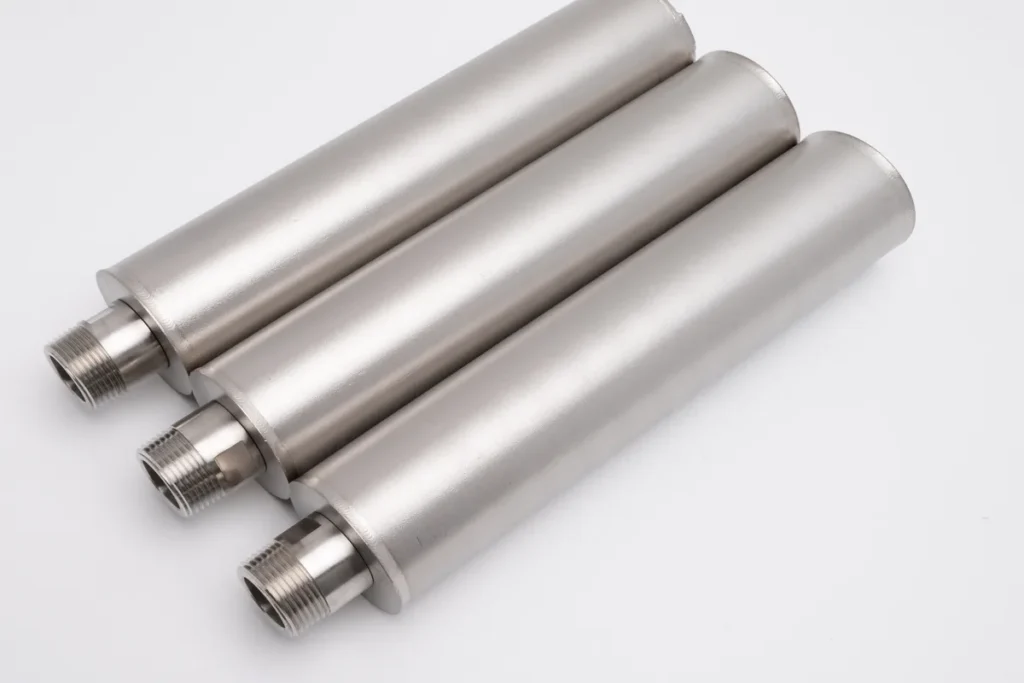
- Connections: tri-clamp, threaded, or custom weld-in configurations to match existing housing standards
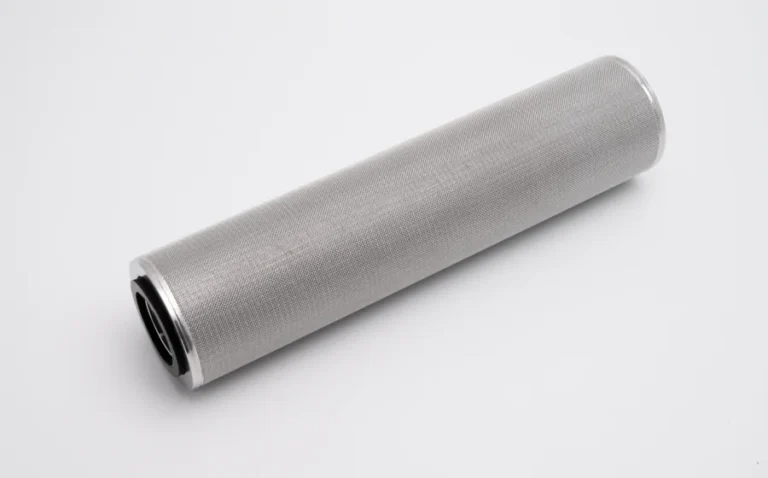
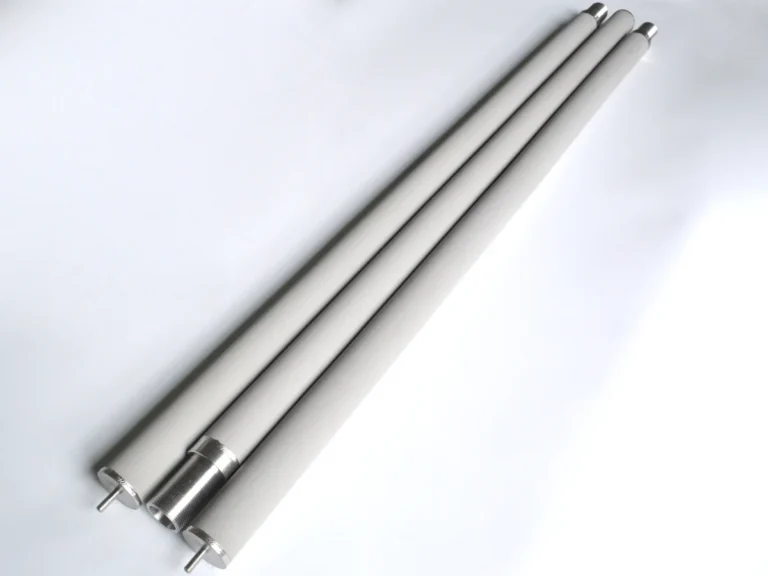
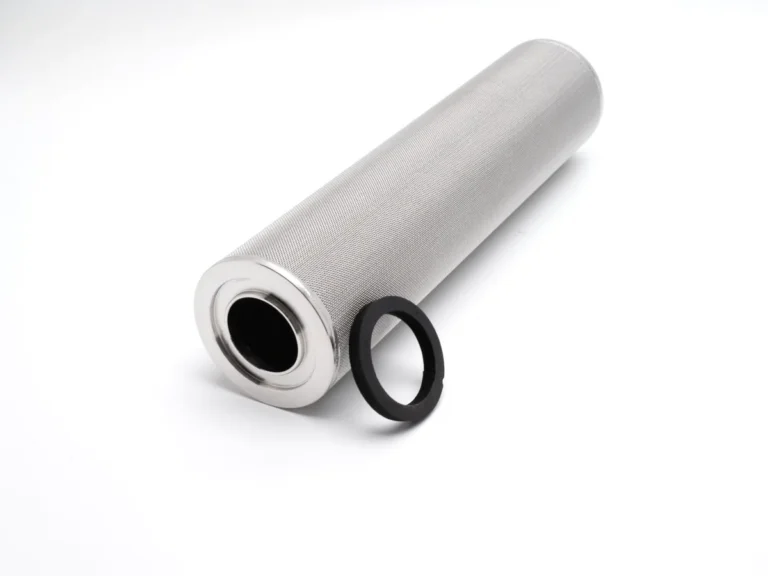
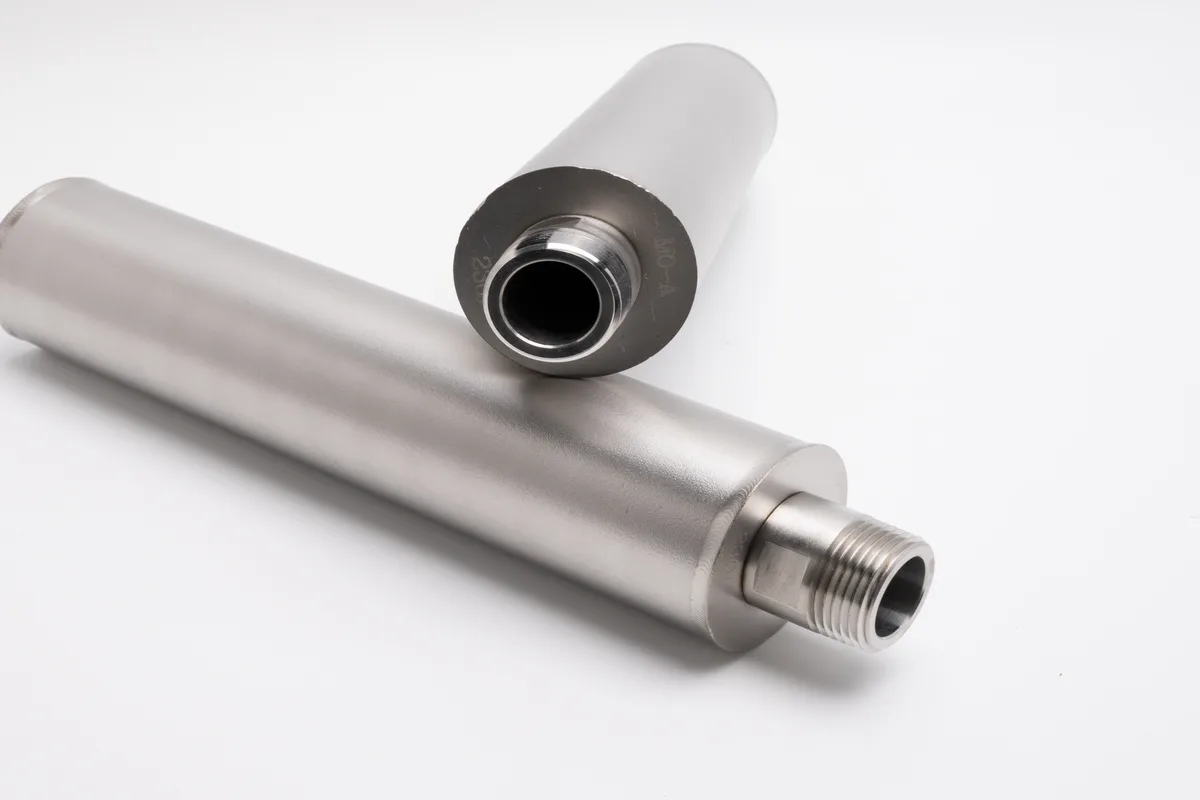
FILTURE’s 316L sintered powder filter cartridges are manufactured for industrial and pharmaceutical filtration applications, available in standard and custom dimensions with full material traceability. If you are evaluating a switch from disposable to reusable filtration, or specifying sintered metal elements for a new system, send us your requirements for sizing recommendations and pricing.