Sintered metal filter elements and porous components for high-temperature gas dedusting, catalyst recovery, high-pressure liquid filtration, and corrosive process streams where polymer media is often unsuitable for long-term service.
Petrochemical and chemical processing plants often operate at temperature and pressure combinations that eliminate many conventional filter media options. A polymer cartridge rated to 90°C is rarely appropriate in a 350°C thermal cracker effluent line. A polypropylene housing rated to 4 bar is not the right choice for high-pressure hydroprocessing circuits.
Sintered 316L stainless steel and special alloy filter elements address all three petrochemical filtration failure modes: temperature, pressure, and chemical attack. For severely corrosive streams — concentrated HCl, mixed acids, or halogenated solvents — we supply Monel 400 and Hastelloy C-276 sintered elements on request.
Our high-temperature sintered filter elements have been deployed in FCC catalyst fines recovery, natural gas dedusting ahead of compressors, and polymer melt filtration — environments where unplanned downtime for filter replacement carries a cost that far exceeds the capital cost of switching to metal media. For in-reactor catalyst support and fixed bed applications, see our sintered porous tubes and catalyst support components.
For non-standard alloys or housing geometries, our custom OEM/ODM manufacturing covers everything from Monel and Hastelloy elements to drop-in replacements for your existing housings.
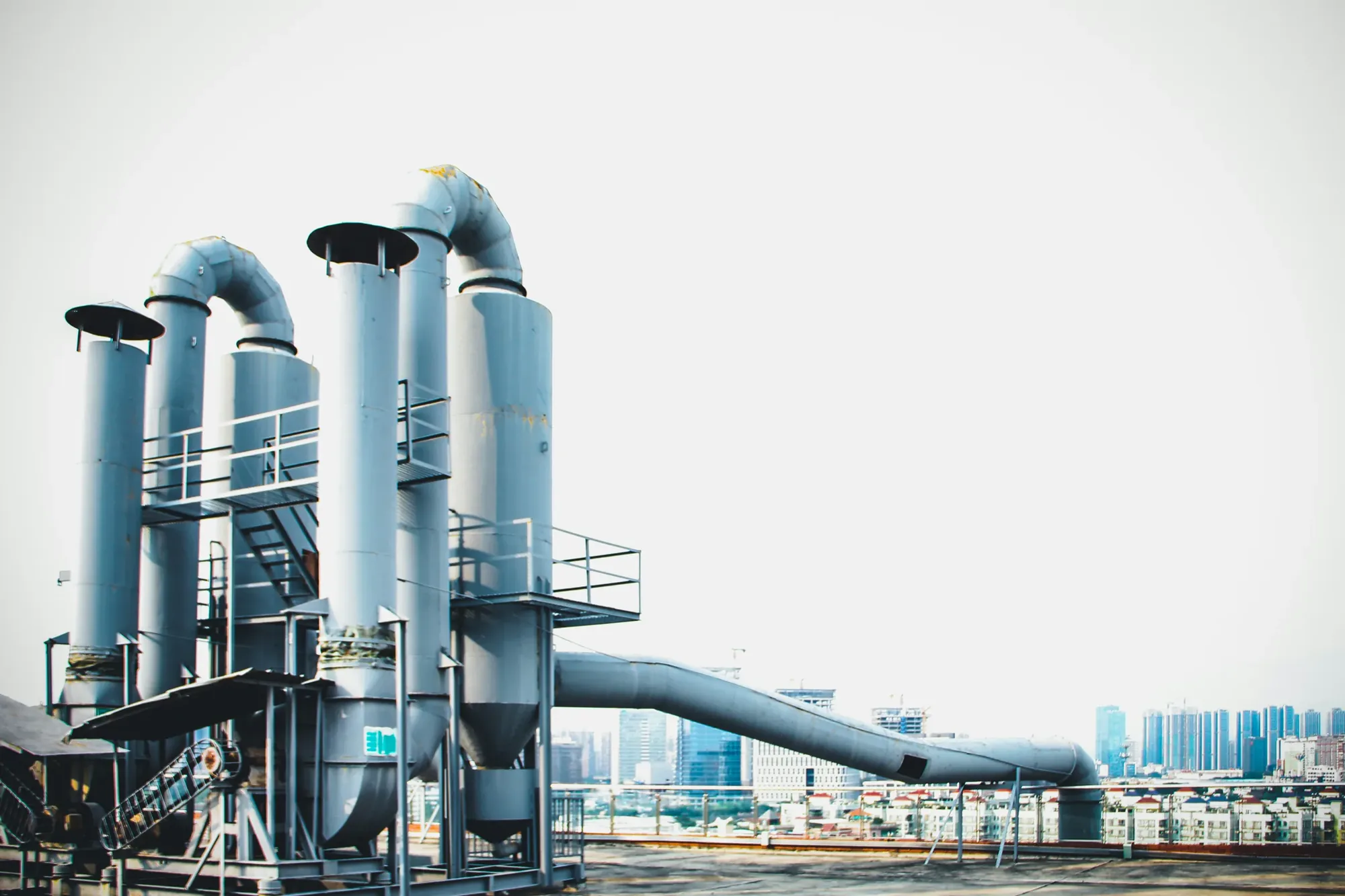
Sintered SS filter elements on process gas streams ahead of compressors and heat exchangers — removing catalyst fines, scale, and particulates at temperatures up to 400°C.
5–100 µm · ≤ 400°C · Wall-dependentFine-pore sintered elements retaining and recovering expensive catalysts — including precious metal catalysts — from process streams in hydroprocessing and petrochemical reactors.
0.5–5 µm · Consistent rated · High pressureMonel 400 and Hastelloy C-276 sintered elements for filtration of concentrated HCl, mixed acids, and halogenated solvents — where standard SS 316L may not offer enough corrosion margin.
Monel / Hastelloy · Custom alloySintered SS and pleated felt elements for high-viscosity polymer melt filtration in extrusion and compounding — high void volume, low pressure drop, rated for continuous high-temperature service.
3–150 µm · High viscosity · ≤ 400°CInlet gas filtration ahead of metering, compression, and processing — removing pipeline scale, compressor lubricant carryover, and liquid slugs from gas transmission lines.
1–20 µm · Sour gas rated · NACE materialsTitanium filter elements for offshore platform seawater injection, subsea chemical injection, and corrosive service where weight reduction and corrosion resistance are both priorities.
Pure Ti · Seawater · LightweightMonel, Hastelloy, and Inconel alloy options quoted on request. All elements rated and tested for your operating pressure and temperature.
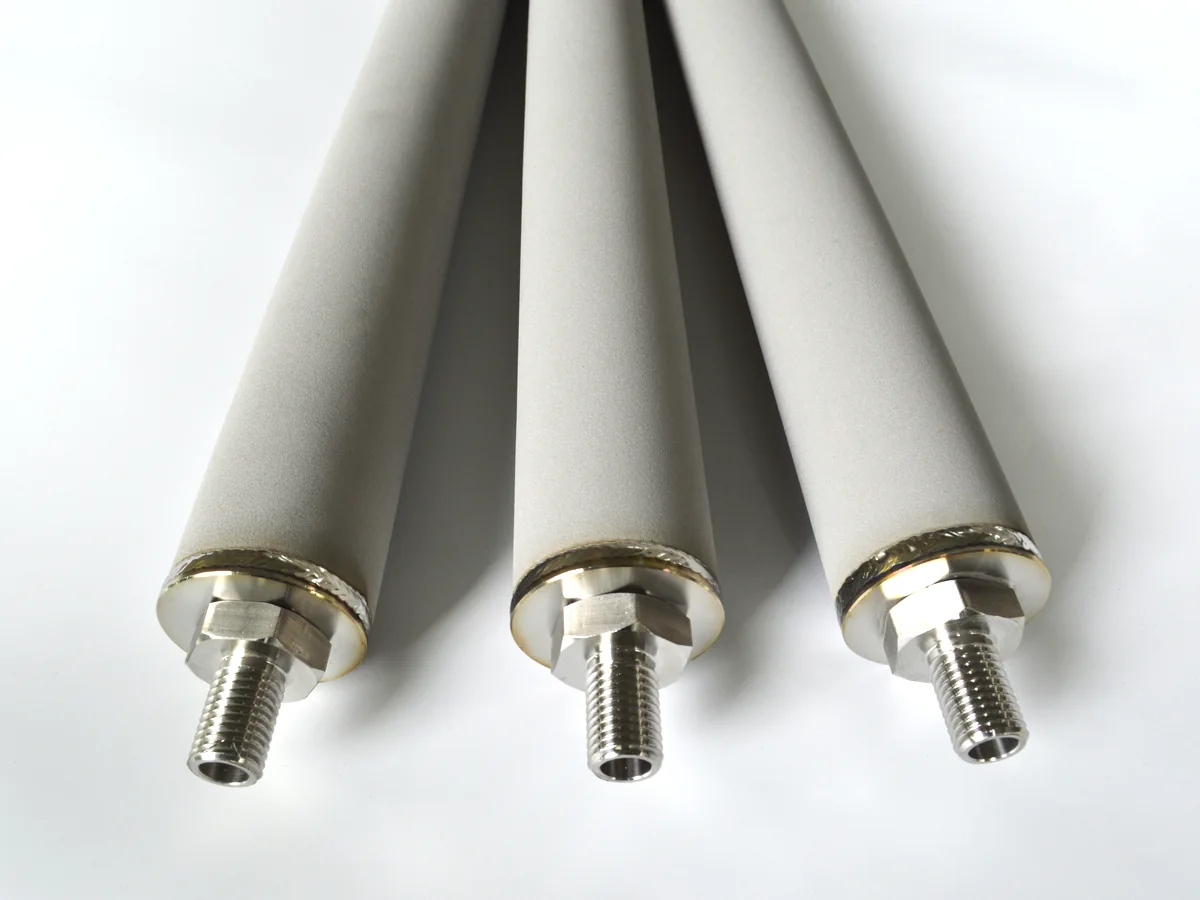
The standard high-temperature sintered element — up to 400°C (element; alloy and seal dependent), with pressure capability set by wall thickness (≈0.6 MPa typical). Available in lengths up to 1,200 mm. Tested at operating pressure before shipment.
View Details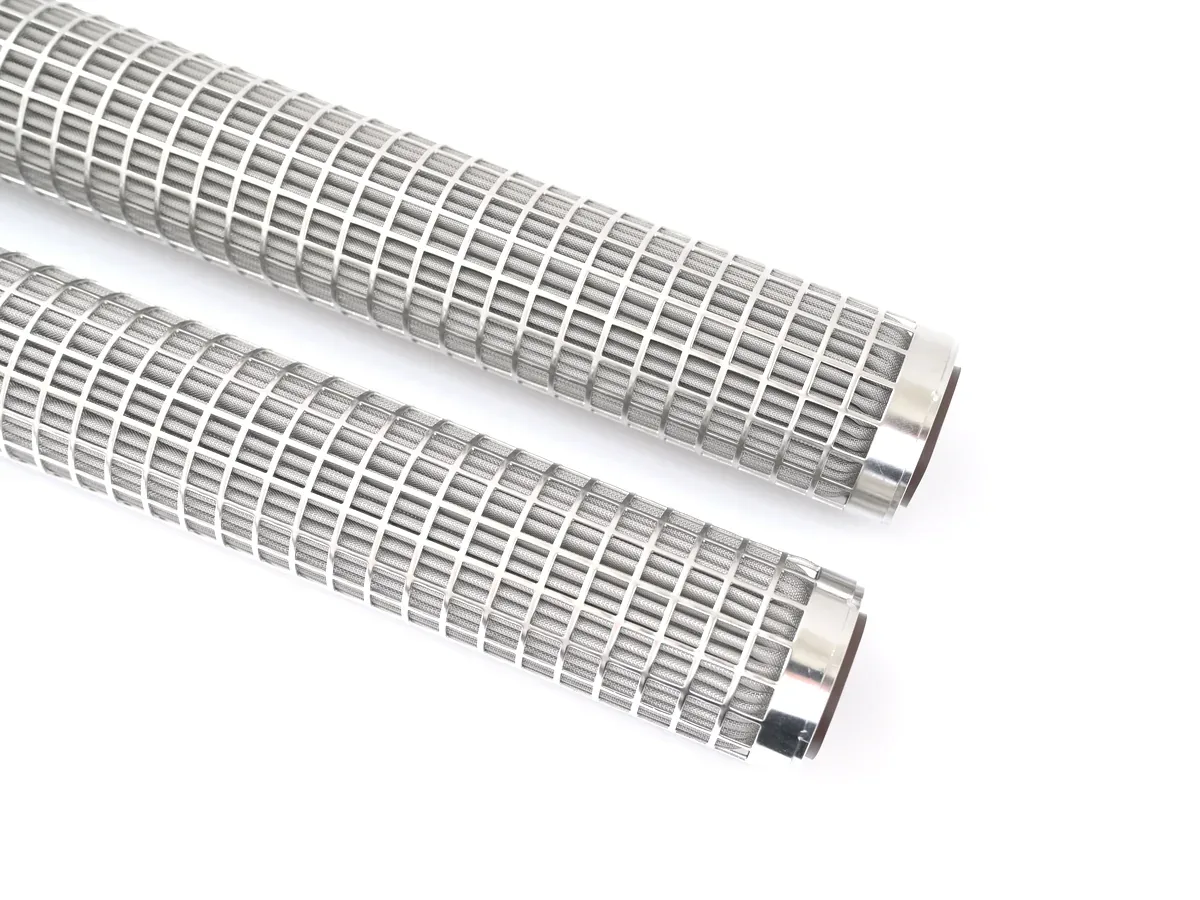
Depth filtration for high-viscosity polymer melts and heavy crude streams. High void volume, very low pressure drop per unit flow. Handles high solids loading between cleaning cycles.
View Details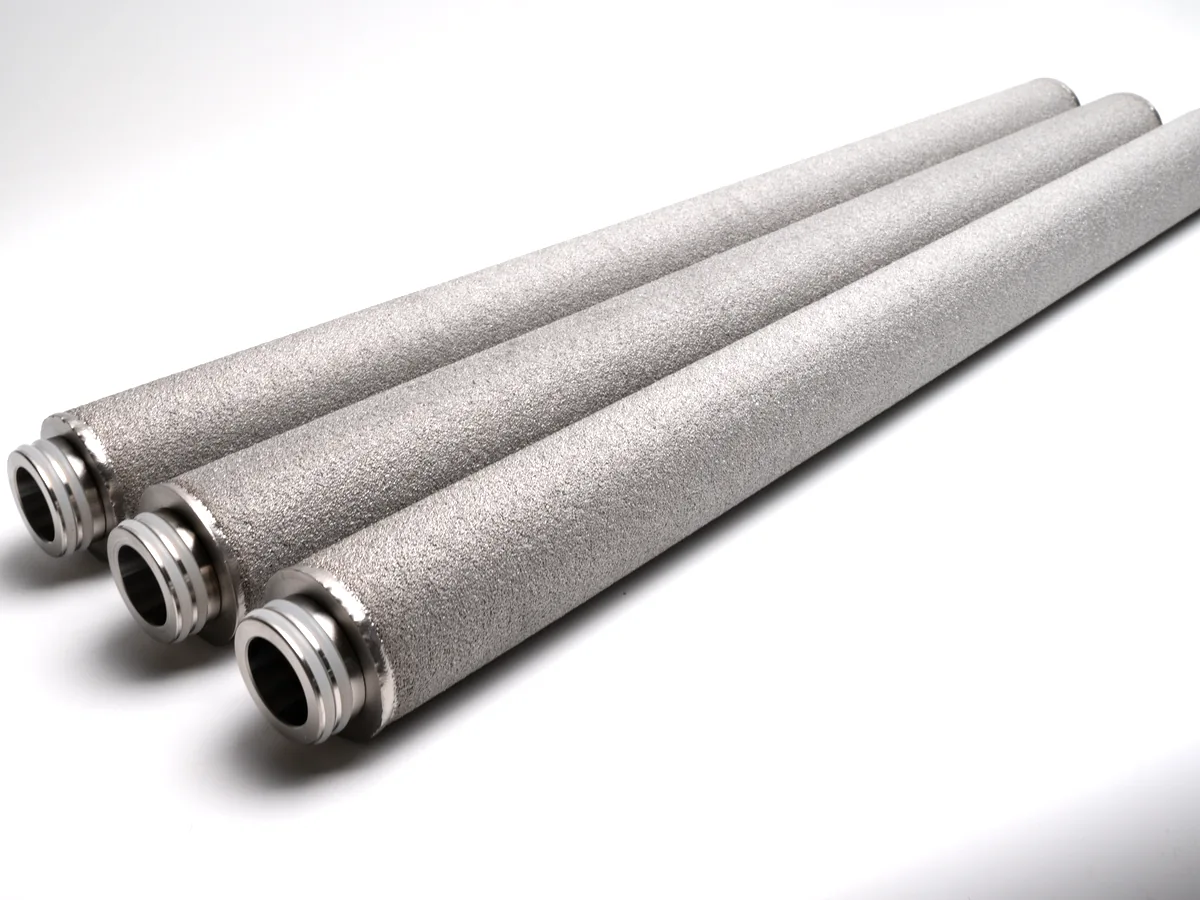
For corrosive chemical service where SS 316L is marginal. Titanium is often evaluated for HCl, H₂SO₄, oxidising media, and chloride-containing streams, subject to concentration, temperature, and pressure conditions.
View DetailsSintered SS elements are tested by us at the rated operating pressure before shipment — not just dimensionally inspected. 1.5× rated pressure hold for 10 minutes minimum. Test certificates available on request.
For applications where SS 316L is inadequate — concentrated HCl, wet chlorine, mixed acid service — we source and sinter Monel 400, Hastelloy C-276, and Inconel 625. Alloy selection guided by our technical team based on your process chemistry.
Replacing metal filter elements in petrochemical service typically follows a 2–5 year cycle depending on media type, process conditions, and cleaning frequency. We maintain design records for every custom element we have ever produced — enabling exact repeat orders years later without re-qualification.
"We used these elements in catalyst recovery service at elevated temperature with acidic carryover. Service life was noticeably better than our previous setup, and replacement planning became more predictable.
Process Engineer Petrochemical Refinery · South Korea
"We tested four suppliers for a demanding pressure-cycling duty in our recovery loop. FILTURE's elements passed the full cycling test without deformation. No other supplier's product did.
Project Engineer Energy & Chemical Group · Netherlands
Tell us the operating temperature, pressure, process chemistry, and desired pore size. We'll recommend a suitable alloy and element type, then confirm pricing and lead time.