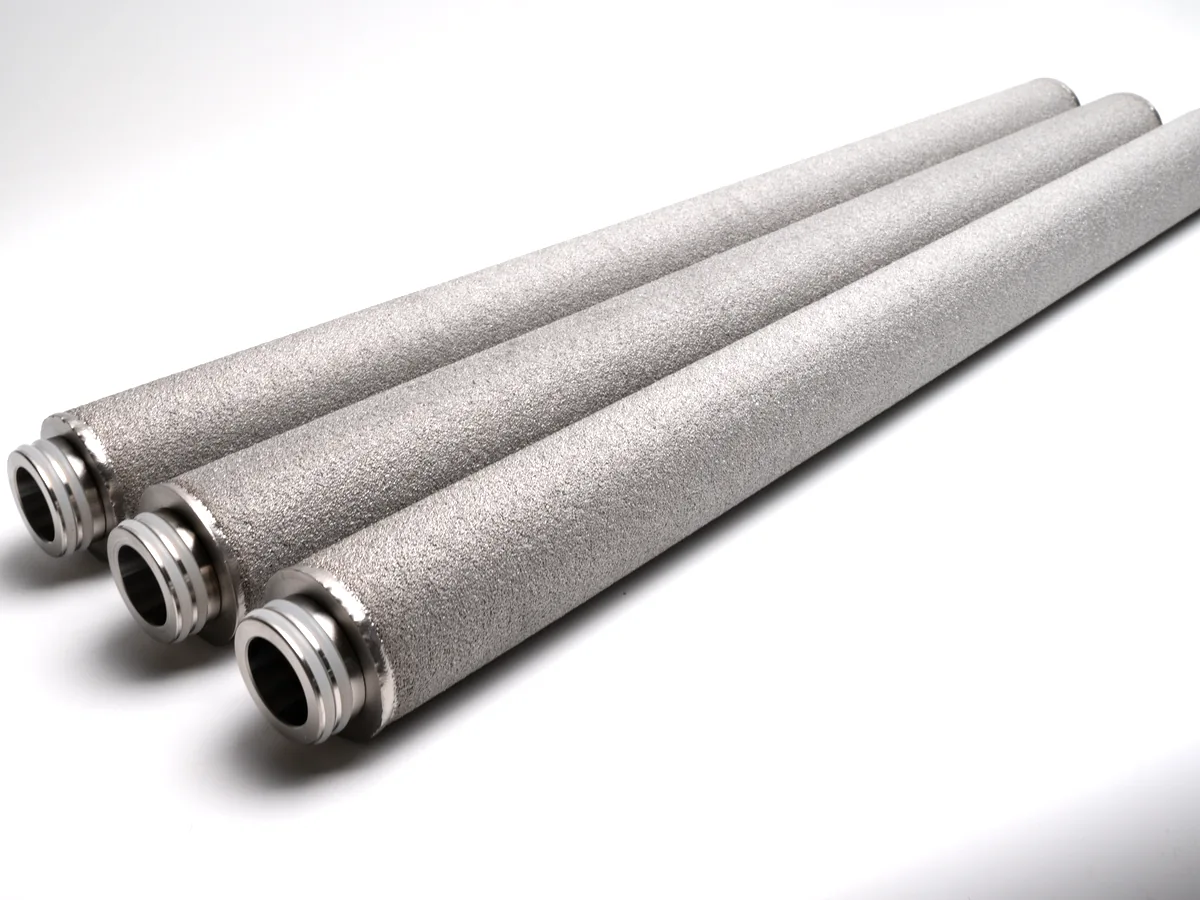
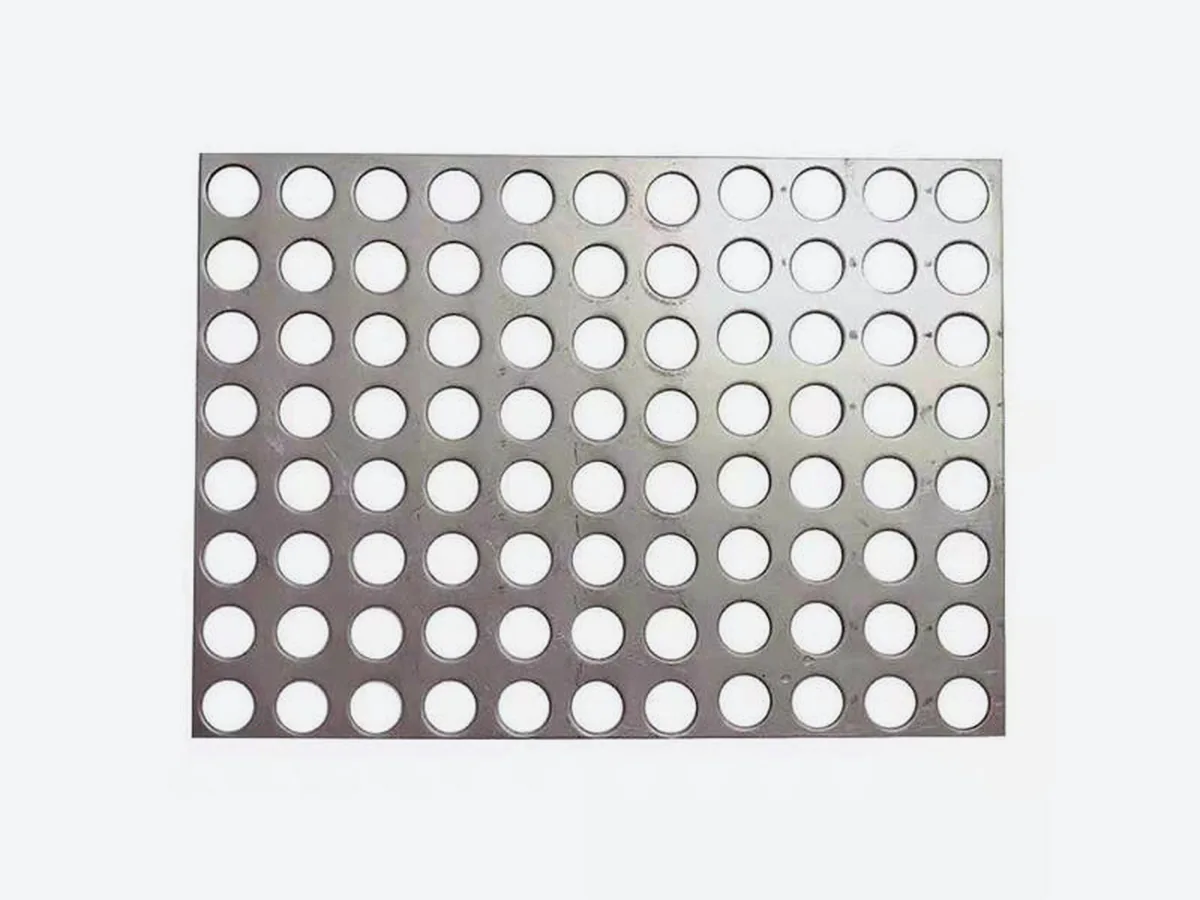
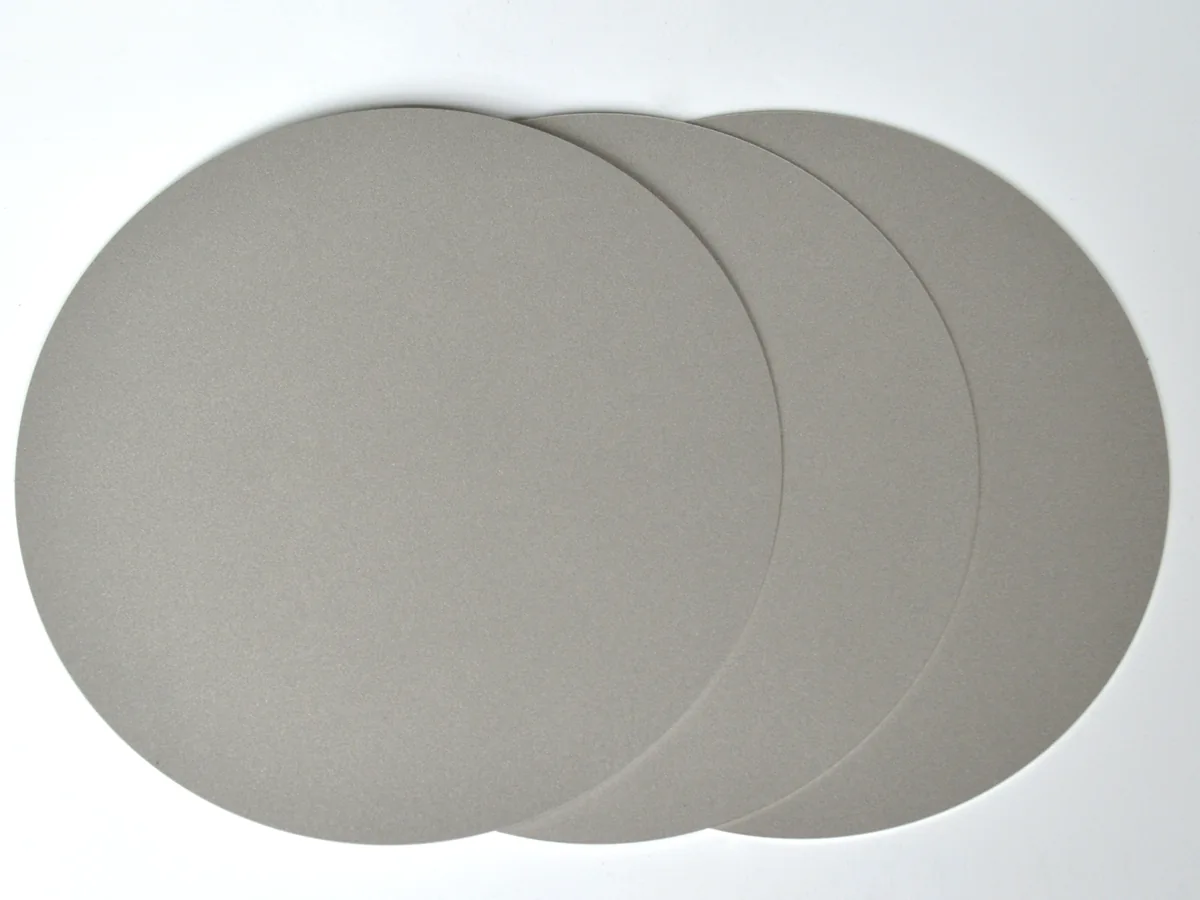
Sintered pure titanium fiber felt — primary specification is the porous transport layer (PTL) in PEM water electrolyzers. Porosity 40–80% (60–70% standard), pore size 5–80 µm.
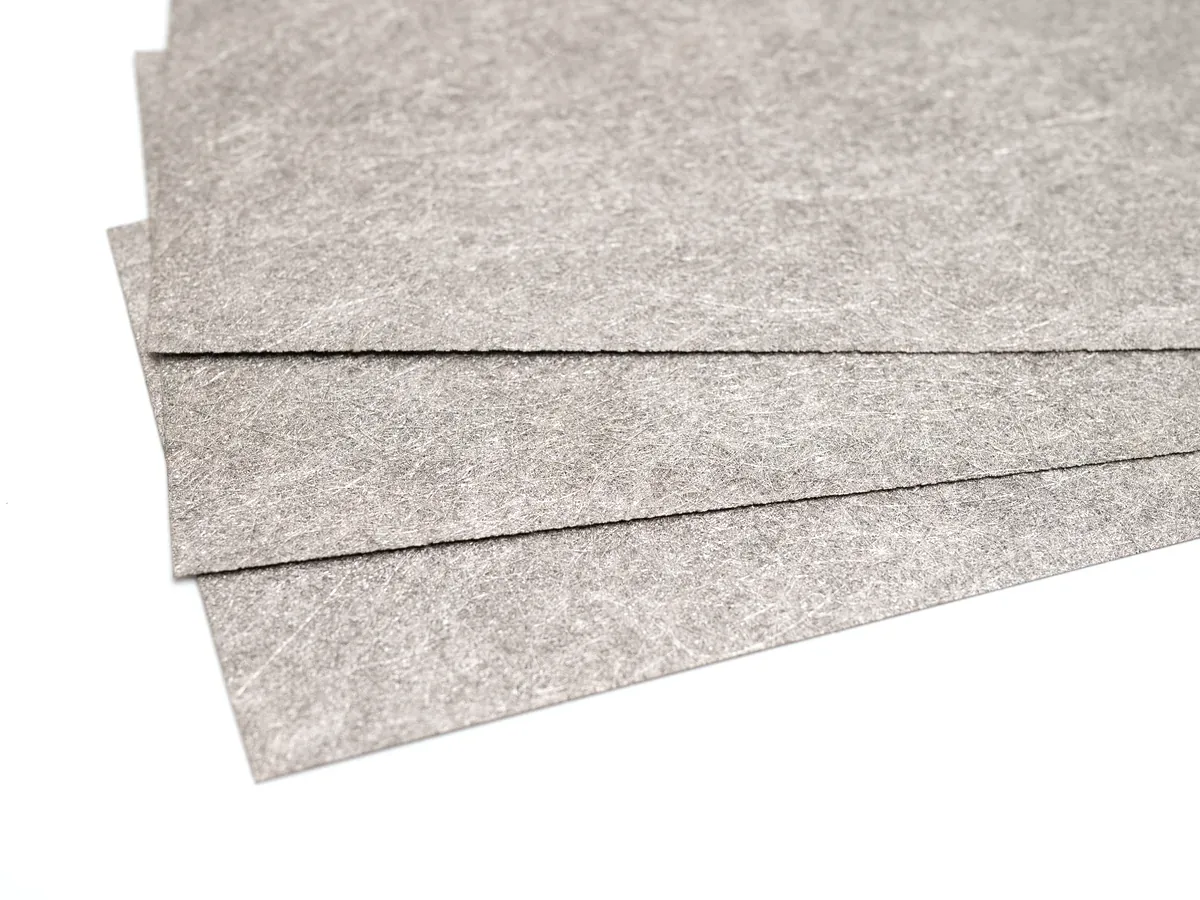
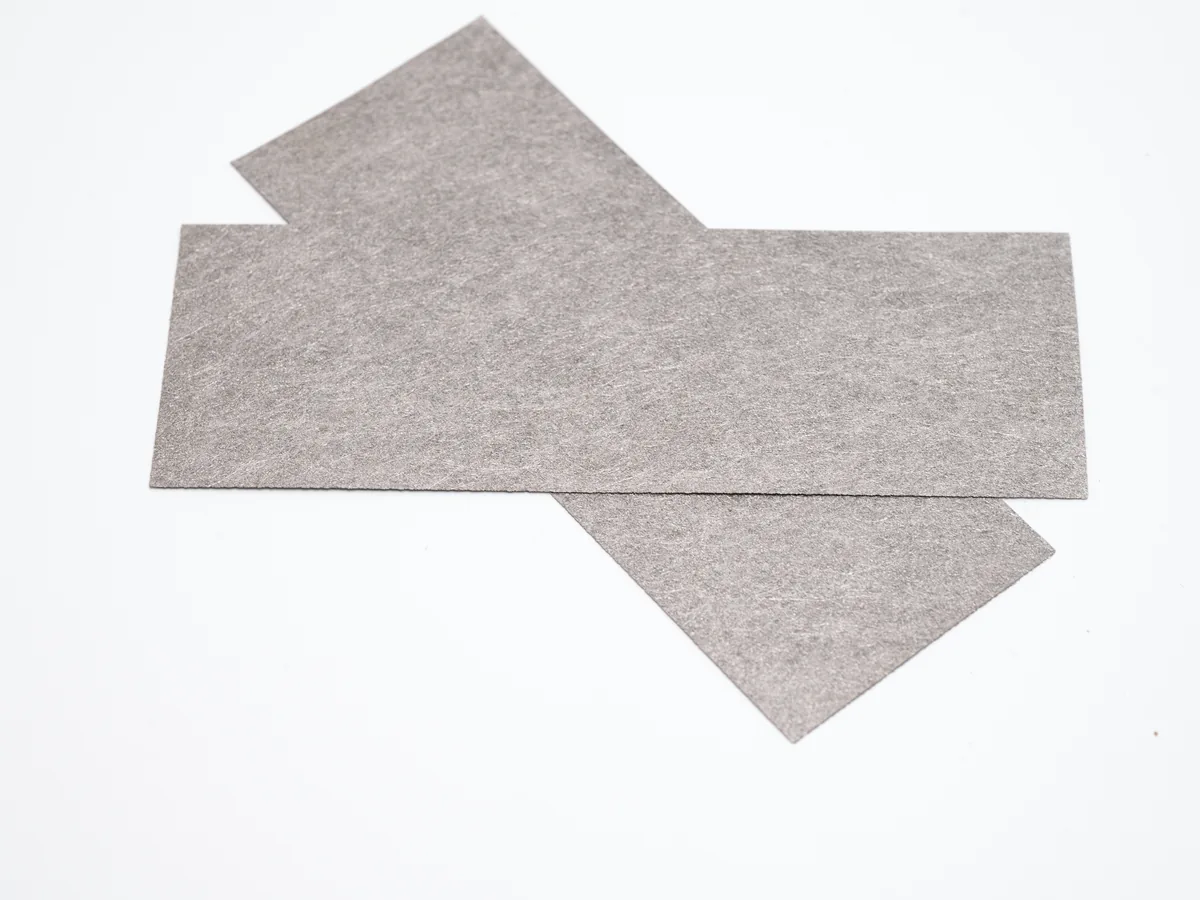
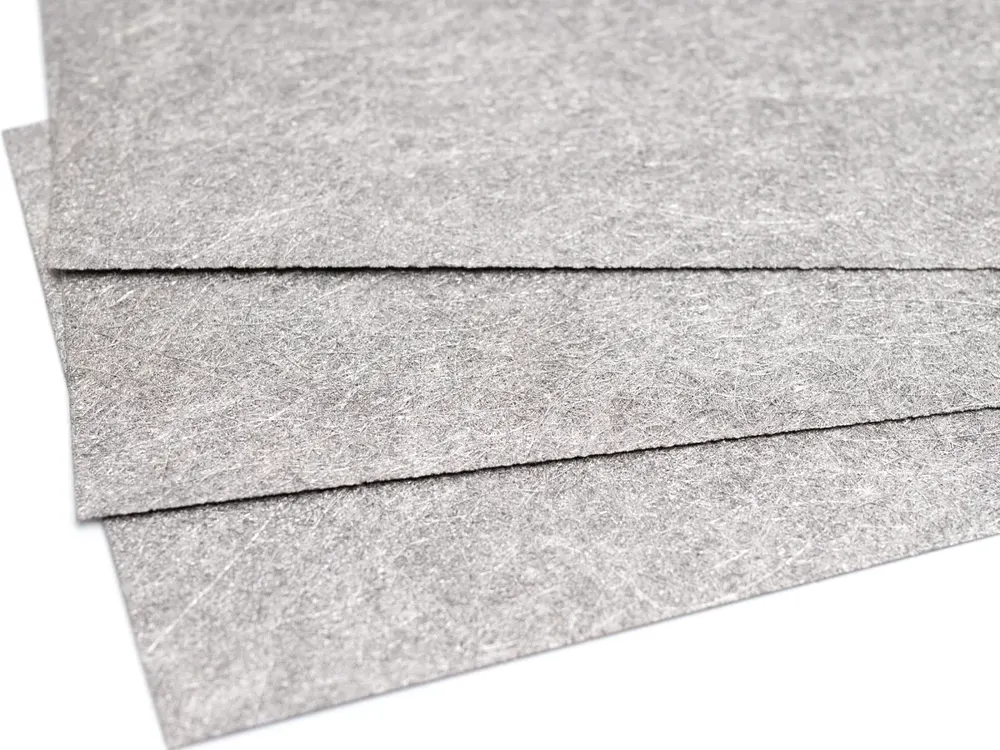
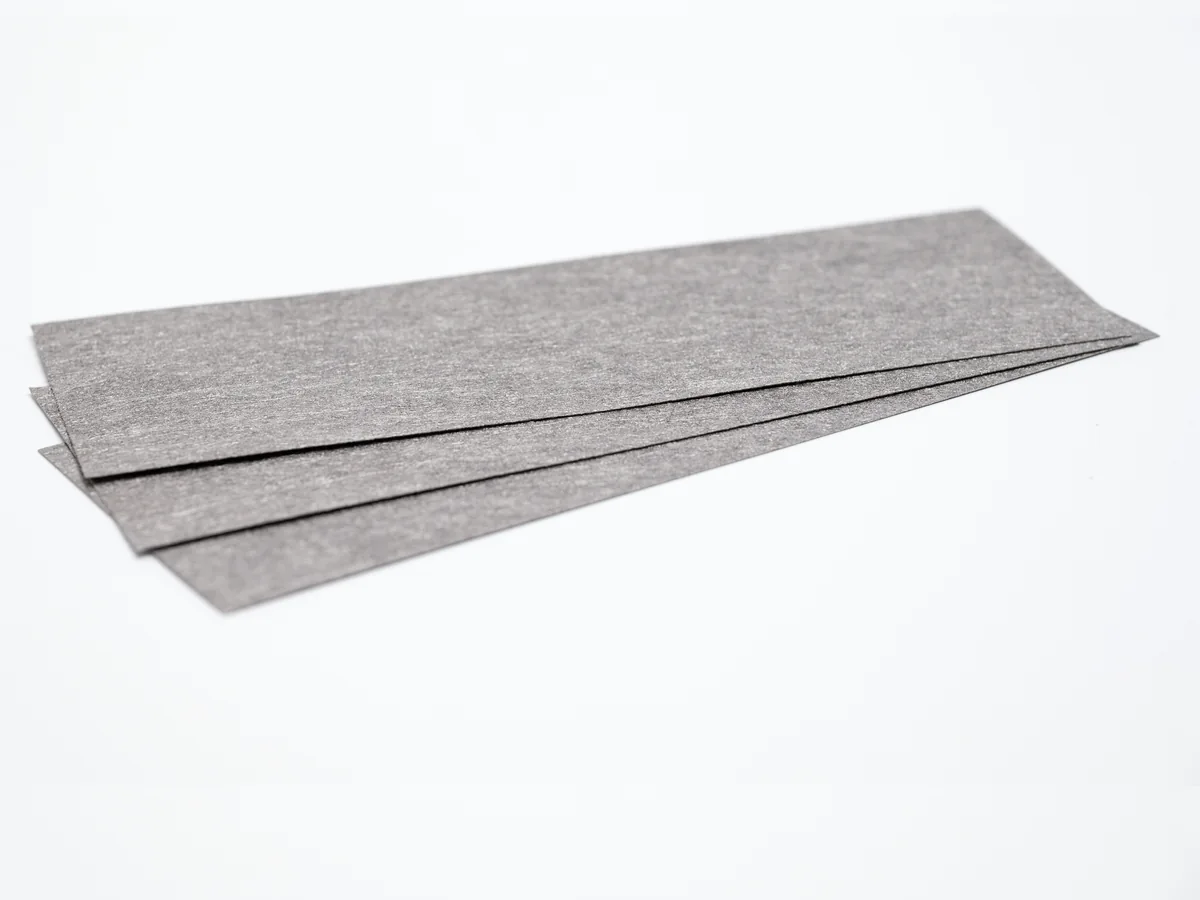
The primary market is PEM water electrolysis. In a PEM electrolyzer cell, the anode-side porous transport layer (PTL) must simultaneously conduct electrons from the current collector to the membrane, allow water to diffuse to the reaction surface, and remove oxygen gas from the membrane. Pure titanium is the required material — at PEM anode potentials in sulfuric acid electrolyte, graphite and carbon-based GDLs corrode rapidly. FILTURE supplies single-layer felt and multi-layer felt assemblies in thicknesses from 0.1 mm to 6 mm, cut to cell dimensions or in sheet rolls up to 1200 × 1200 mm for customer die-cutting.
A 0.6 mm felt is also supplied as the cathode gas diffusion layer in high-temperature PEM fuel cells (HT-PEMFC, phosphoric-acid-doped PBI membranes, operating above 160 °C) — titanium is chemically inert under these conditions, while carbon-based GDLs oxidise to CO₂ over time. Felt surfaces can be supplied with a platinum coating for conductivity or a PTFE hydrophobic treatment (around 5 wt% loading) for flooding resistance. A diffusion-bonded felt-plate composite — a porous titanium plate layer fused to a fiber felt layer, typically 0.25 mm + 0.25 mm for a 0.5 mm total — is also available for hydrogen electrolyzer GDL applications requiring both mechanical support and gas-flow distribution.
Secondary applications include pharmaceutical clarification, food processing, and high-temperature gas filtration, where the high void volume (40–80%, 60–70% standard) gives low pressure drop at high flow rates and good dirt-holding capacity.
At PEM anode potentials in H₂SO₄ electrolyte, carbon and graphite GDLs corrode. Ti fiber felt is the only commercially scalable material for this position.
High void volume enables simultaneous electron conduction, water ingress to membrane, and oxygen escape — the competing mass transfer requirements of the PEM anode PTL.
Pore size 5–80 µm, thickness 0.1–6 mm — specified to the individual cell design. Multi-layer assemblies for gradient porosity structures on request.
Stable in 3% HCl, 5% H₂SO₄, HNO₃, NaOH, and chloride solutions — the chemical environments encountered in PEM and alkaline electrolysis.
Felt surfaces accept a platinum coating for enhanced conductivity, or a PTFE hydrophobic treatment (around 5 wt% loading) for flooding resistance in fuel cell cathodes — without significant loss of porosity.
A porous titanium plate diffusion-bonded to a fiber felt layer combines mechanical support and permeability control with gas-flow distribution — a single component replacing separate plate and felt layers.
Porous transport layer on anode side of PEM cell. Controls O₂ removal, water distribution, and electron path from current collector to membrane.
0.3–2 mm thick · Custom cell dims · TiGas diffusion medium in hydrogen fuel cell anodes. Ti felt used in applications where high corrosion resistance is needed.
Custom thickness · 20–40 µm fiberA 0.6 mm titanium felt replaces the carbon-paper GDL on the cathode in phosphoric-acid-doped PBI membrane stacks operating above 160 °C — chemically stable where carbon GDLs oxidise.
0.6mm · 60–70% porosity · >160 °CDiffusion-bonded composite of a porous titanium plate and a fiber felt layer, combining mechanical support and permeability control with gas-flow distribution, for hydrogen electrolyzer GDLs.
0.5mm (0.25+0.25mm) · Ti Gr.1 · Diffusion-bondedTi fiber felt for electrode and separator support in alkaline electrolyzers — stable in KOH electrolyte at elevated temperature.
KOH-compatible · 1–5 mm · CustomHigh void volume handles high-viscosity pharmaceutical liquids at low pressure drop. Cleanable; no fiber shedding.
5–50 µm · TiBiologically inert Ti fiber felt for food-grade liquid clarification where SS fiber is incompatible with process chemistry.
5–50 µm · BiocompatibleHigh-porosity Ti felt for hot-gas filtration where the 300 °C rating and chemical resistance of titanium are needed.
5–80 µm · 300 °C · Acid-resistantProvide cell dimensions, required porosity, pore size, and layer thickness. We'll confirm availability and include permeability data with the quotation.
FILTURE is a supplier and exporter of sintered metal filter elements — parts are made to order and shipped worldwide.