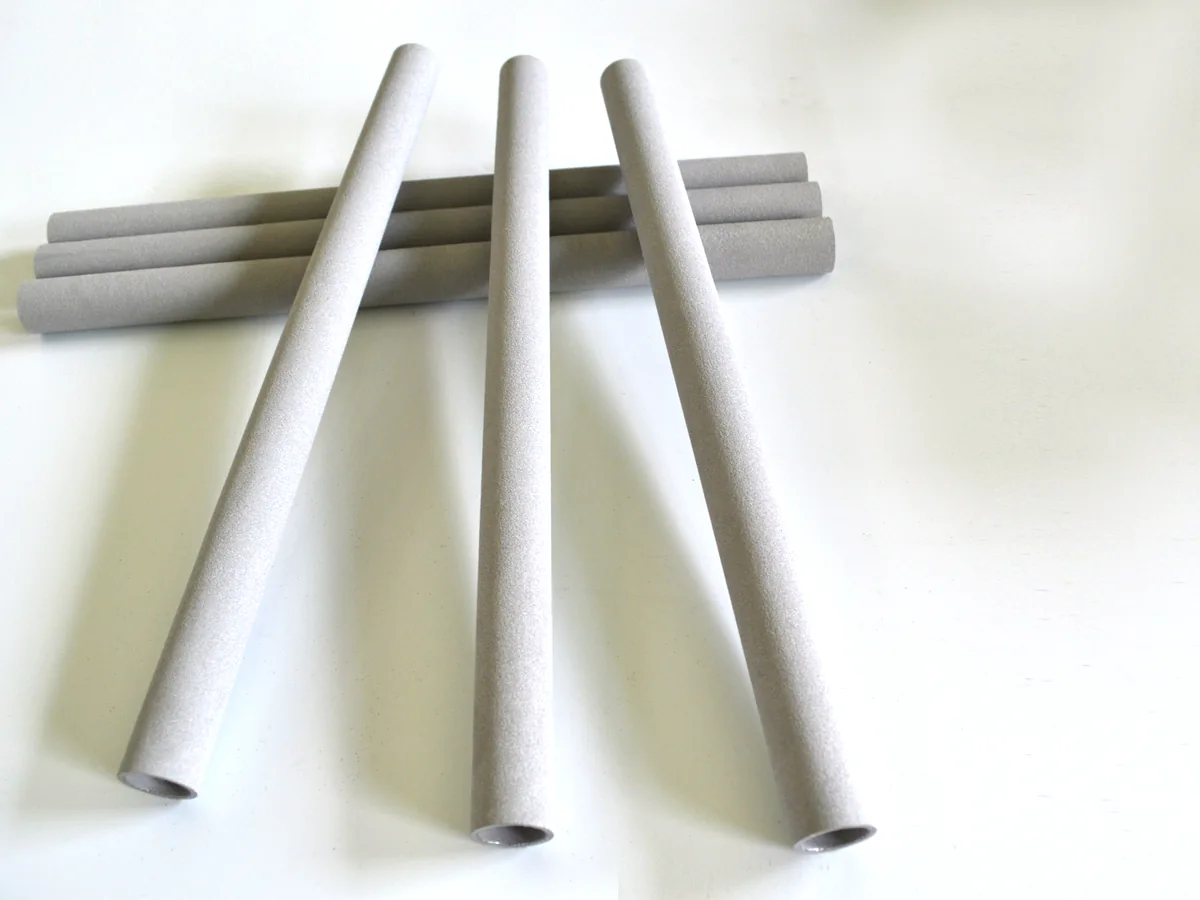
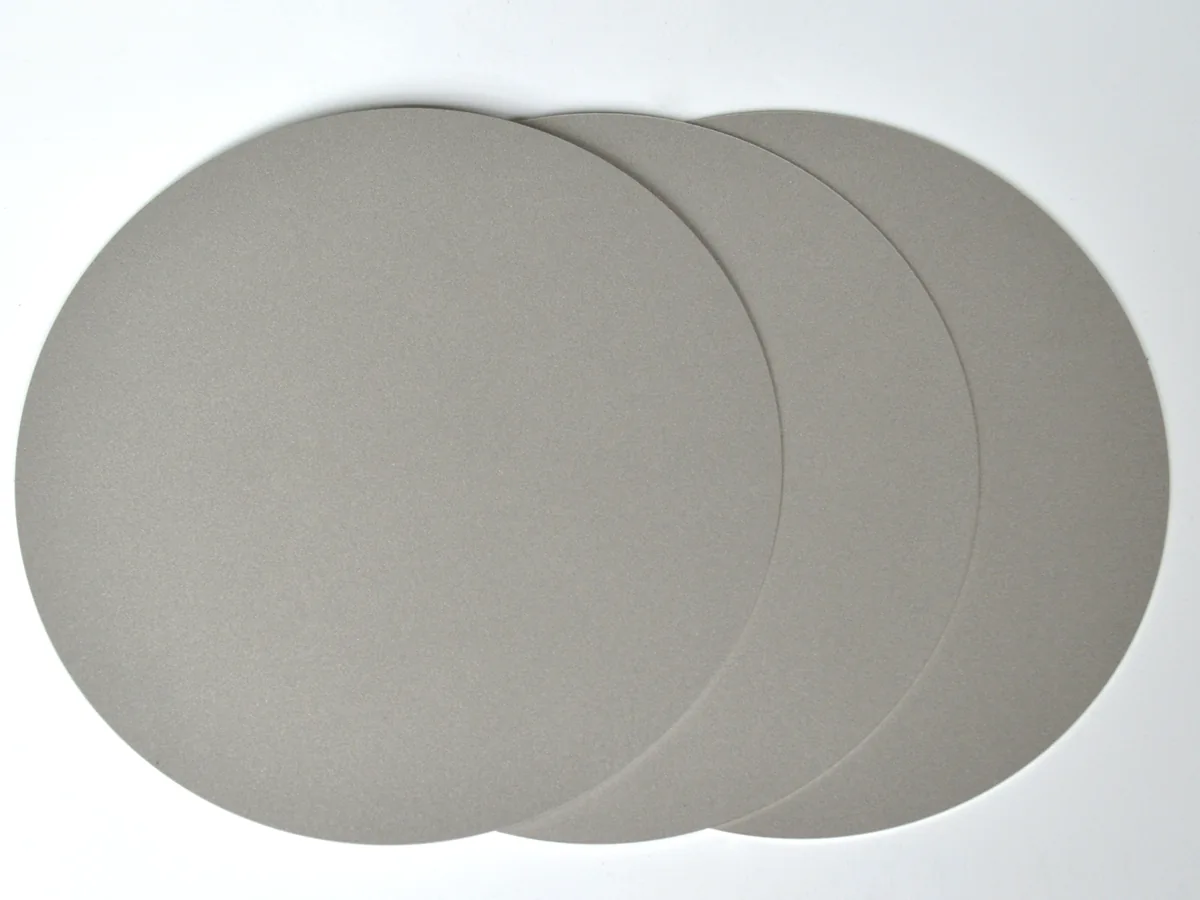
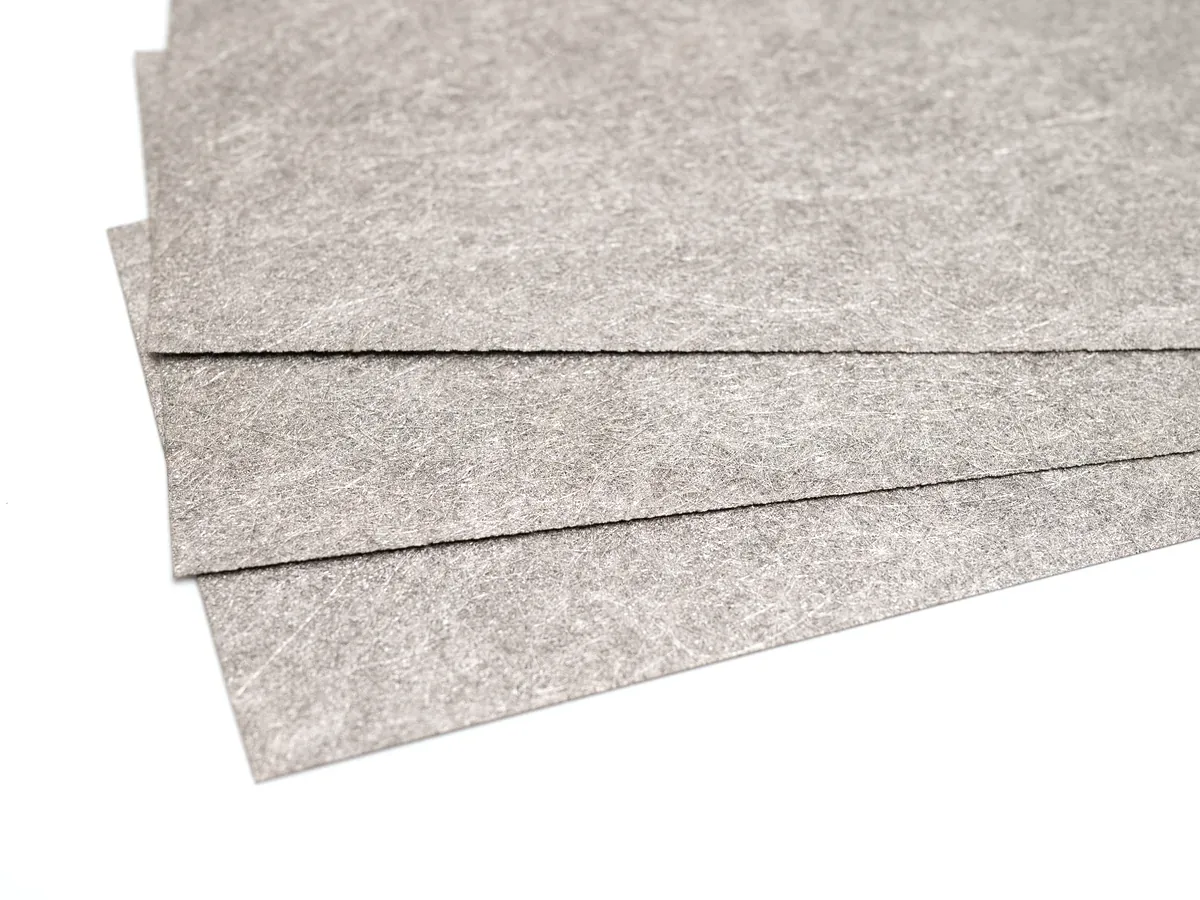
Sintered porous plates and sheets in 316L SS or Pure Ti. Flat format for sparger plates, electrode substrates, flow distribution, and filter media blanks.
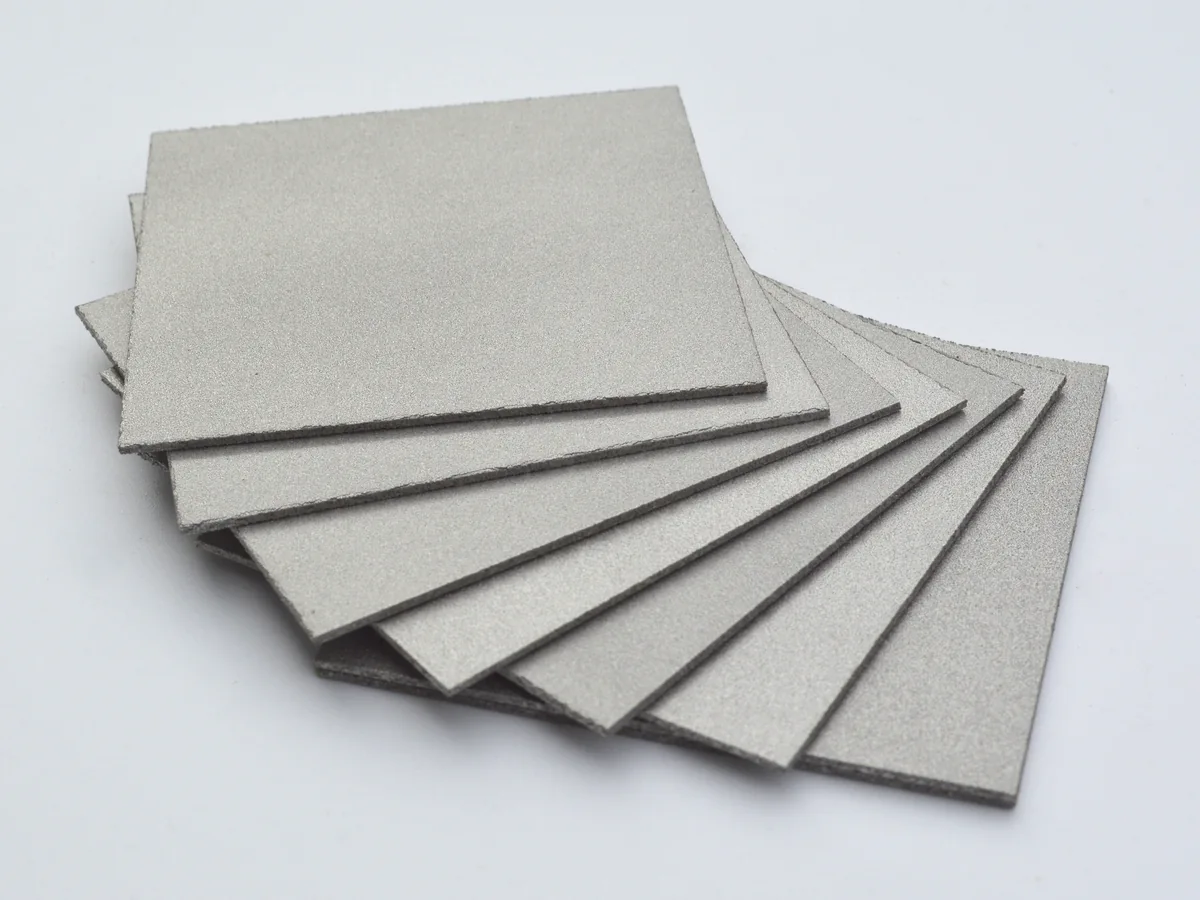
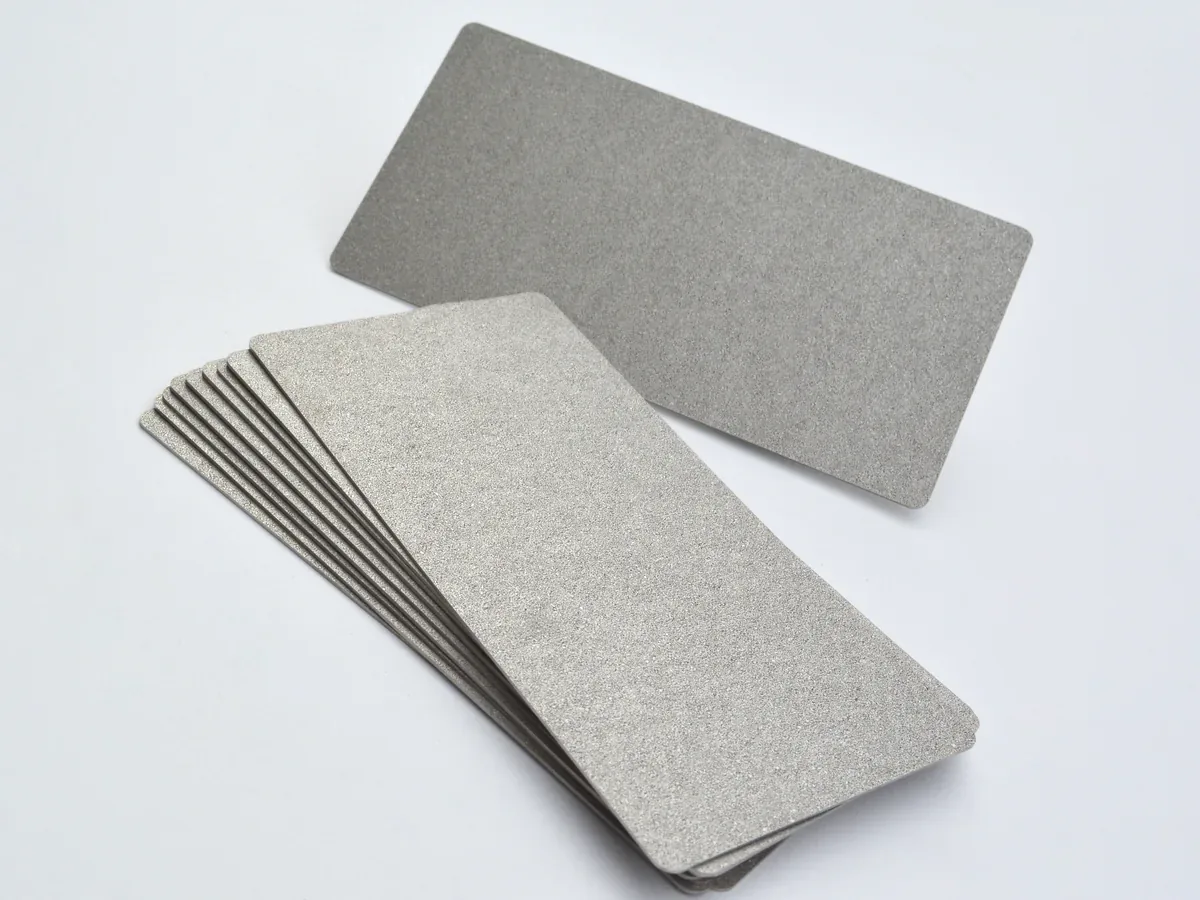
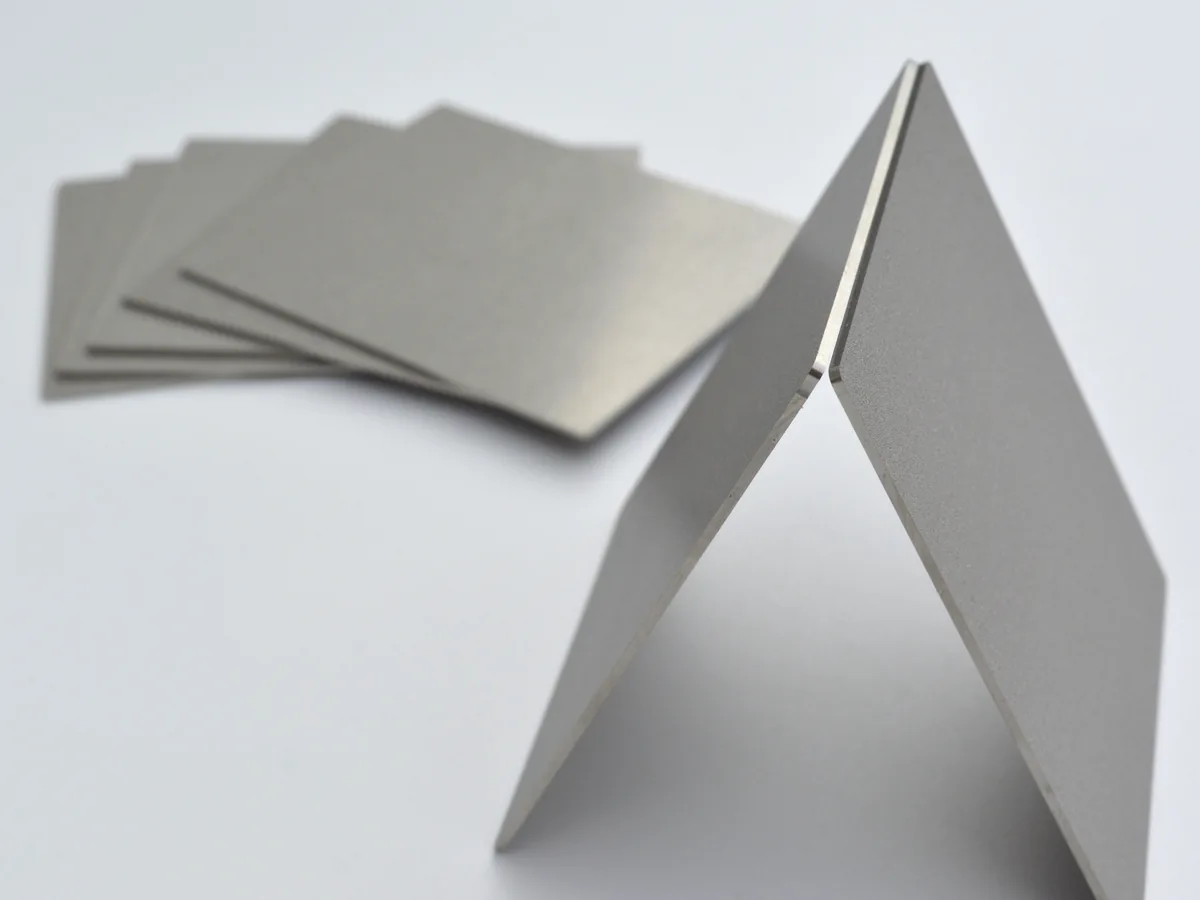
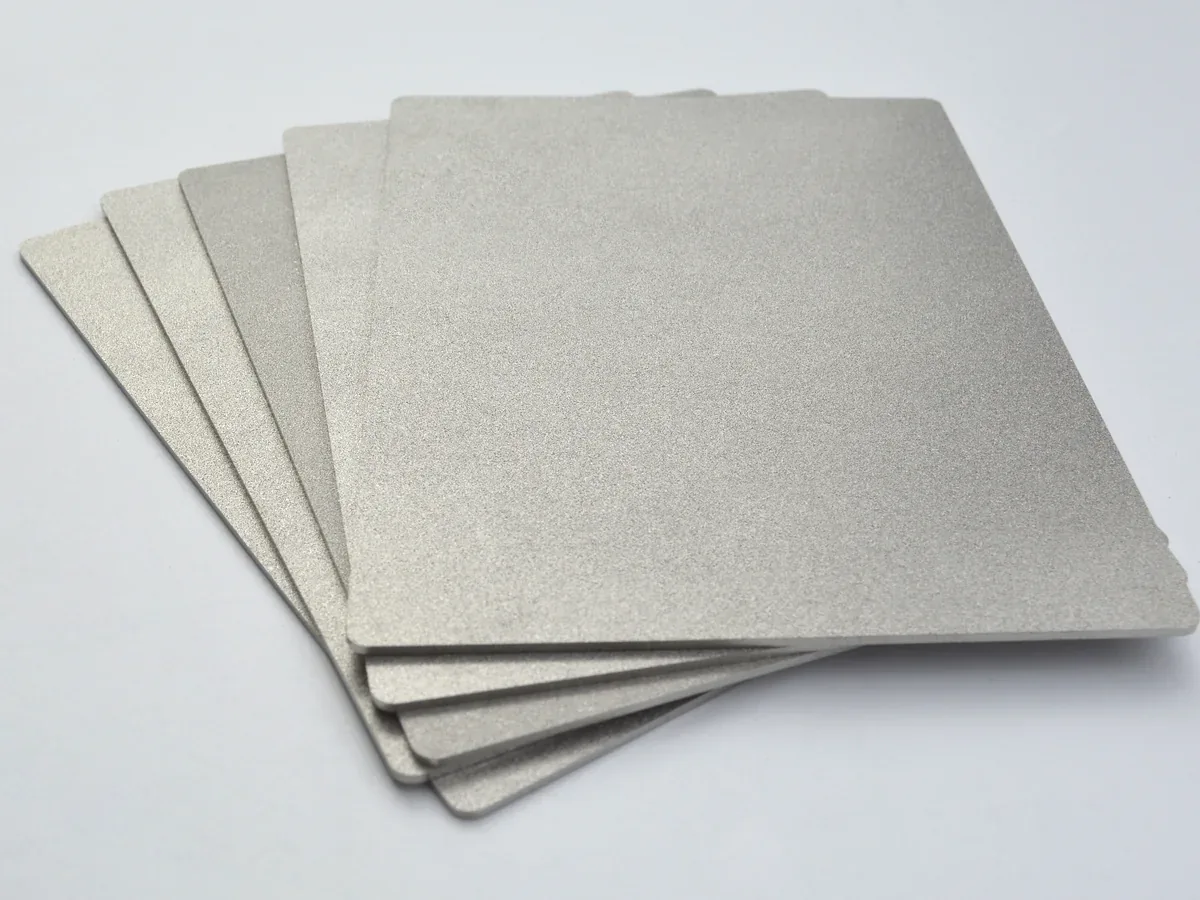
Titanium plates up to 600 × 400 mm; SS plates up to 300 × 300 mm; thickness 0.5–20 mm (Ti) or 0.5–10 mm (SS). Plates can be cut to precise shapes — round, rectangular, or irregular — by wire-EDM, laser cutting, or milling, with hole patterns, slots, or custom profiles machined after sintering.
For PEM electrolyzer applications, titanium porous plates serve as current collector and gas diffusion layer simultaneously. Porosity (30–45%) and pore size are specified to the individual stack design, and surface finish (Ra) is measured and certified for each batch. The sintered structure resists hydrogen embrittlement under cathodic charging, and the as-sintered surface is smooth enough for low-resistance electrical contact without additional polishing.
For electrocatalysis research, plates are available with a ruthenium-iridium oxide (Ru-Ir, MMO) coating or platinum coating — typically 8–12 µm on a 100 × 100 mm format — for bifunctional oxygen and hydrogen evolution catalyst studies. Coating is applied on customer request and is quoted separately.
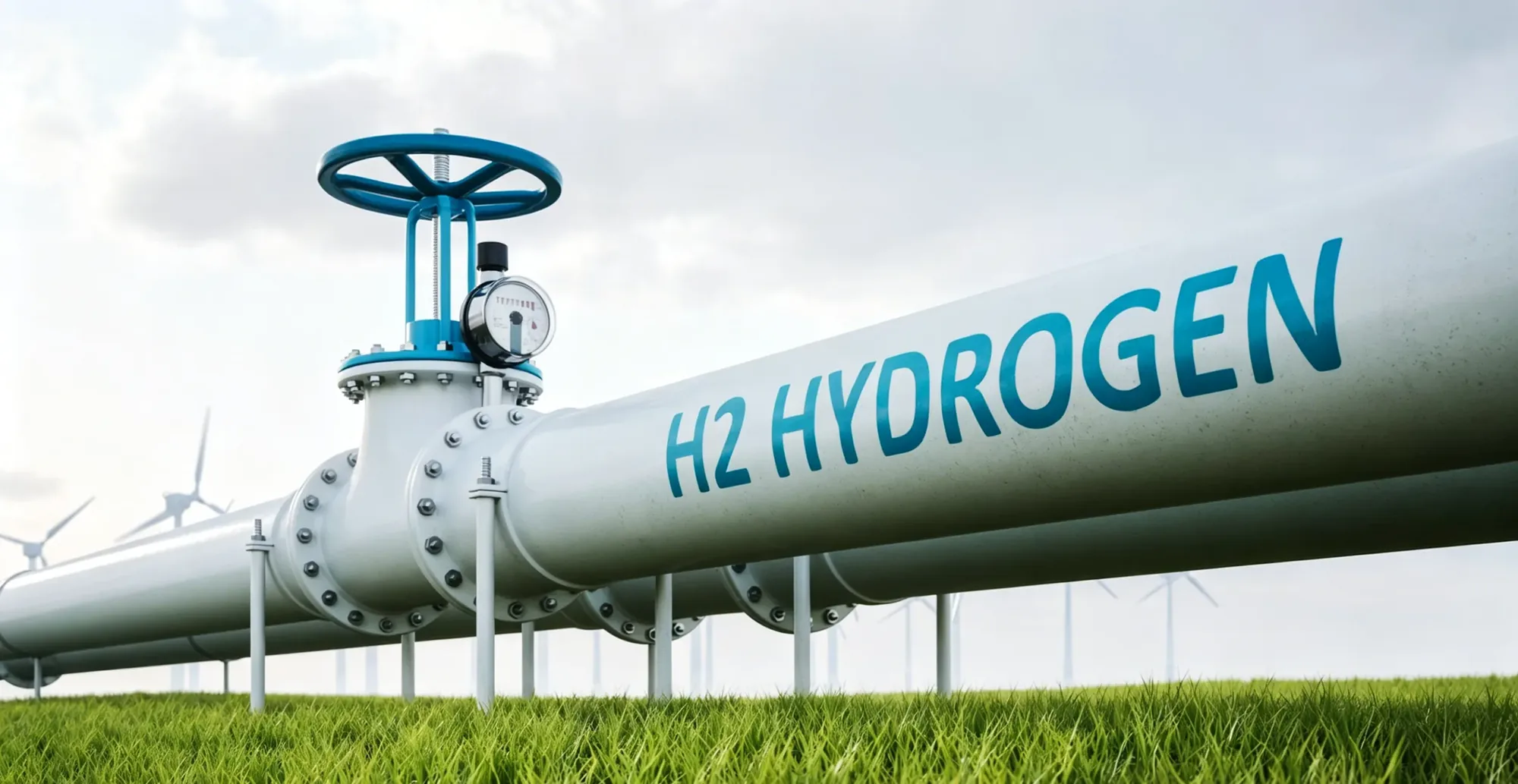
Porous titanium plates for current collection and gas diffusion in PEM water electrolysis. Stable at anode potentials where carbon-based GDLs corrode, with inherent resistance to hydrogen embrittlement under cathodic charging.
Waterjet and wire-EDM cutting to complex shapes, with hole patterns, slots, and machined profiles. Tolerances to ±0.1 mm.
Titanium plates up to 600 × 400 mm — significantly larger than SS plates — available in single-piece format without joins.
Porosity measurement and Ra surface finish records available on request for PEM-grade titanium plates.
Ru-Ir oxide (MMO) or platinum coating available on titanium plates for electrocatalysis research. Specified and quoted separately on customer request.
Mill test reports, chemical composition, and CoC available for every batch. Dimensions and porosity inspection records on request.
Ti porous plate serves as current collector and gas diffusion layer in the anode compartment of PEM water electrolysis cells.
Custom cell dims · Pure Ti · Ra certifiedTi plate with Ru-Ir oxide (MMO) or Pt coating for lab-scale electrolysis and fuel cell catalyst studies. Coating on customer request, priced separately.
100×100 mm · Ru-Ir or Pt · On requestPorous plate installed at the base of a chemical reactor to distribute gas uniformly upward through a liquid column.
10–100 µm · SS or Ti · Custom sizePorous plate in vessel internals to distribute liquid or gas flow evenly across a cross-section — in absorption, extraction, and reaction vessels.
Low ΔP · Custom pore sizeFlat sintered plates used as disc filter media in leaf filters, pressure nutsche filters, and other flat-bed filtration equipment.
0.22–100 µm · Cut to fit · SS or TiPorous distribution plates in pharmaceutical vessels and reactors. 316L SS or Ti for pharmaceutical service.
5–20 µmPorous plates for gas and liquid distribution in high-pressure chemical and petrochemical reactors.
Thick-wall · Wall-dependent · Custom alloyProvide plate size, thickness, pore size, and any required machining. We will quote cut-to-size blanks or fully machined parts.
FILTURE is a supplier and exporter of sintered metal filter elements — parts are made to order and shipped worldwide.