PEM water electrolysis splits water into hydrogen and oxygen using a proton exchange membrane — typically Nafion — as the electrolyte. It is one of the leading technologies for producing green hydrogen from renewable electricity, and global installed capacity is growing fast. By 2030, the IEA projects over 130 GW of electrolyzer capacity will be needed to meet announced hydrogen targets. Every megawatt of PEM electrolyzer capacity requires multiple titanium components inside the cell stack, many of them porous. This post explains what those components are, why titanium is typically required on the anode side, and what specifications matter.
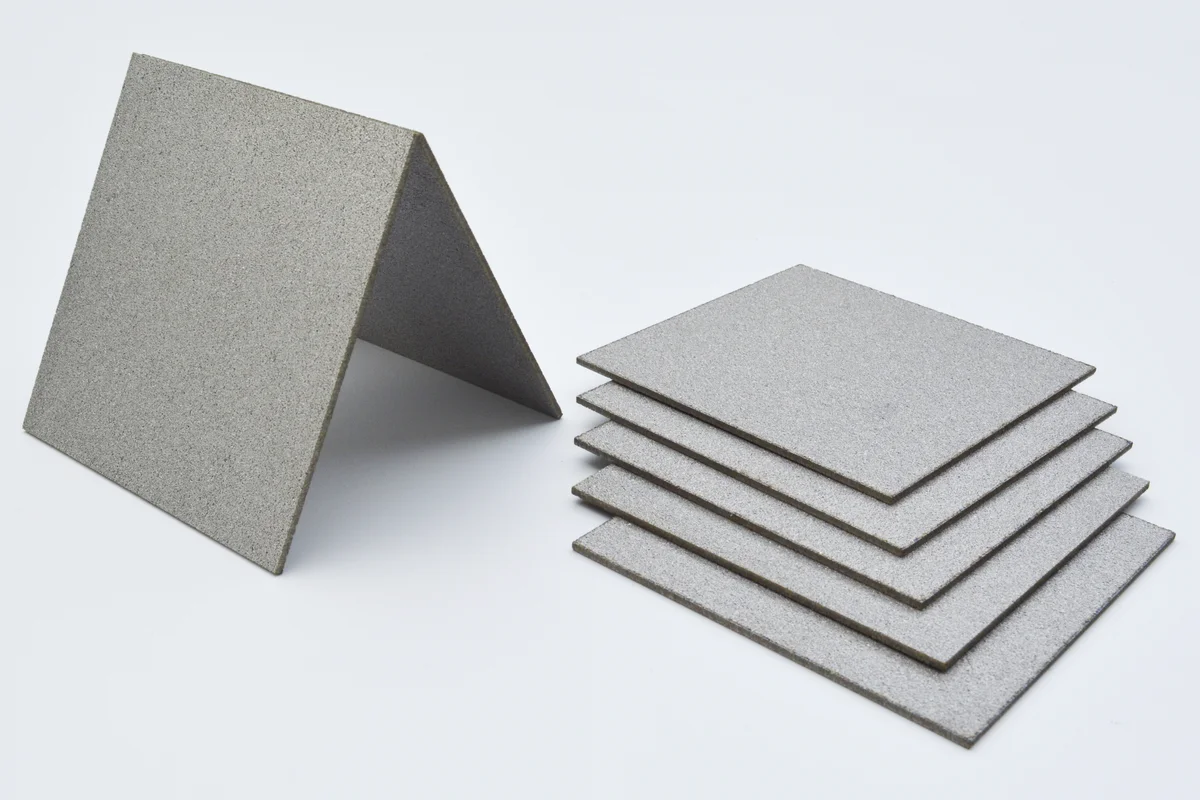 porous plates for PEM electrolyzer” loading=”lazy” style=”width:100%;max-width:800px;border-radius:8px;margin:24px auto;display:block;”>
Why Titanium, Not Stainless Steel
A PEM electrolysis cell has two sides separated by the proton exchange membrane. The cathode side (hydrogen evolution) operates in a relatively mild environment — humidified gas at moderate potential. Standard stainless steel or carbon-based materials work fine there.
The anode side (oxygen evolution) is a different story. The Nafion membrane creates a strongly acidic environment with an equivalent pH below 1. Combine that with anodic potentials exceeding +1.8 V vs. RHE and dissolved oxygen, and you have conditions that aggressively corrode most metals. Stainless steel — even 316L — dissolves under these conditions. Iron, nickel, and chromium ions leach out of the steel, migrate into the membrane, and poison the catalyst layer. Within weeks to months, cell performance degrades irreversibly.
Titanium survives because it forms a stable, self-healing TiO2 passive layer that withstands both the acidity and the oxidizing potential far better than most structural metals. In PEM-anode service, Grade 1 or Grade 2 titanium is therefore widely used for long stack lifetimes, although the actual corrosion rate still depends on potential, coating system, water chemistry, and operating profile. This is why components touching the anode side of a PEM electrolyzer — the porous transport layer, the flow field plate, and in some designs the current collector mesh — are typically made from titanium.
Titanium Components in the PEM Stack
Porous Transport Layers (PTL)
The porous transport layer sits directly against the anode catalyst layer. It has three jobs: conduct electrons from the catalyst to the bipolar plate, distribute water evenly across the active area, and allow oxygen gas bubbles to escape without blocking the catalyst surface. The PTL is the most critical porous component in the stack.
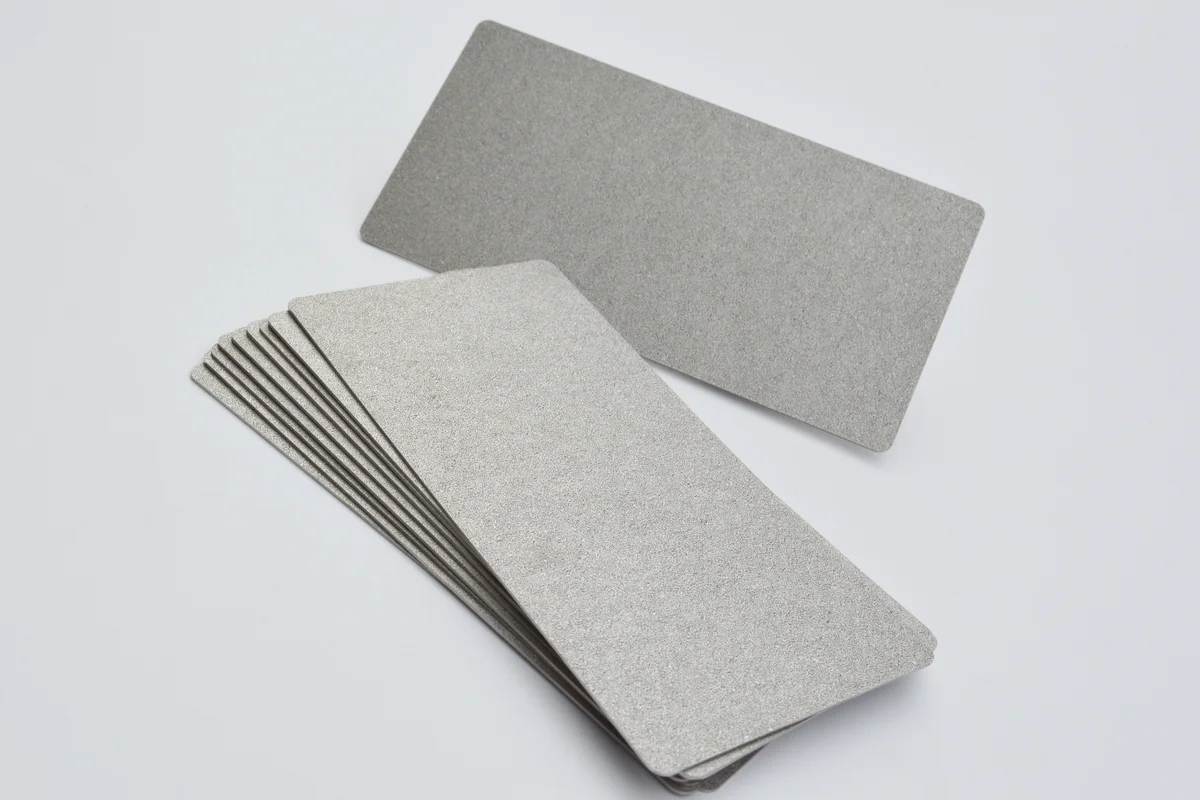
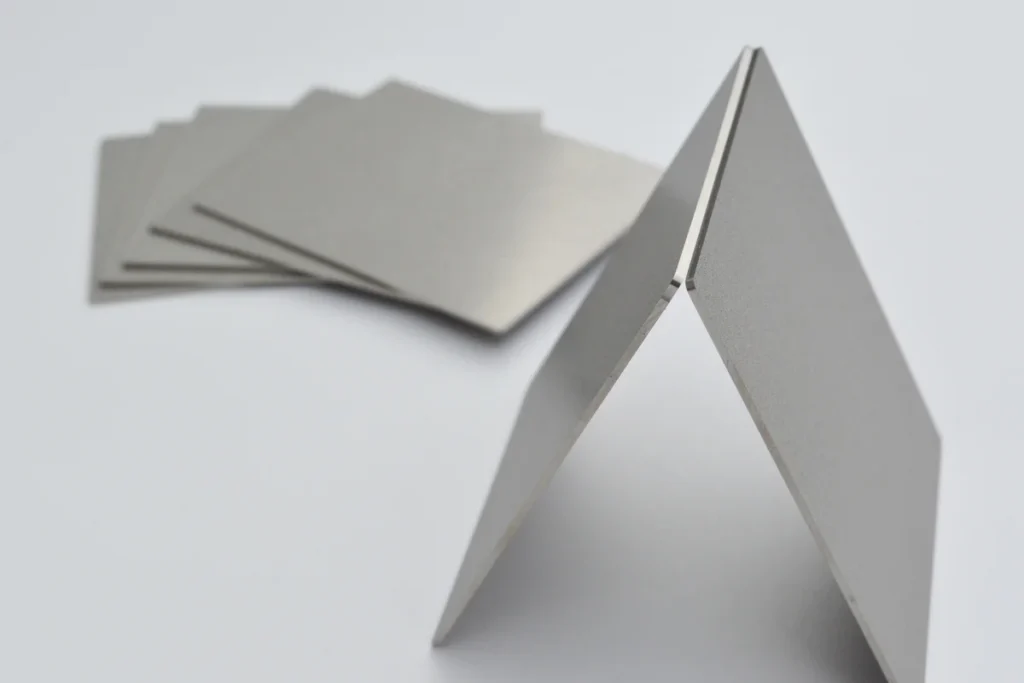
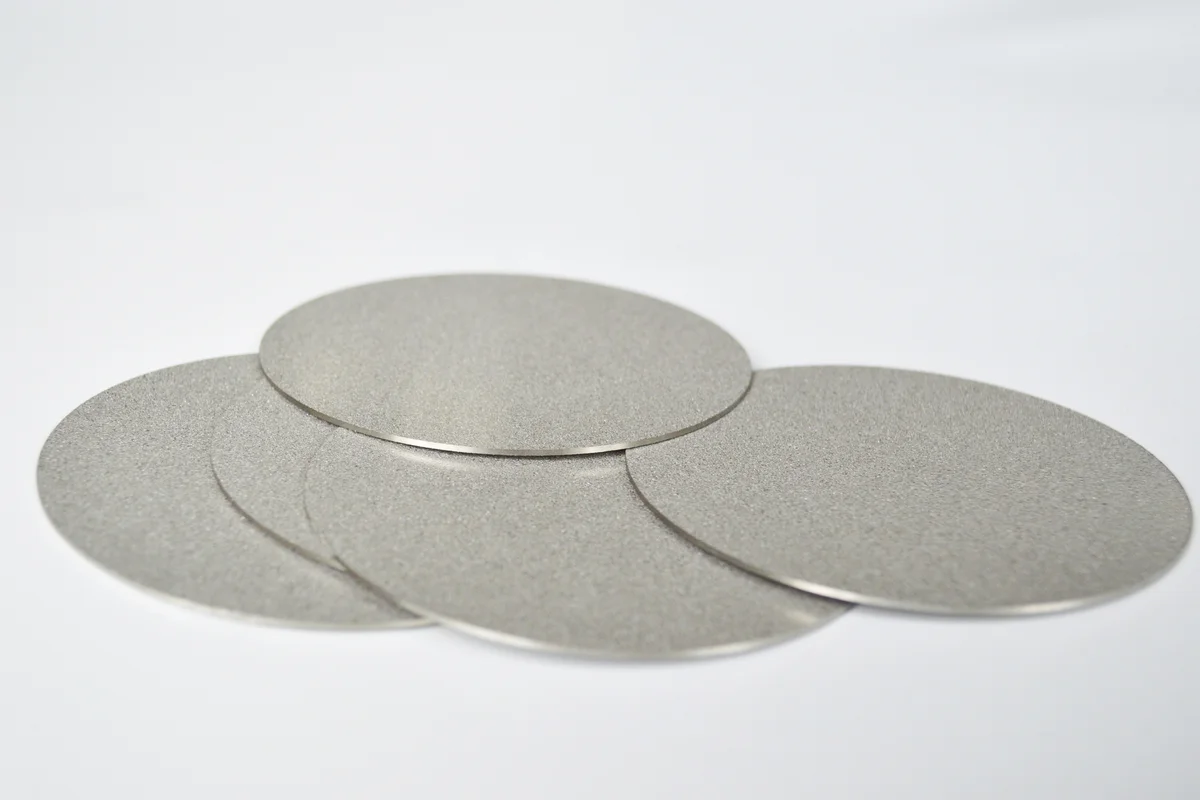
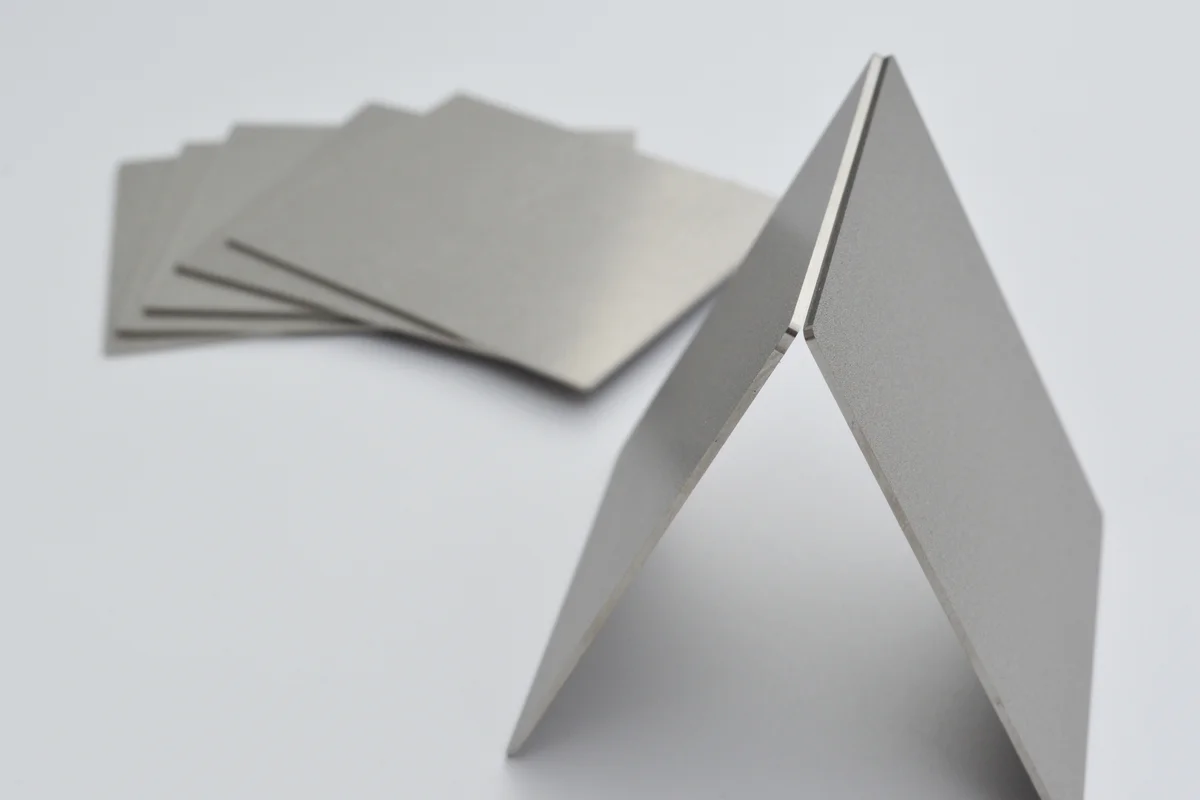
PTLs are made from sintered titanium powder or titanium fiber felt, depending on the design. Sintered powder PTLs offer tighter pore size control and higher mechanical stiffness. Titanium fiber felt PTLs provide higher porosity and better gas permeability. Both types are used commercially.
Typical PTL specifications:
- Porosity: 30-45% (sintered powder) or 70-80% (fiber felt)
- Mean pore size: 10-50 µm
- Thickness: 0.5-2.0 mm
- Material: Grade 1 commercially pure titanium
- Surface treatment: often platinum or iridium coated to reduce interfacial contact resistance
Pore size and porosity directly affect performance. Too-small pores trap oxygen bubbles against the catalyst, increasing mass transport losses. Too-large pores reduce the number of contact points with the catalyst layer, increasing electrical resistance. Most stack developers settle on a mean pore size between 15-30 µm as a practical optimum.
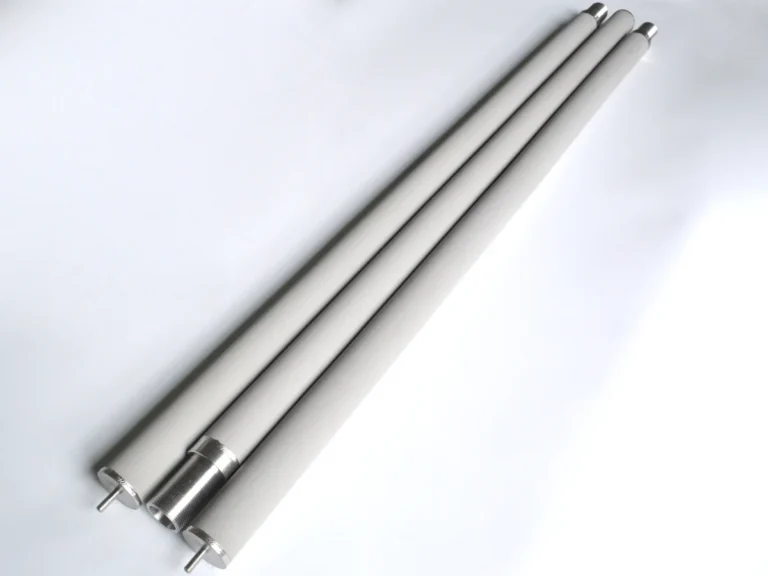
FILTURE manufactures titanium fiber felt and sintered titanium porous plates that are used as PTL substrates in PEM electrolyzer development and production.
Bipolar Plates
Bipolar plates separate adjacent cells in the stack and conduct current between them. On the anode side, they need machined flow channels to distribute water and remove oxygen. The plate must be electrically conductive, corrosion resistant, gas-tight, and mechanically strong enough to withstand the stack compression forces — typically 1-3 MPa clamping pressure.
Anode bipolar plates are machined from solid titanium plate stock — Grade 2 or Grade 5 (Ti-6Al-4V) depending on strength requirements. Flow channel geometries (parallel, serpentine, or interdigitated) are CNC milled. Surface flatness tolerances are tight, typically within 0.05 mm across the active area, because any gap between the plate and the PTL creates a high-resistance contact point.
Some manufacturers apply a platinum or gold coating (0.05-0.5 µm thick) to the bipolar plate surface to reduce the contact resistance caused by the native TiO2 oxide layer. Without this coating, the semiconductive oxide adds measurable ohmic losses, particularly at high current densities above 2 A/cm².
Mesh Current Collectors
Titanium woven mesh serves as an additional current collection and distribution layer in some stack designs, placed between the PTL and the bipolar plate. The mesh provides a compliant interface that accommodates slight thickness variations in the PTL while maintaining electrical contact.
Common specifications for electrolyzer mesh:
- Mesh count: 40-100 mesh (150-400 µm opening)
- Wire diameter: 0.1-0.3 mm
- Material: Grade 1 titanium
- Coating: platinum (0.05-0.2 µm) to minimize contact resistance
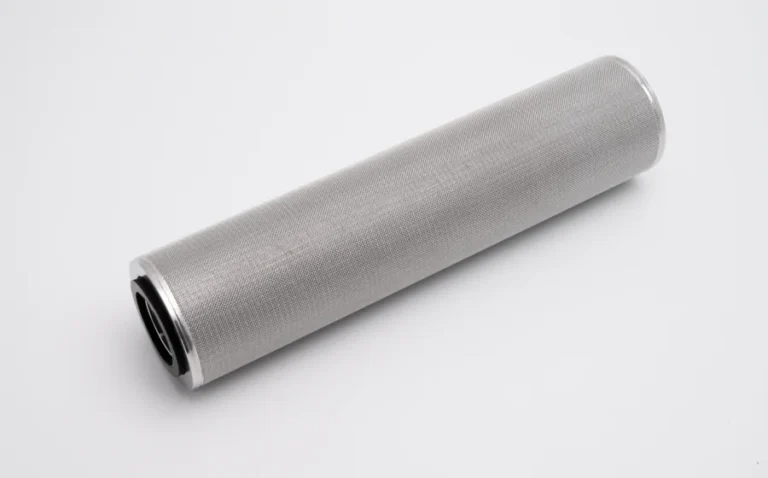
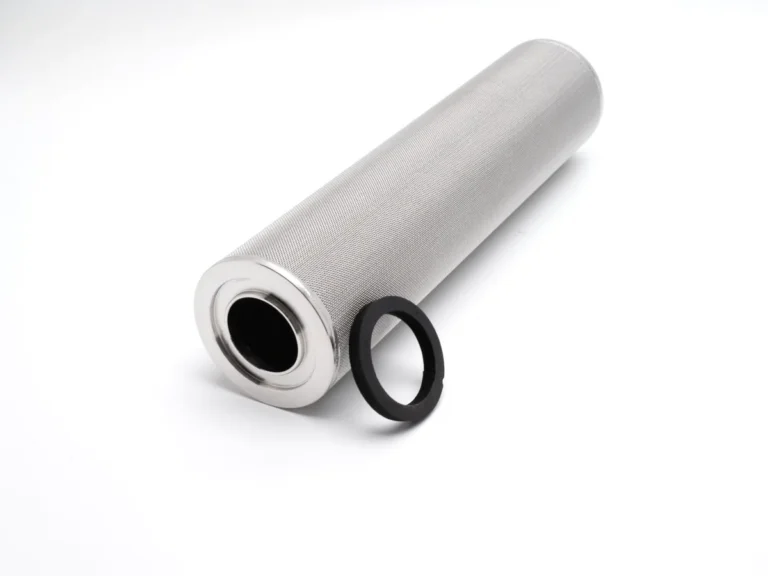
FILTURE supplies titanium woven mesh in the mesh counts and wire diameters used in electrolyzer applications.
How Green Hydrogen Demand Is Driving Component Requirements
The shift from small laboratory electrolyzers (single cells, a few cm² active area) to multi-megawatt production stacks (hundreds of cells, active areas exceeding 1000 cm²) is changing what component suppliers need to deliver. Larger active areas mean larger PTL sheets — 500 mm x 500 mm or bigger — with consistent porosity and thickness across the entire piece. Stack manufacturers are moving from hand-assembled prototypes to semi-automated assembly lines, which demands tighter dimensional tolerances on every component.
Volume is also increasing. A single 1 MW PEM electrolyzer stack contains roughly 200-400 cells. Each cell needs a PTL, a bipolar plate, a mesh current collector, and associated gaskets and endplates. Multiply that by the gigawatt-scale project pipelines being announced globally, and titanium porous component demand is scaling from kilograms per year to tons per year for a single OEM customer.
Specification Checklist for Electrolyzer Components
If you are sourcing titanium porous components for PEM electrolysis development or production, here is what to specify:
- Material grade (Grade 1 CP Ti preferred for corrosion resistance; Grade 2 acceptable)
- Porosity and pore size distribution (provide target range and measurement method — mercury intrusion or capillary flow porometry)
- Thickness tolerance (typically ±0.05 mm for PTL, ±0.02 mm for bipolar plates)
- Surface roughness (Ra value, relevant for contact resistance)
- Sheet/plate dimensions and flatness tolerance
- Noble metal coating requirements (metal, thickness, coverage area)
- Cleanliness requirements (particulate-free, no organic contamination)
FILTURE manufactures titanium fiber felt, sintered porous plates, woven mesh, and machined titanium components for PEM electrolyzer OEMs and research institutions. If you are developing or scaling up an electrolyzer stack and need titanium porous components to specification, contact us with your requirements.