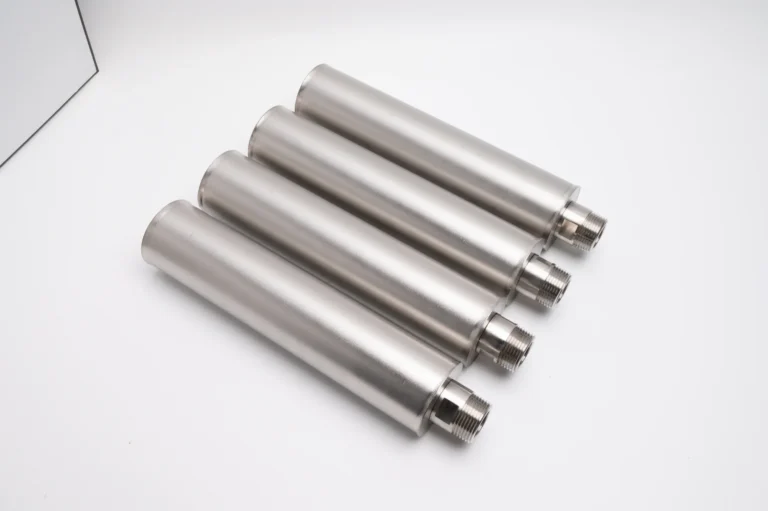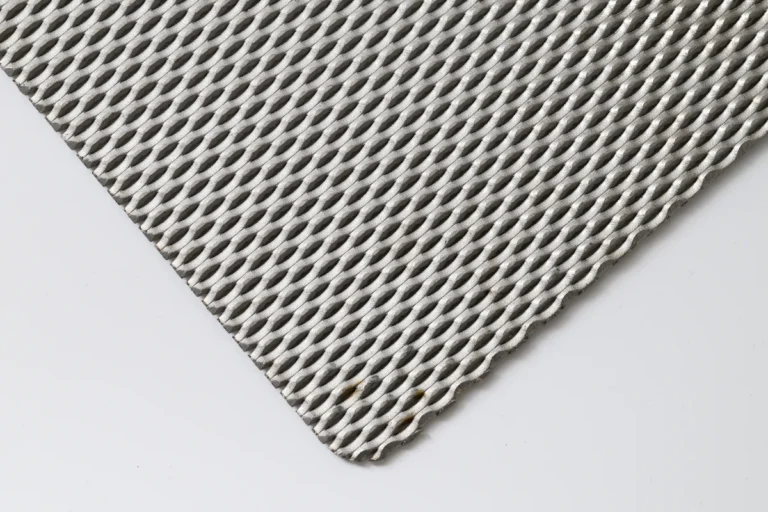
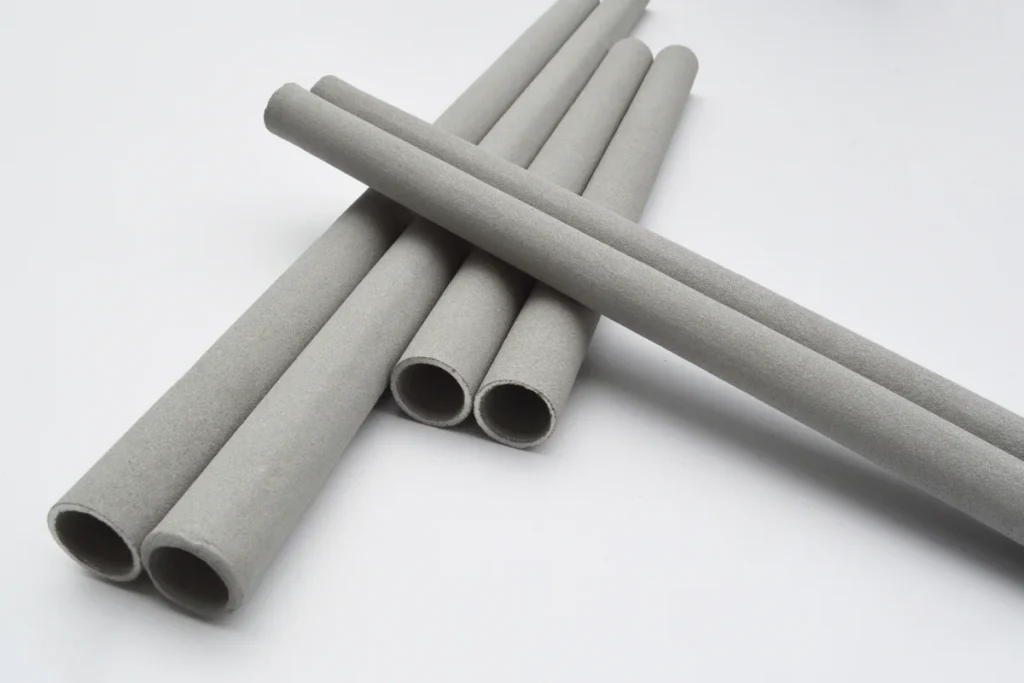
Porous metal components — tubes, plates, and discs — are the building blocks used in filtration assemblies, gas distribution systems, flow restrictors, and electrochemical cells. Choosing the right form factor depends on where the component sits in the system and what it needs to do. This guide covers the three standard shapes, their dimensional ranges, and the applications each one fits best.
Materials and Pore Structure
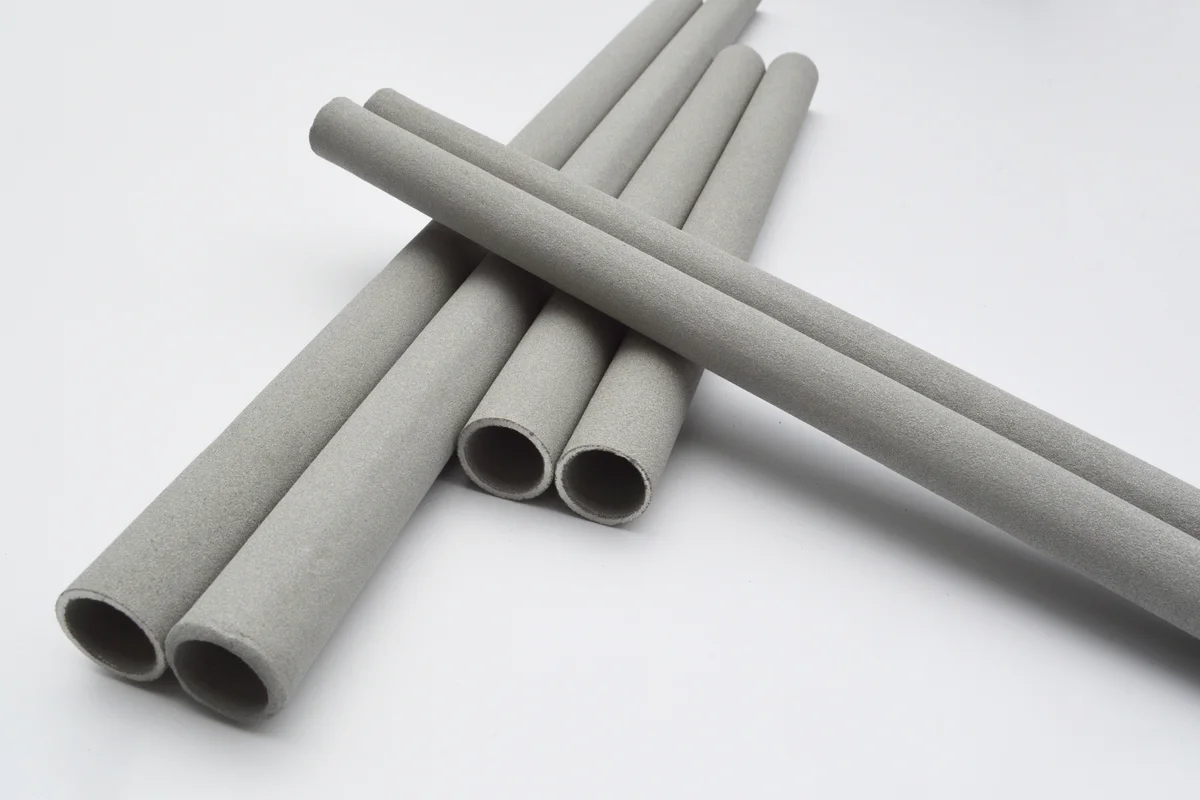
All three forms are manufactured by sintering metal powder (316L stainless steel or pure titanium Grade 2) in a vacuum furnace at 1000-1200°C. The resulting structure has interconnected porosity throughout the wall or body thickness, with pore sizes controllable from 0.22 to 100 µm depending on the starting powder particle size and sintering parameters. Typical porosity is 30-45%, meaning roughly one-third of the component volume is open pore space.
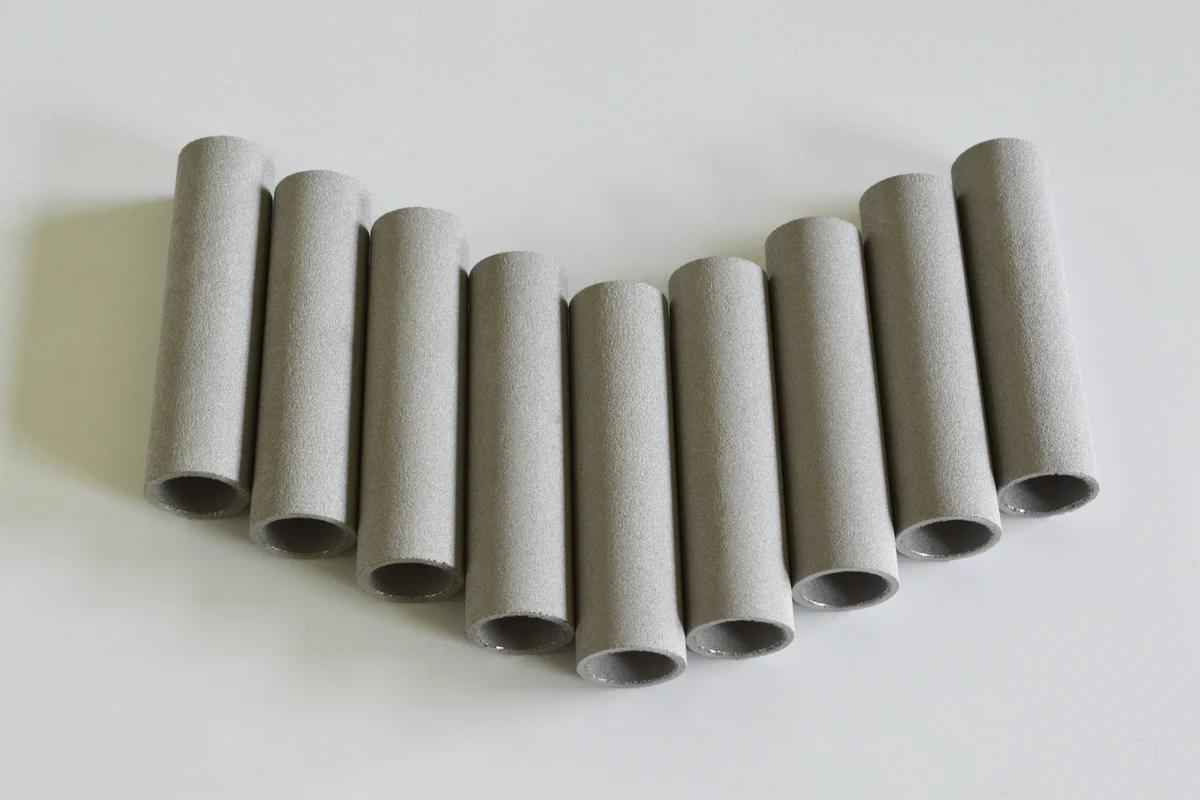
The choice between 316L SS and titanium depends on the process medium. 316L covers most industrial fluids — water, air, nitrogen, hydrocarbons, mild acids and caustics. Titanium is specified when the medium contains chlorides, strong mineral acids (HCl, H2SO4), seawater, or when biocompatibility is required for pharmaceutical use.
Porous Tubes
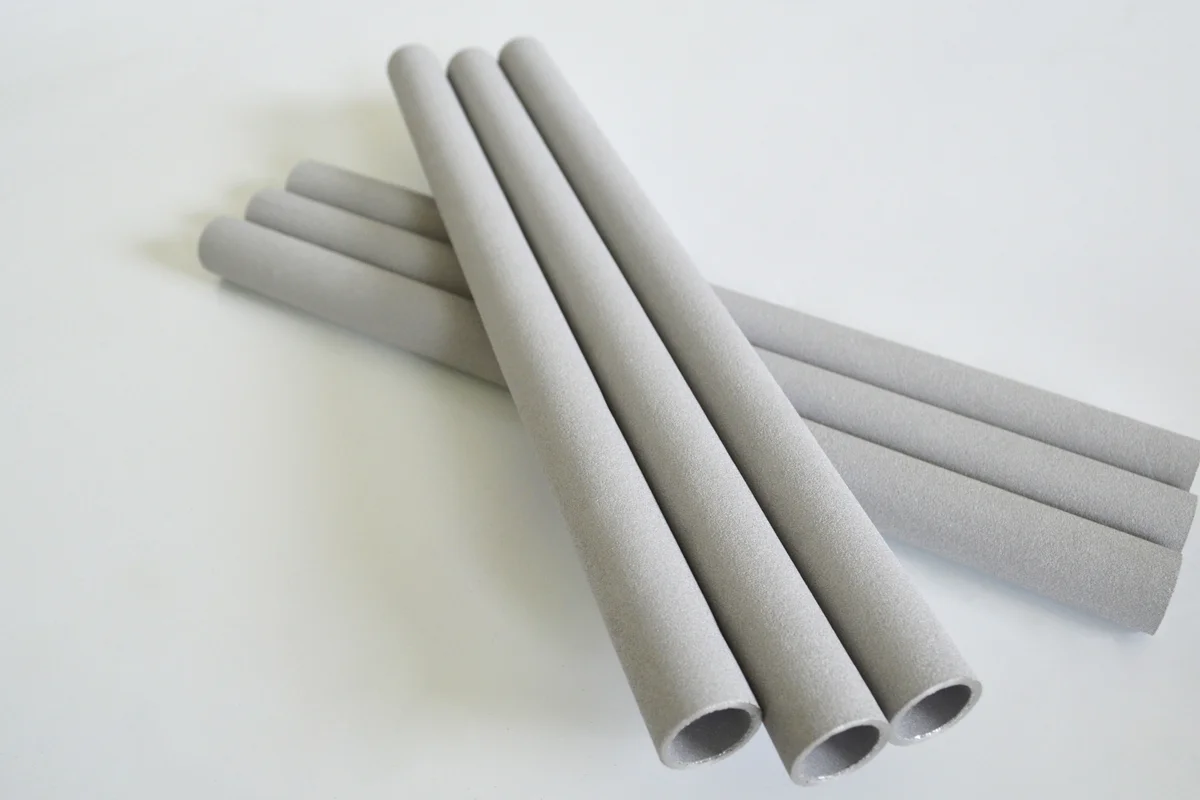
OD range: 14 – 200 mm (titanium) / 20 – 200 mm (316L SS)
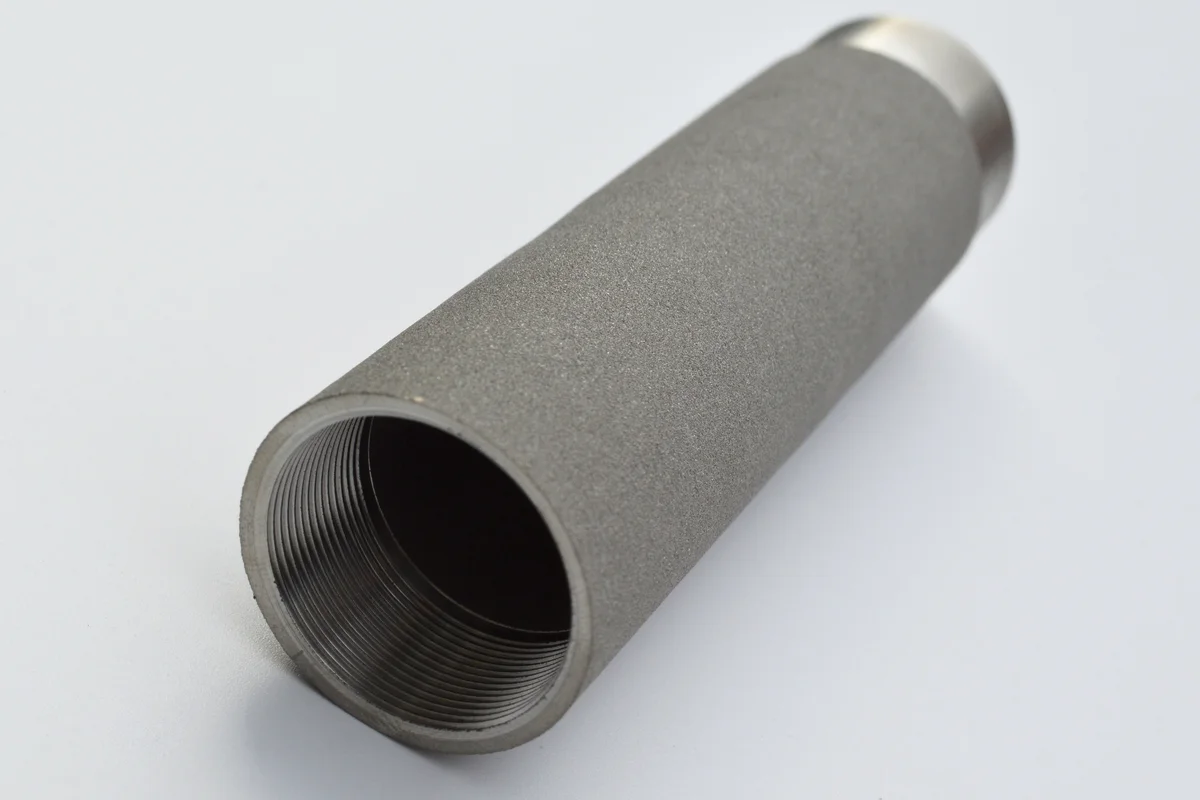
Length: 100 – 1200 mm
Wall thickness: 2 – 10 mm
Porosity: 30 – 45%
Pore size: 0.22 – 100 µm
Porous tubes are the most versatile form factor. Their cylindrical geometry allows them to be installed directly in pipelines, inserted into housings, or mounted vertically in vessels. Fluid can flow from outside-in (filtration mode) or inside-out (sparging/aeration mode).
Gas Sparging and Aeration
When a porous tube is pressurized with gas from the inside, the gas exits through the pore channels as a uniform distribution of fine bubbles on the outer surface. The bubble size is controlled by the pore size of the tube — finer pores produce smaller bubbles, which means more surface area per unit volume of gas and better mass transfer. Typical sparging applications include oxygenation of wastewater, carbonation of beverages, and gas-liquid reactions in chemical processing. For aeration, pore sizes of 10-50 µm are common; for fine bubble diffusion in bioreactors, 2-10 µm is typical.
Fluidization
In fluidized bed reactors and powder handling systems, porous tubes distribute gas evenly along their length to maintain uniform fluidization. The pressure drop across the porous wall acts as a natural flow resistance that prevents channeling — even if the bed density varies along the tube length, the gas distribution stays relatively uniform. This is a significant advantage over drilled-pipe distributors, where gas preferentially flows through the holes in low-resistance zones.
Inline Filtration
Porous tubes installed as inline filter elements operate in outside-in flow, capturing particles from the process stream as fluid passes through the tube wall into the clean bore. The cylindrical geometry provides a large filtration area relative to the housing diameter. Multiple tubes can be arranged in parallel within a single housing to increase total flow capacity.
Porous Plates
Maximum size: 600 x 400 mm (titanium) / 300 x 300 mm (316L SS)
Thickness: 0.5 – 20 mm (titanium) / 0.5 – 10 mm (316L SS)
Porosity: 30 – 45%
Pore size: 0.22 – 100 µm
Porous plates are flat rectangular or square components with uniform through-porosity. They are used wherever the application needs a flat permeable surface rather than a cylindrical one.
PEM Electrolyzer Components
In proton exchange membrane (PEM) water electrolyzers, porous titanium plates serve as porous transport layers (PTLs) and flow field plates on the anode side. The plate must allow water to reach the catalyst layer while conducting electricity and carrying away oxygen gas bubbles. Titanium is required here because the anode environment is highly oxidizing (pure oxygen at elevated potential in acidic conditions). Plate thickness for PTL applications is typically 0.5-2 mm with porosity tuned for the specific cell design.
Flow Distribution
When a fluid stream needs to be spread evenly across a cross-section — for example, feeding a packed bed reactor or distributing gas across the face of a heat exchanger — a porous plate acts as a passive flow distributor. The pressure drop across the plate forces the fluid to spread laterally before passing through, eliminating the jet effects that occur with simple nozzle-type distributors.
Porous Discs
Diameter: 5 – 400 mm (titanium) / 5 – 300 mm (316L SS)
Thickness: 0.5 – 20 mm
Tolerance: OD ±0.1 mm, thickness ±0.05 mm
Porosity: 30 – 45%
Pore size: 0.22 – 100 µm
Porous discs are circular components that fit into round housings, flanges, and pipe connections. They are the simplest form factor to install — drop into a seat, clamp or bolt in place — and the most commonly used shape for small-scale and laboratory applications.
Sample Filtration and Laboratory Use
In analytical chemistry and quality control labs, sintered metal discs serve as reusable filter supports and filter elements in vacuum filtration rigs, inline sample holders, and Buchner-type funnels. A 25-50 mm disc at 0.22-1 µm rating provides sterile-grade filtration for sample preparation without the ongoing cost of disposable membrane filters.
Gas Diffusion
Small porous discs (5-50 mm diameter) are used as gas diffusion elements in sensors, analyzers, and small-scale gas-liquid contactors. The disc controls the rate at which gas permeates into the measurement chamber or liquid volume, providing a steady and repeatable flow without valves or active flow control.
Pressure Equalization
Sealed enclosures — electronic housings, pressure transducers, battery packs — need to equalize internal and external air pressure during temperature changes or altitude shifts. A small porous disc (typically 5-15 mm diameter, 0.22-5 µm pore size) allows slow gas exchange while blocking liquid water, dust, and contaminants. This is the same operating principle used in Gore-Tex vent plugs, but in a metal disc that tolerates higher temperatures and mechanical loads.
Choosing the Right Form Factor
The decision tree is usually driven by the installation geometry:
- Tube when the component sits inside a pipe, vessel, or cylindrical housing; when you need length-distributed sparging or inline filtration; or when you need end fittings (welded caps, threads, flanges) for direct plumbing connections.
- Plate when the application requires a flat permeable surface spanning a rectangular or square cross-section; for electrolyzer cell stack components; or for large-area flow distribution.
- Disc when the component drops into a round seat or flange; for laboratory and bench-scale equipment; for vent plugs and small gas diffusers; or when the required size is under about 300 mm diameter.
All three forms are available in custom dimensions. If your application needs a non-standard size, pore rating, or end configuration, see our porous components product page for the full specification range, or contact us with your requirements.