Titanium is one of the most requested materials for custom-machined components in chemical processing, marine, aerospace, and medical equipment. It is also one of the hardest metals to machine well. This guide covers the two most common commercially pure and alloy grades — Grade 2 and Grade 5 (Ti-6Al-4V) — along with the tolerances, surface finishes, and post-machining treatments you should specify when ordering CNC machined titanium parts.
Why Titanium Is Difficult to Machine
If you have ever quoted a titanium part and seen the price come back at 3-5x the same geometry in stainless steel, there are real reasons behind the cost. Titanium presents three compounding problems on CNC machines:
- Low thermal conductivity (6.7 W/m-K for Grade 2, 6.6 W/m-K for Grade 5). For comparison, 304 stainless is about 16 W/m-K, and 6061 aluminum is around 167 W/m-K. Heat does not conduct away through the workpiece — it stays concentrated at the tool tip, accelerating wear.
- Work hardening. Titanium hardens rapidly under deformation. If the tool dwells or rubs instead of cutting, the surface layer hardens and becomes even more difficult to cut on the next pass. This demands rigid setups, sharp tools, and consistent chip loads.
- Chemical reactivity at high temperature. Above roughly 500 degrees C, titanium reacts with oxygen and nitrogen in the atmosphere, and it tends to weld to carbide tool edges (built-up edge). This requires lower cutting speeds, aggressive coolant (typically high-pressure flood coolant), and frequent tool changes.
The practical result: cutting speeds for titanium alloys run at about 30-60 m/min, compared to 100-200 m/min for austenitic stainless steels. Cycle times are longer, tooling costs are higher, and machine rigidity matters more. None of this is insurmountable — it just requires a shop that machines titanium routinely, not occasionally.
Grade 2 vs Grade 5: When to Use Which
The choice between Grade 2 (commercially pure titanium) and Grade 5 (Ti-6Al-4V) comes down to a straightforward trade-off between corrosion performance and mechanical strength.
Grade 2 — Commercially Pure Titanium
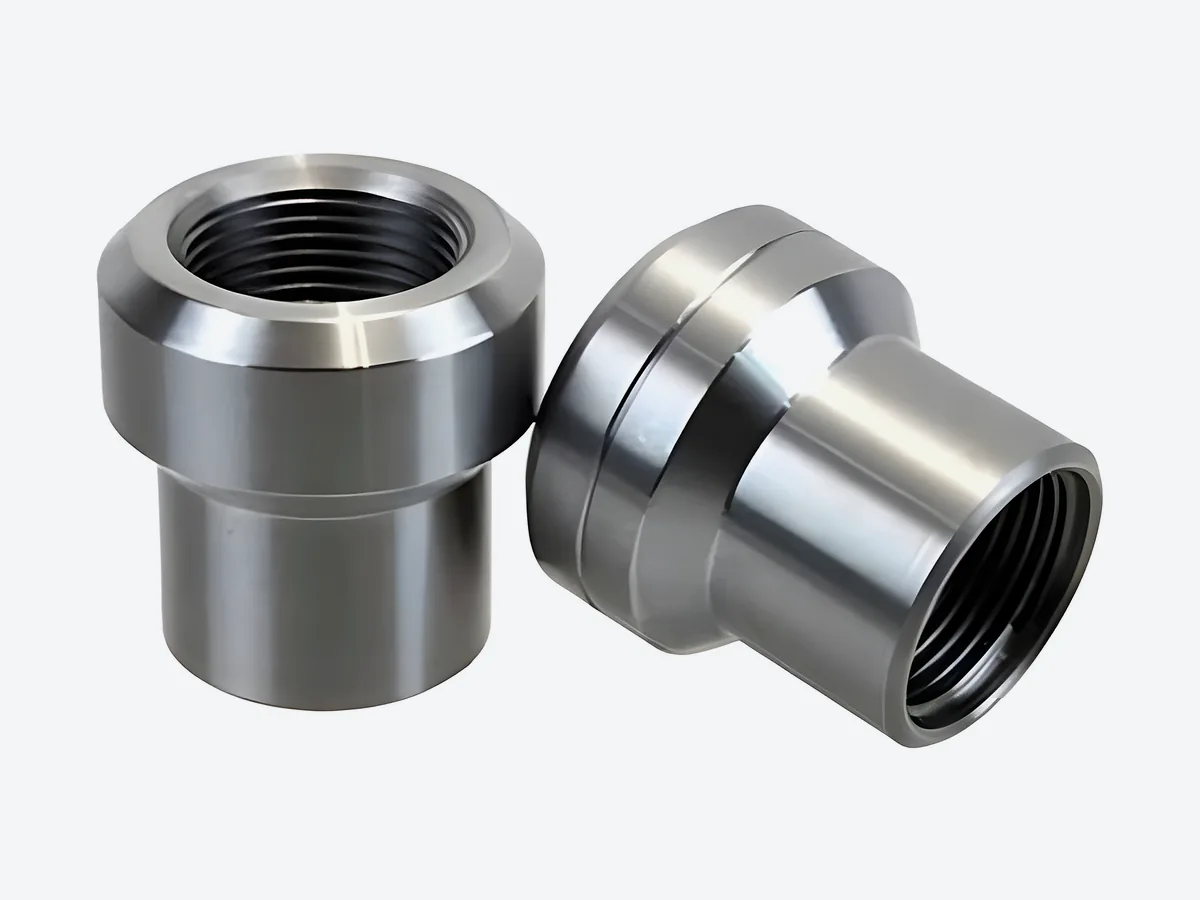
Grade 2 is the workhorse of the chemical processing and marine industries. It offers excellent corrosion resistance in oxidizing acids (nitric, chromic), chloride environments, and seawater. Its lower strength (345 MPa yield) means it is easier to form and machine than Grade 5. Use Grade 2 when the part needs to resist corrosion in aggressive media but is not heavily loaded — flanges, pipe fittings, valve bodies, heat exchanger components, and instrument housings.
Grade 5 — Ti-6Al-4V
Grade 5 accounts for over 50% of all titanium used globally. The addition of 6% aluminum and 4% vanadium roughly doubles the yield strength compared to Grade 2, bringing it to 830 MPa — comparable to high-strength steel alloys, at 57% of the weight. Use Grade 5 when you need both corrosion resistance and structural load capacity: aerospace fasteners, medical implants, high-performance valve stems, racing components, and subsea connectors.
Specifications Comparison: Grade 2 vs Grade 5
Tensile Strength (min): Grade 2 — 345 MPa | Grade 5 — 900 MPa
Yield Strength (0.2% offset, min): Grade 2 — 275 MPa | Grade 5 — 830 MPa
Elongation (min): Grade 2 — 20% | Grade 5 — 10%
Density: Grade 2 — 4.51 g/cm3 | Grade 5 — 4.43 g/cm3
Thermal Conductivity: Grade 2 — 6.7 W/m-K | Grade 5 — 6.6 W/m-K
Elastic Modulus: Grade 2 — 103 GPa | Grade 5 — 114 GPa
Hardness: Grade 2 — HRC 20 (approx.) | Grade 5 — HRC 36 (approx.)
Machinability Rating: Grade 2 — Fair | Grade 5 — Difficult
ASTM Standard: Grade 2 — ASTM B348 / B381 | Grade 5 — ASTM B348 / B381
Achievable Tolerances and Surface Finish
What you can hold on a CNC titanium part depends on the feature, the machine, and the shop’s experience. Here are realistic numbers:
- Standard machining tolerance: +/-0.05 mm on general dimensions. This covers most functional surfaces and bolt-hole patterns.
- Precision tolerance: +/-0.02 mm on critical bores, sealing faces, and mating surfaces. Achievable with careful fixturing and finish passes, but expect longer cycle times and higher cost.
- Tight tolerance (grinding/EDM): +/-0.005 mm is possible on small features with secondary operations, though rarely needed for industrial filtration parts.
- Surface finish: Ra 1.6-3.2 micrometers is standard for as-machined titanium. Ra 0.8 micrometers is achievable with fine finishing passes. Ra 0.4 micrometers or better requires polishing or electropolishing as a secondary operation.
When specifying tolerances on a drawing, apply tight tolerances only where function requires them. Over-tolerancing a titanium part adds machining time and cost without improving performance.
Common CNC Machined Titanium Part Types
Flanges and Fittings
Titanium flanges to ASME B16.5 or custom dimensions are widely used in chemical reactors, offshore pipelines, and desalination plants. Grade 2 handles most corrosive-service flange applications. Grade 5 is used where high bolt loads or pressure ratings demand greater strength.
Valve Bodies and Stems
Machined from solid bar or forged blanks, titanium valve components serve in chlor-alkali plants, bleach production, and seawater cooling systems where stainless steel would suffer pitting or crevice corrosion.
Custom Connectors and Adapters
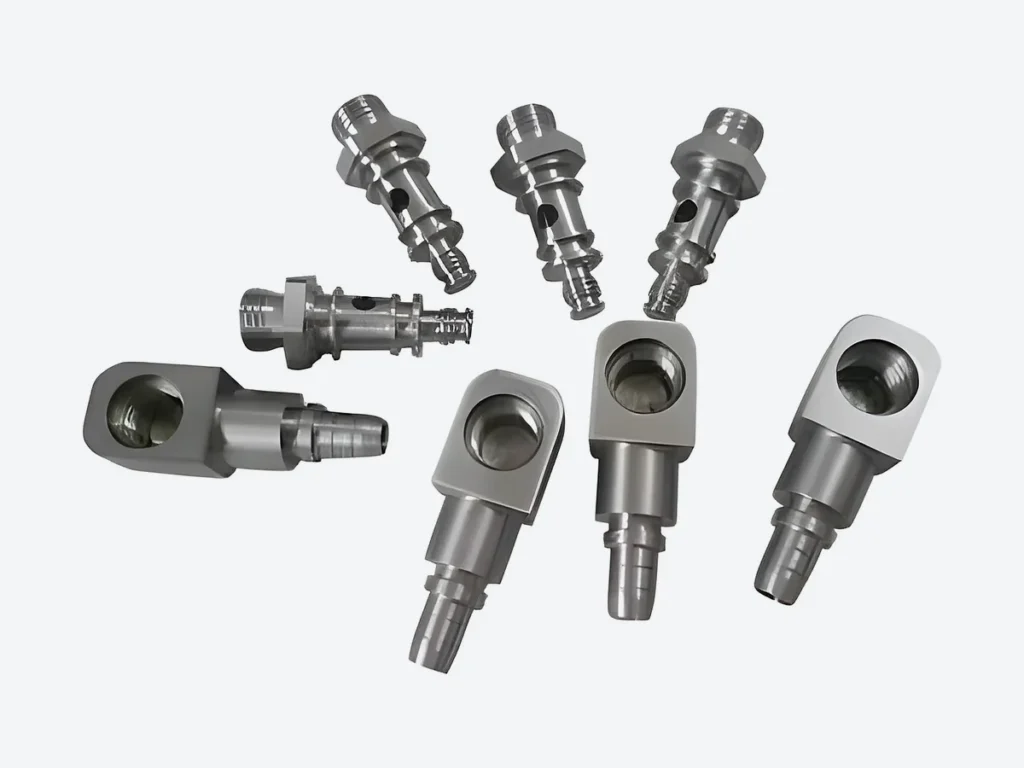
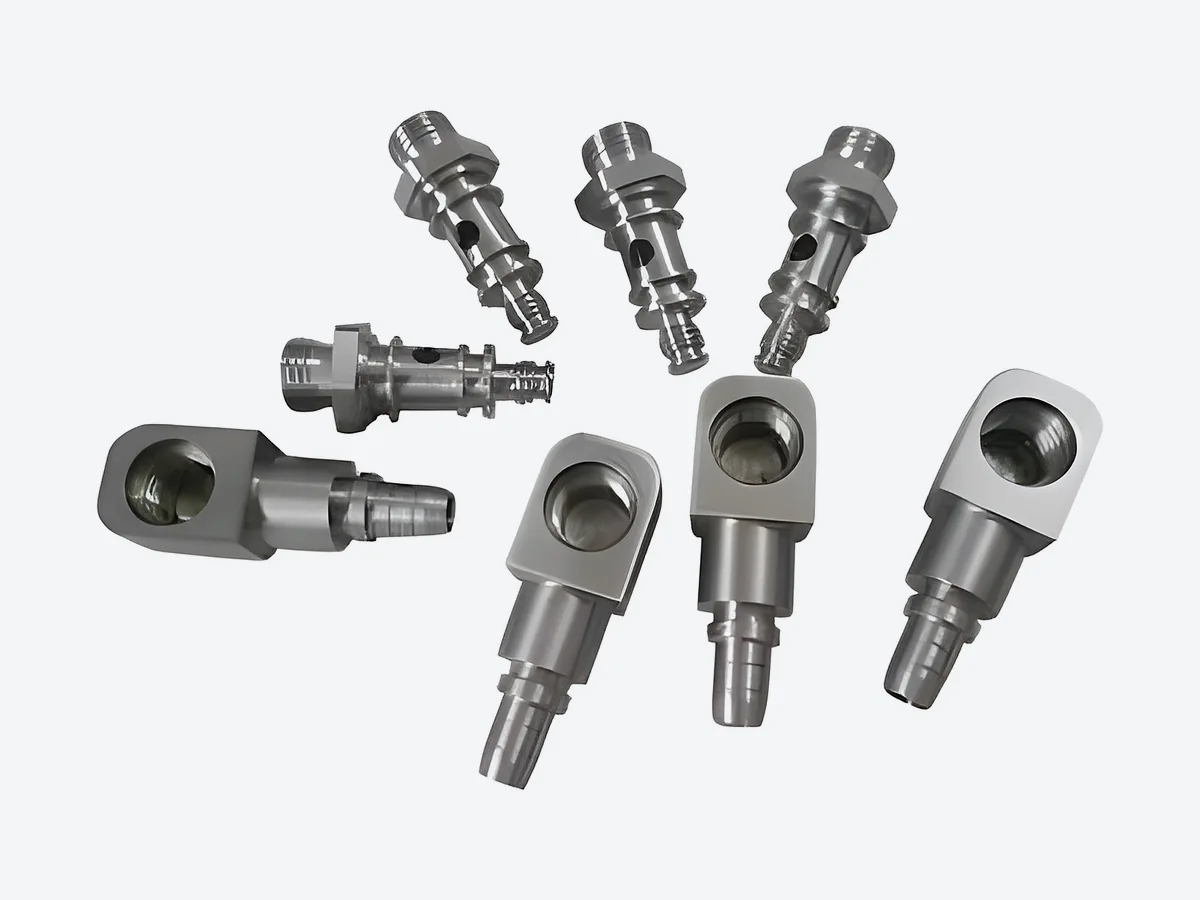
Instrumentation fittings, sensor housings, and custom threaded adapters are common low-volume titanium machining jobs. These parts often combine close-tolerance bores with standard thread forms (metric or NPT).
Filter and Sparger Components
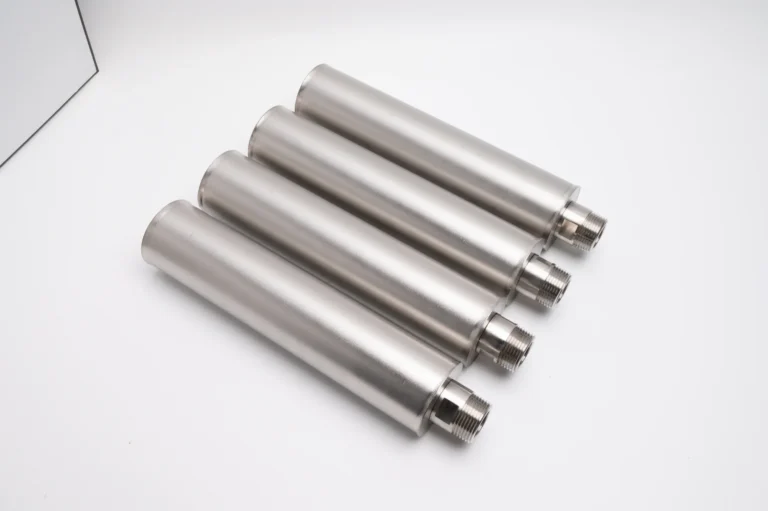
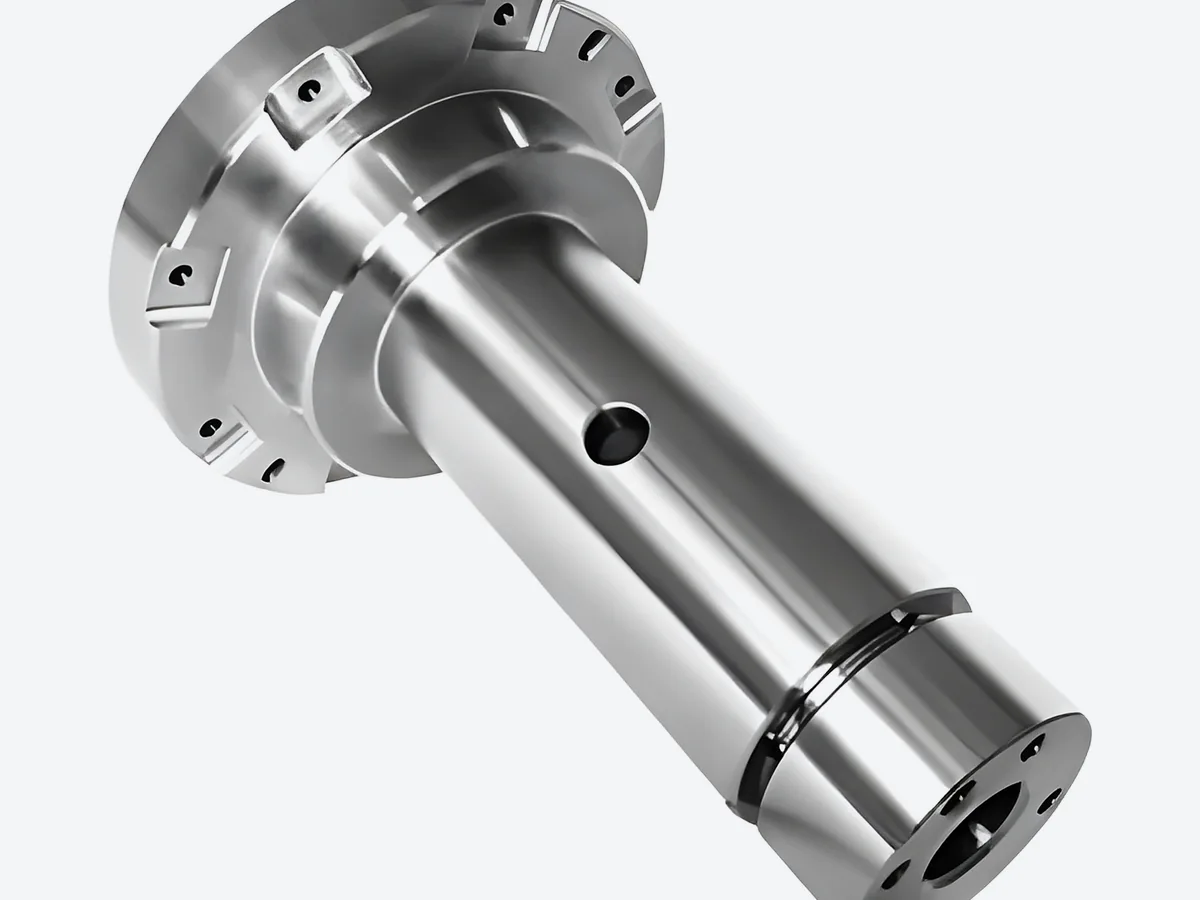
Titanium end caps, collector tubes, and support rings for sintered metal filter assemblies. These parts interface with sintered porous media and require controlled surface finishes on sealing faces to ensure leak-free joints.
Post-Machining Surface Treatments
As-machined titanium is already corrosion-resistant, but several post-machining treatments are used depending on the application:
- Pickling or chemical cleaning: Acid cleaning is used to remove embedded iron contamination, shop residue, and heat tint where required by the application. The exact chemistry should be agreed based on the titanium grade, surface-finish target, and downstream service conditions.
- Electropolishing: Removes a thin surface layer electrochemically, reducing Ra by roughly 50% and creating a smooth, easy-to-clean surface. Common for pharmaceutical and semiconductor applications.
- Anodizing (Type II or Type III): Thickens the oxide layer to 0.5-5 micrometers, improving wear resistance and producing interference colors (blue, purple, gold) for identification or aesthetic purposes. Not a hard coating — titanium anodizing improves galling resistance but does not add significant hardness like aluminum hard anodizing does.
- PVD coatings (TiN, TiAlN): For wear-critical applications like valve seats. Adds a hard layer (HV 2000+) over the titanium substrate.
What to Include on Your Drawing
A complete specification for CNC machined titanium parts should include:
- Material grade and applicable standard (e.g., “Ti Grade 5 per ASTM B348”)
- Dimensional tolerances on all critical features
- Surface finish requirements (Ra values on relevant surfaces)
- Thread standard and class (e.g., M12x1.75-6H)
- Post-machining treatment (passivation, electropolishing, anodizing)
- Inspection requirements (CMM report, material test certificate 3.1)
FILTURE manufactures CNC machined titanium parts in both Grade 2 and Grade 5, from prototype quantities to production runs. Our Baoji facility operates CNC turning and milling centers equipped for titanium processing with high-pressure coolant systems. View our full range of titanium machined parts, or contact us with your drawing for a quotation.