PEM water electrolysis is one of the more demanding operating environments for porous media. The membrane electrode assembly sits in an acidic, oxidizing environment at potentials above 1.6 V — conditions under which carbon-based materials on the anode side can degrade rapidly. Titanium fiber felt has therefore become a standard porous transport layer (PTL) material for PEM electrolyzer anodes because it offers the corrosion resistance that carbon cannot provide in that service.
This article covers the material properties that matter for PTL and GDL selection, the specifications available, and the trade-offs involved in choosing titanium fiber felt for electrolyzer applications.
What Titanium Fiber Felt Actually Is
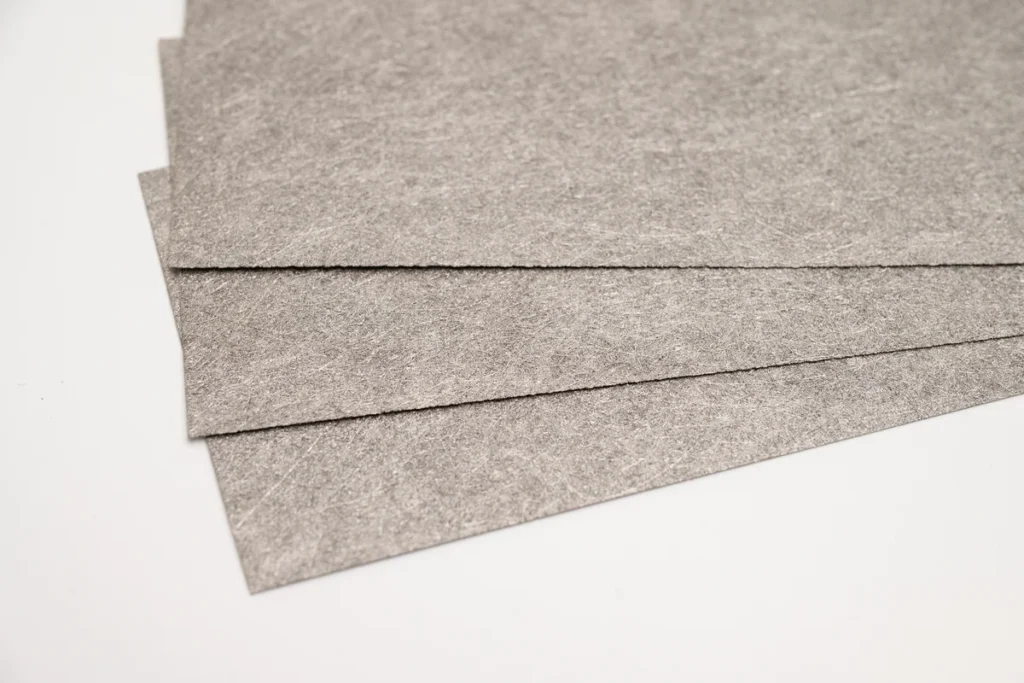
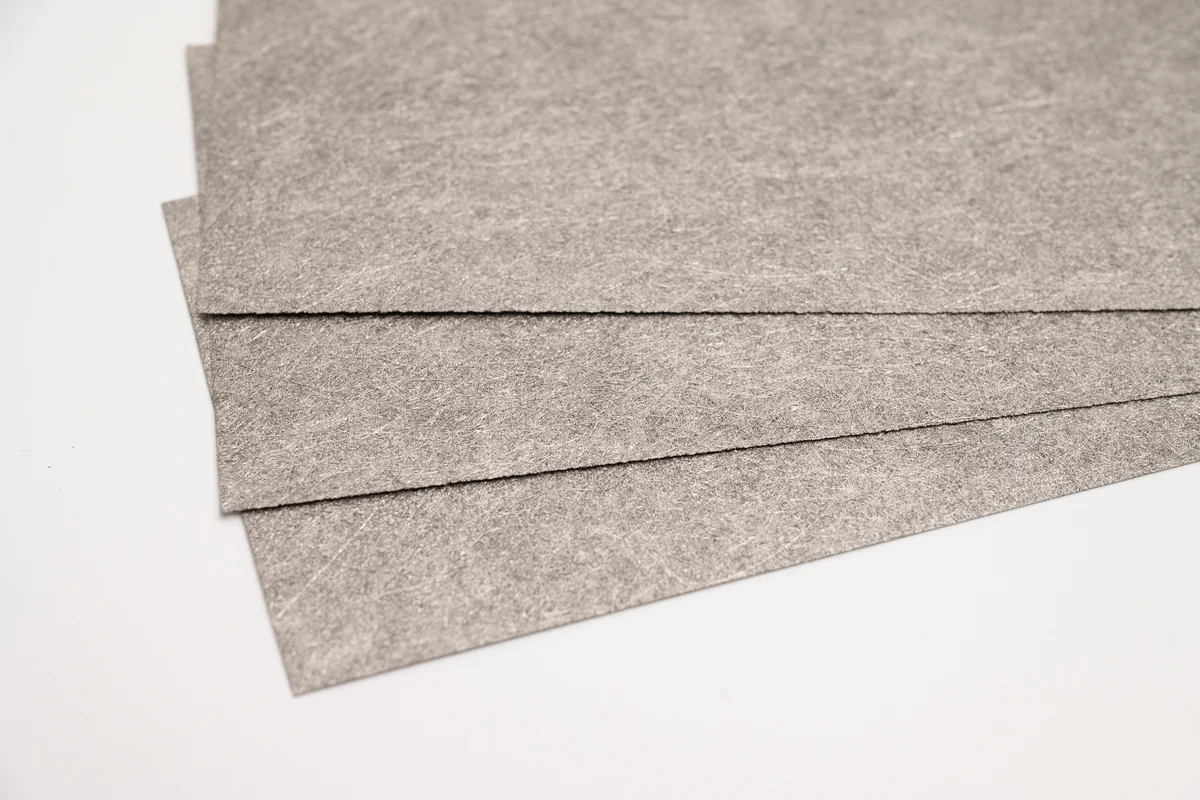
Titanium fiber felt is a non-woven mat of sintered titanium fibers — typically Grade 1 or Grade 2 CP (commercially pure) titanium. Individual fibers are drawn or melt-spun to diameters of 20–40 µm, then laid into a random three-dimensional web and vacuum-sintered at 1000–1200 °C. The sintering bonds fibers at their contact points, producing a self-supporting porous sheet with interconnected open porosity.
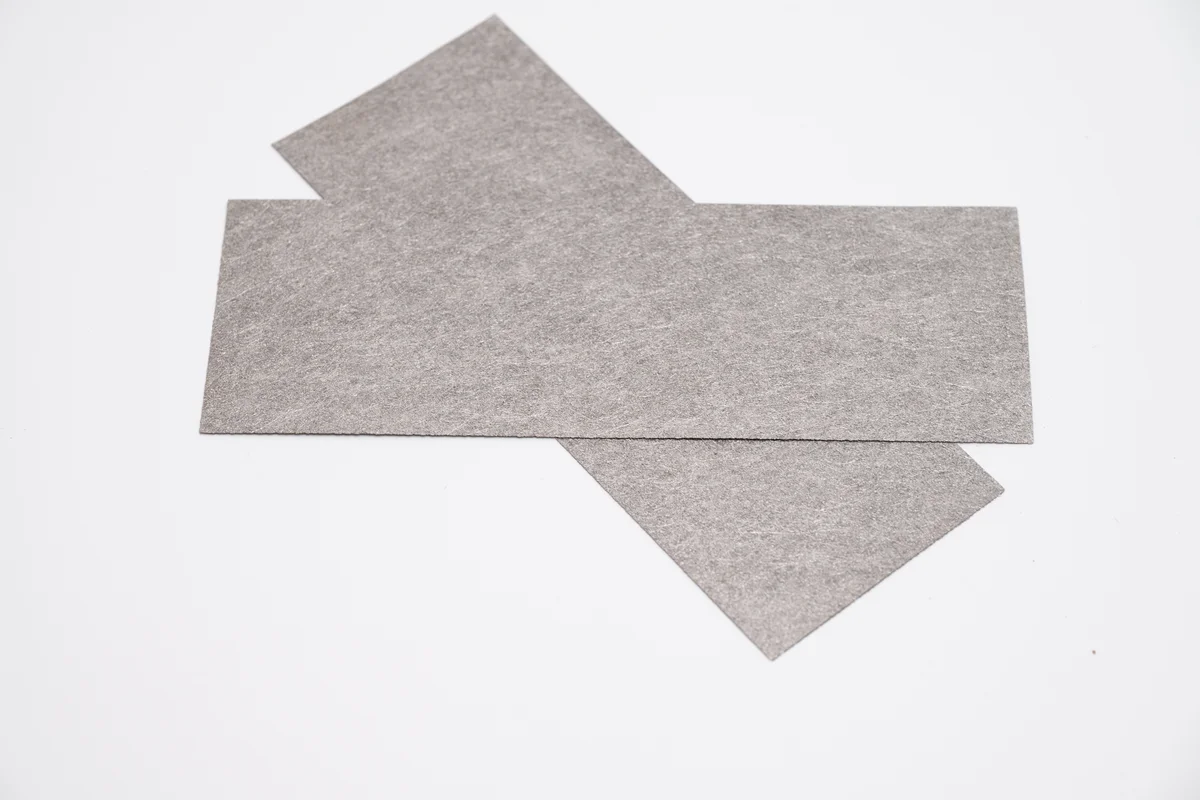
The result is distinct from woven mesh or etched foil: fiber felt has a tortuous, three-dimensional pore network rather than straight-through channels. This matters for electrolyzer performance because it promotes uniform gas-liquid distribution across the catalyst layer.
Key Specifications
Material: CP Titanium Grade 1 / Grade 2 (ASTM B265 base)
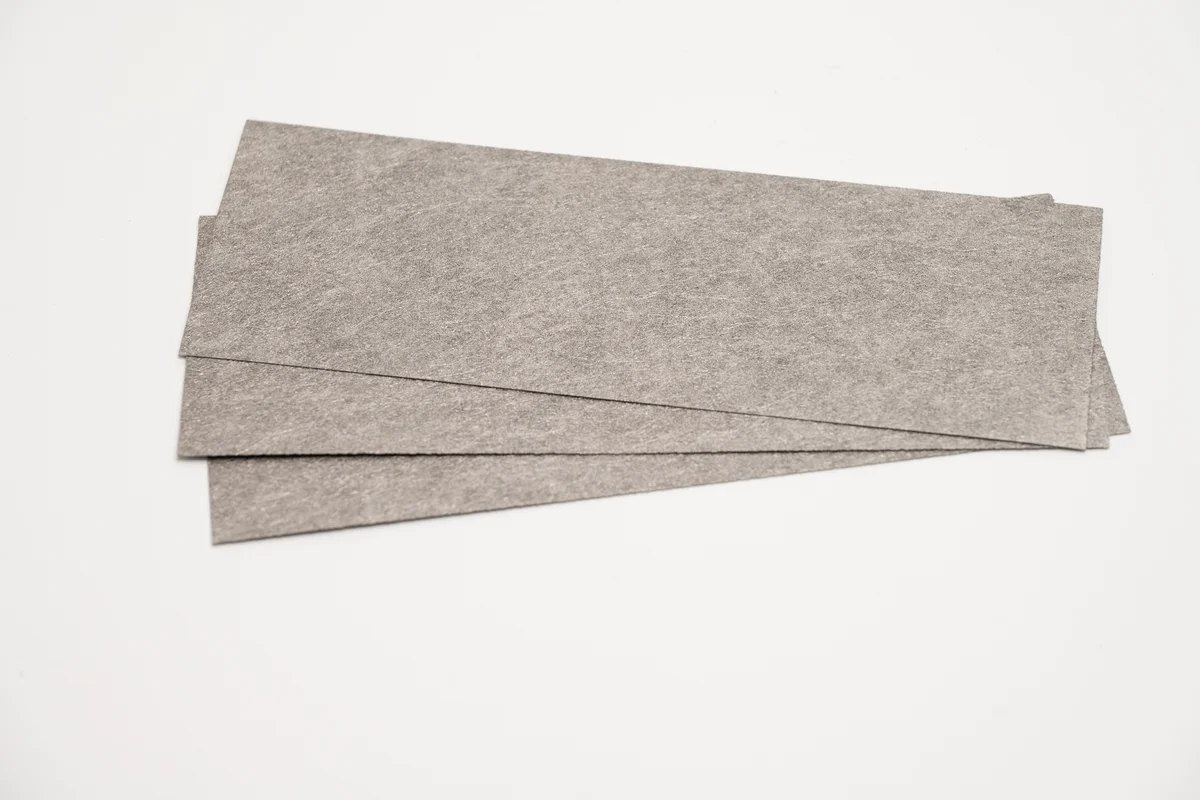
Fiber diameter: 20–80 µm (commonly 20 µm or 50 µm)
Porosity: 70–80%
Thickness: 0.3–5 mm (typical PTL range: 0.3–1.0 mm)
Mean pore size: 5–80 µm (tunable via fiber diameter and compaction)
Maximum pore size: specify the target range and a validated measurement method: 10–120 µm depending on grade
Sheet size: Up to 300 × 500 mm standard; custom cuts available
Electrical resistivity: Through-plane area-specific resistance <10 mΩ·cm² (compressed at 1 MPa)
Role in a PEM Electrolyzer
In a PEM water electrolyzer, the PTL sits between the flow field plate and the anode catalyst layer. It has to do several things simultaneously:
- Distribute water — Feed water must reach the entire catalyst surface uniformly. The pore network in fiber felt provides capillary-driven distribution without requiring high differential pressure.
- Remove oxygen gas — Oxygen bubbles generated at the anode catalyst must escape through the PTL to the flow channels. If gas accumulates, it blocks active catalyst sites and increases local current density. The interconnected porosity of fiber felt provides multiple escape paths.
- Conduct electrons — The PTL carries current from the catalyst layer to the bipolar plate. Sintered fiber-to-fiber contacts provide metallic conductivity paths. Low contact resistance is critical — every milliohm of added resistance means more waste heat at high current densities (1–3 A/cm²).
- Mechanical support — The membrane (typically Nafion, 50–180 µm thick) is soft and prone to creep under compression. The PTL must support it without punching through. Fiber felt’s fine surface texture is more membrane-friendly than coarse mesh or perforated sheet.
Why Not Carbon Paper?
On the cathode side of a PEM fuel cell, carbon paper or carbon cloth works well as a GDL — the reducing environment at ~0 V vs. RHE is relatively benign for carbon. But the PEM electrolyzer anode operates at 1.6–2.0 V vs. RHE in a highly acidic Nafion environment (equivalent pH ~1). Under these conditions, carbon can oxidize and lose structural integrity quickly, which is why it is generally avoided on the anode side of PEM electrolyzers.
Titanium forms a stable TiO₂ passive layer that withstands these potentials in acidic media. Corrosion rates for CP Ti in PEM anode conditions are effectively negligible over thousands of hours of operation.
Porosity and Pore Size: What to Specify
Porosity
Higher porosity (70–80%) improves water and gas transport but reduces mechanical strength and electrical conductivity. Lower porosity (50–60%) improves contact resistance and structural rigidity but may limit mass transport at high current densities. For most PEM electrolyzer stacks operating at 1–2 A/cm², a porosity of 60–75% is a reasonable starting range.
Pore Size
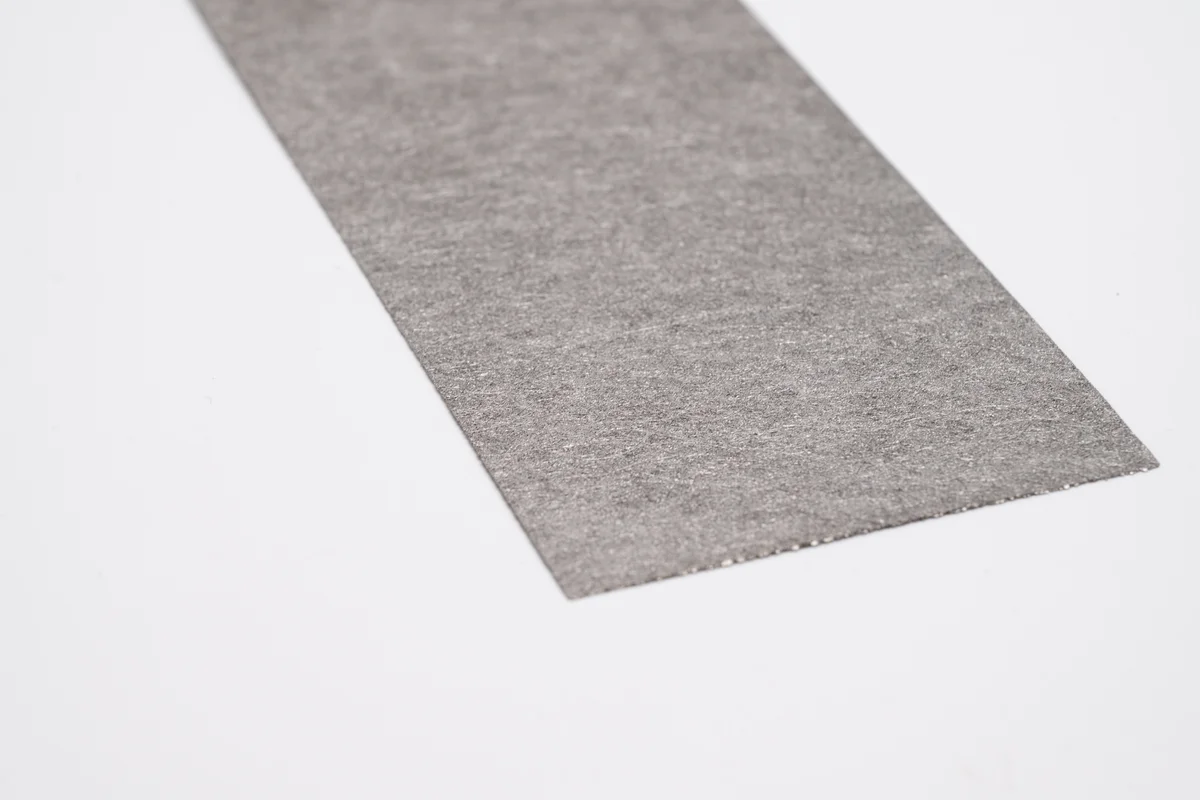
Smaller pores (5–20 µm) provide better capillary pressure for water management and a smoother surface for membrane contact. However, very fine pores can trap oxygen bubbles and increase mass transport overpotential. Larger pores (40–80 µm) allow easier gas escape but may create uneven pressure on the catalyst layer. Pore size is controlled by fiber diameter and sintering compaction — finer fibers packed more densely yield smaller pores.
Thickness
Thinner PTLs (0.2–0.5 mm) reduce through-plane resistance and stack thickness but are harder to handle and may not distribute flow uniformly from widely spaced flow channels. Thicker PTLs (0.5–1.0 mm) improve in-plane distribution but add resistance and weight. Most commercial stacks use 0.25–0.5 mm for small cells and 0.5–1.0 mm for larger active areas.
Surface Coatings for Research and Performance
Bare titanium fiber felt works well as a PTL, but the native TiO₂ oxide layer adds some contact resistance. For research applications and high-performance stacks, coatings can help:
- Platinum (Pt) coating — Reduces interfacial contact resistance between PTL and catalyst layer. Typical loading: 0.05–0.5 mg/cm². Applied by sputtering, electrodeposition, or atomic layer deposition.
- Iridium (Ir) or iridium oxide (IrO₂) coating — Acts as both a contact resistance reducer and an additional catalyst layer. Relevant for bifunctional electrode research.
- Ruthenium (Ru) coating — Used in some catalyst screening studies. Lower cost than Ir but less stable at high anodic potentials.
FILTURE supplies fiber felt substrates suitable for these coatings. Surface preparation (cleaning, etching) can be specified to match your deposition process.
Ordering Considerations
When specifying titanium fiber felt for PEM electrolyzer work, the critical parameters to define are: porosity target (±5%), thickness (±0.05 mm), fiber diameter, and maximum pore size. If you are working at the research stage, smaller sheets (50 × 50 mm or 100 × 100 mm) cut to your cell geometry are typical. For stack prototyping, larger sheets with precise tolerance control become important.
For detailed specifications and pricing on titanium fiber felt for PEM electrolysis, see the titanium fiber felt product page or contact our engineering team with your cell design parameters.