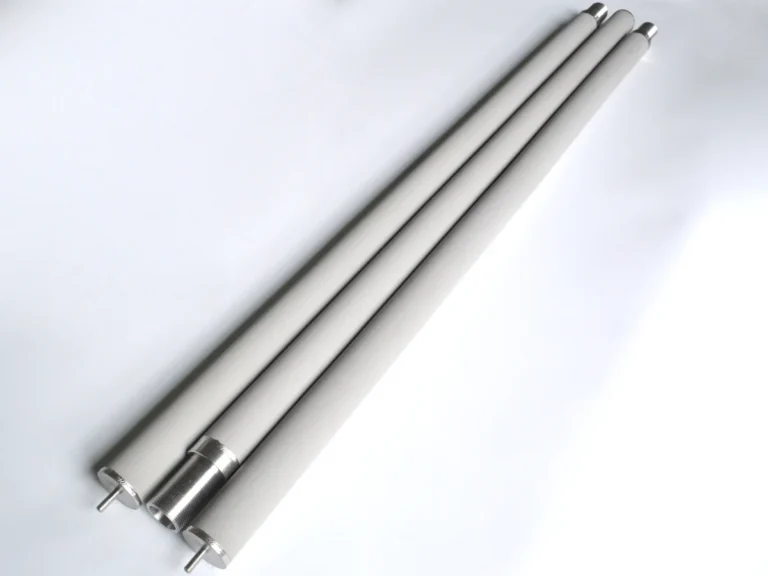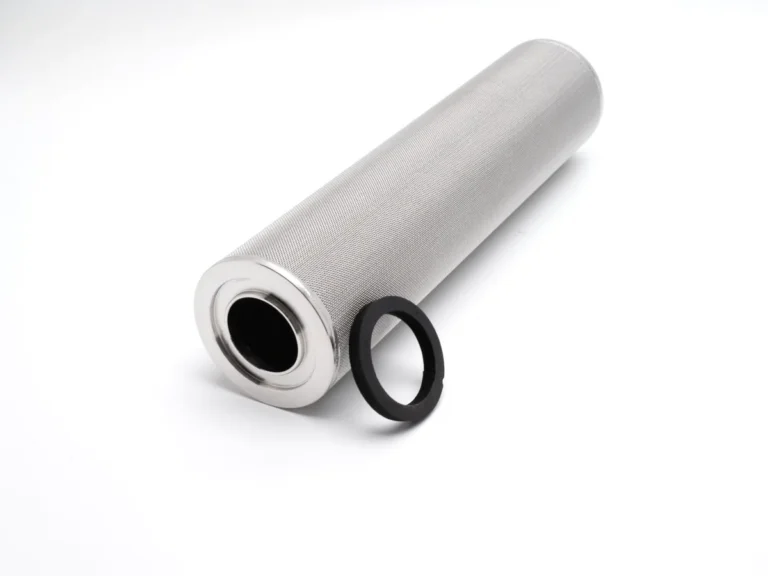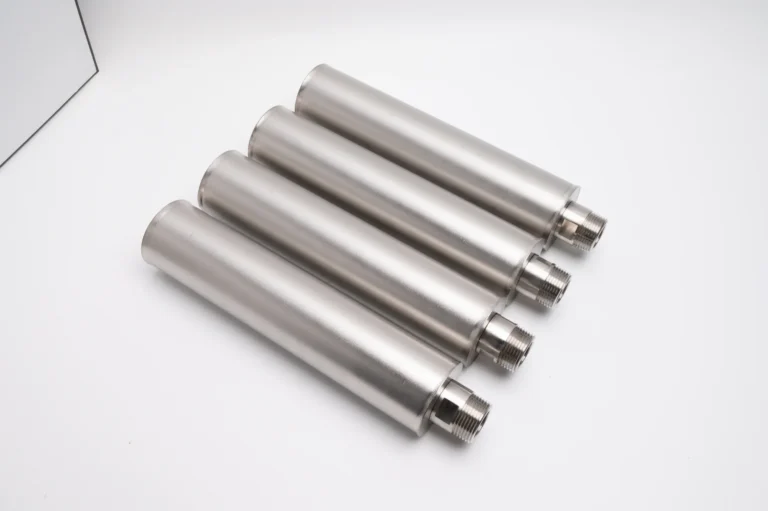
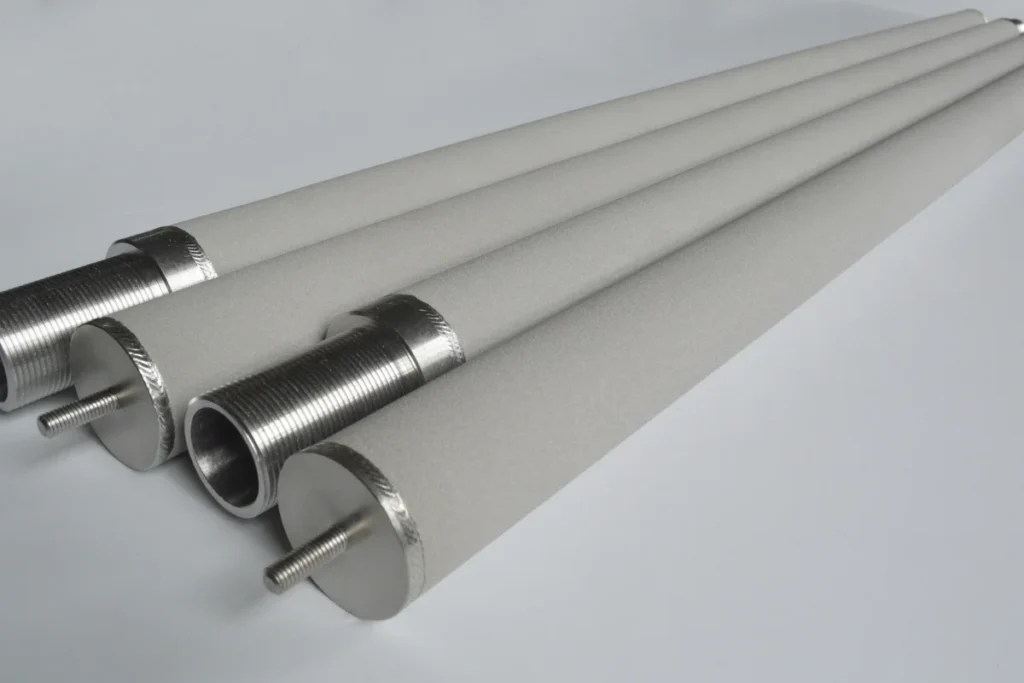
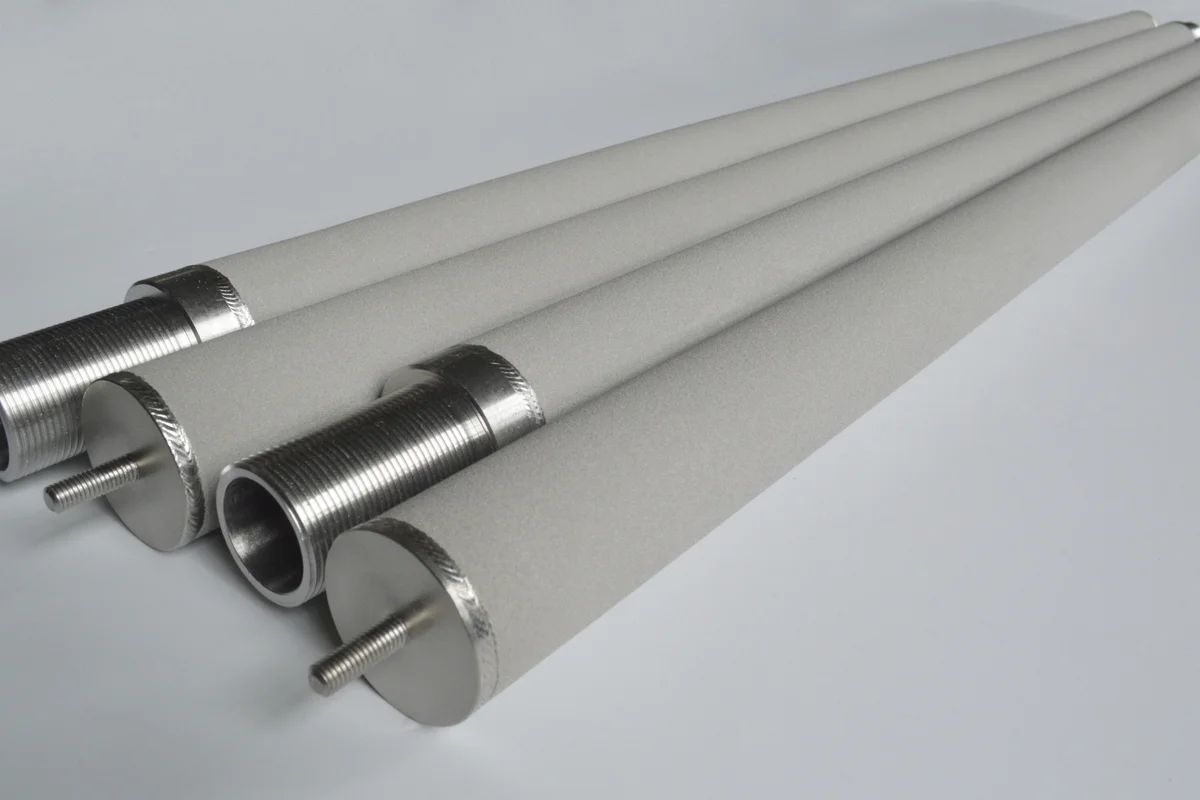
Sintered stainless steel powder filters are one of the most widely used types of porous metal filter elements in industrial process filtration. They are often selected for temperatures and cleaning regimes that are difficult for many polymer filter elements to handle, and unlike disposable cartridges, they can usually be cleaned and reused many times when the service conditions are suitable. This post covers how they are made, what they can do, and where they fit in a filtration system.
How Sintered Powder Filters Are Made
The manufacturing process starts with 316L stainless steel powder — spherical or irregular particles in a controlled size distribution. The powder is loaded into a mold (typically a cylindrical die for tube-shaped elements) and compressed under controlled pressure to form a green body. This compact is then sintered in a vacuum or hydrogen atmosphere furnace at 1000-1200°C, just below the melting point of the alloy.
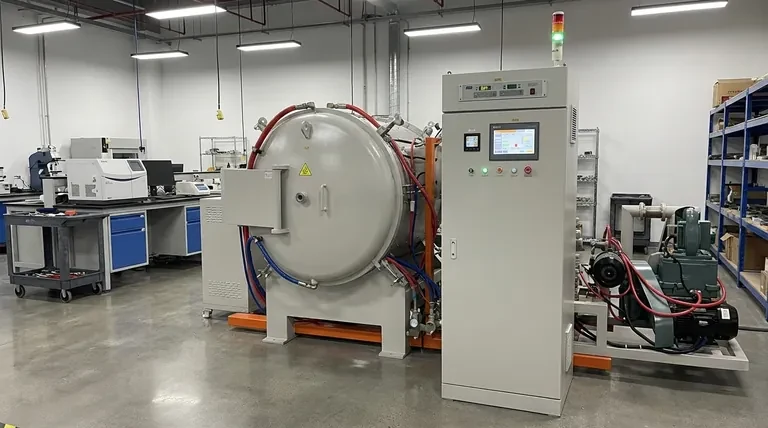
During sintering, adjacent powder particles form metallurgical bonds at their contact points through solid-state diffusion. The result is a rigid, self-supporting structure with a network of interconnected pores running through the entire wall thickness. Unlike woven mesh or perforated sheet, the pore channels in sintered powder are tortuous — fluid must follow a winding path through the filter wall, which is what gives these elements their high particle capture efficiency.
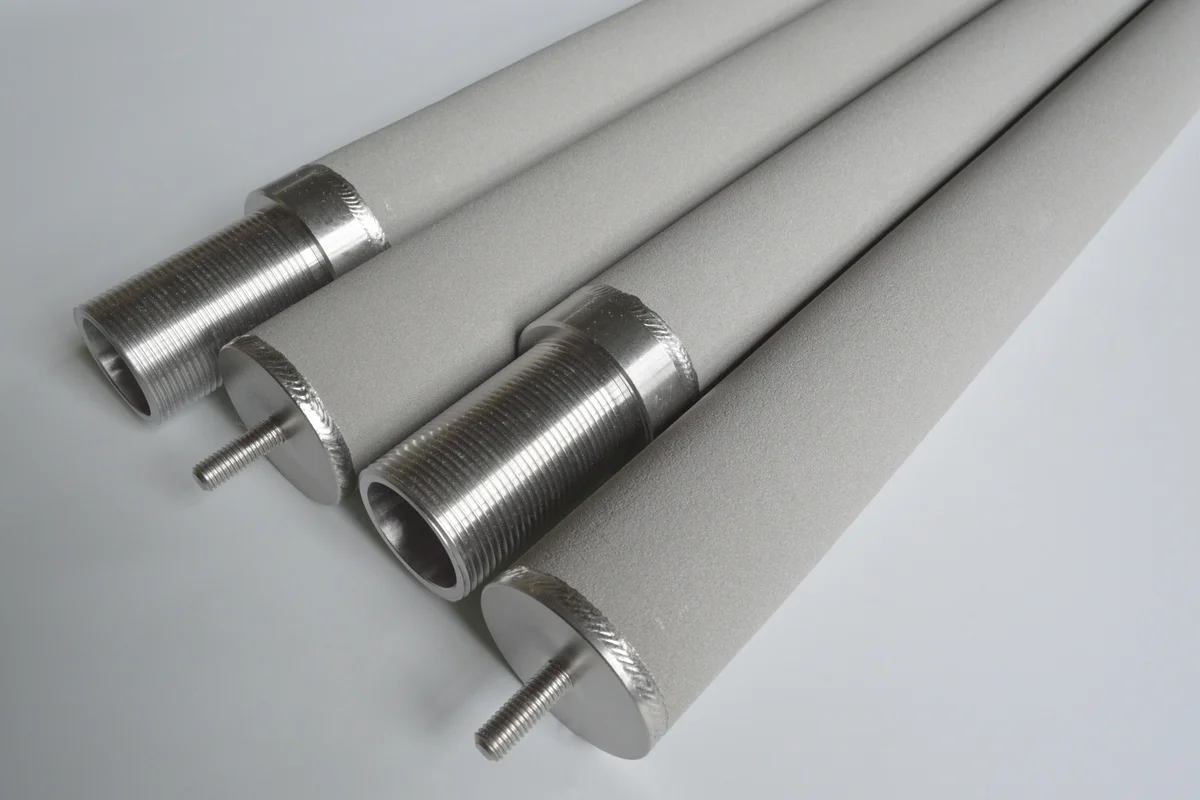
After sintering, elements are machined to final dimensions. End caps, flanges, or threaded fittings can be welded directly to the porous body since it is the same base alloy.
Key Specifications
Material: 316L stainless steel (304, 304L, 310S available on request)
Pore size range: 0.22 – 100 µm
Max operating temperature: 400°C
Max differential pressure: approximately 0.6 MPa (wall thickness dependent)
Porosity: 30 – 45%
Standard tube OD: 20 – 200 mm
Length: 100 – 1200 mm
Wall thickness: 1 – 10 mm
Where Sintered Powder Filters Are Used
Catalyst Recovery
In chemical reactors that use precious metal catalysts (platinum group metals, nickel, palladium), losing catalyst fines to the process stream is expensive. Sintered powder elements in the 1-10 µm range capture catalyst particles from the product stream while allowing the process fluid to pass. The captured catalyst can be recovered during backwash and returned to the reactor. Because the filter operates at process temperature, there is no need to cool the stream before filtration.
Industrial Gas Filtration
Sintered powder elements filter particulate from compressed air, nitrogen, hydrogen, and other process gases. At fine pore ratings such as 0.22-1 µm, they are used in gas filtration applications that require very low particle carryover, subject to the validation standard and system design used by the end user. Their mechanical strength means they tolerate the pressure cycling that comes with compressed gas systems better than many polymer elements used in comparable service.
Pharmaceutical Vent Filters
Reactor vessels, dryers, and storage tanks in pharmaceutical plants need vent filters that allow pressure equalization while helping maintain sterile conditions and preventing product powder from escaping. Sintered SS powder elements at 0.22 µm rating are used in this role when the housing design, sealing arrangement, and validation protocol support the application. They also tolerate repeated steam-in-place (SIP) sterilization cycles at 121-134°C, which can be a significant advantage over polymer vent filters with more limited steam-cycle life.
Solvent and Chemical Recovery
In processes that recycle solvents or recover valuable chemicals from waste streams, sintered powder filters remove suspended solids before distillation or reuse. The broad chemical compatibility of 316L handles most organic solvents, mild acids, and caustic solutions. Operating temperatures up to 400°C allow filtration of hot streams without cooling, which saves energy and simplifies the process flow.
Sintered Powder vs. Sintered Mesh: How to Choose
Both sintered powder and sintered mesh elements are made from 316L stainless steel and both are backwashable. The difference is in pore structure and how that affects performance.
Sintered powder has a tortuous pore path with a wide distribution of pore sizes through the wall thickness. This gives it higher dirt-holding capacity — it traps particles throughout the depth of the filter wall, not just at the surface. Powder elements reach finer pore ratings (down to 0.22 µm) that sintered mesh cannot practically achieve. However, this depth filtration mechanism also means higher initial pressure drop for a given flow rate.
Sintered mesh is made from multiple layers of woven wire cloth diffusion-bonded together. The filtration is primarily surface capture, with a sharper particle size cutoff. This means higher flow rates per unit area and lower clean pressure drop — but the element loads up faster in high-solids applications because all the captured material sits on the surface. Sintered mesh filter ratings typically start at 1 µm and go up to 5,000 µm.
As a general rule: choose sintered powder when you need fine filtration (below 5 µm), when the contaminant load is moderate, or when the application requires sterile-grade ratings. Choose sintered mesh when flow rate matters more than absolute pore size, when the filtration rating is coarse (above 10 µm), or when you need rapid, efficient backwashing of high-solids streams.
Cleaning and Service Life
Sintered powder elements are cleaned by backwashing — reversing flow direction to dislodge captured particles. For stubborn contaminants, ultrasonic cleaning in a suitable solvent or mild acid soak will restore most of the original permeability. With proper cleaning and no mechanical damage, a sintered SS powder element can last 5-10 years in continuous service. This long service life is the main economic argument against disposable cartridges in applications where the operating conditions allow it.
If you are specifying sintered powder filter elements for a new system or replacing existing filters, you can review our full SS sintered powder filter product page for dimensional options and ordering information. For corrosive media that exceed the limits of 316L, consider our titanium sintered powder filter instead.