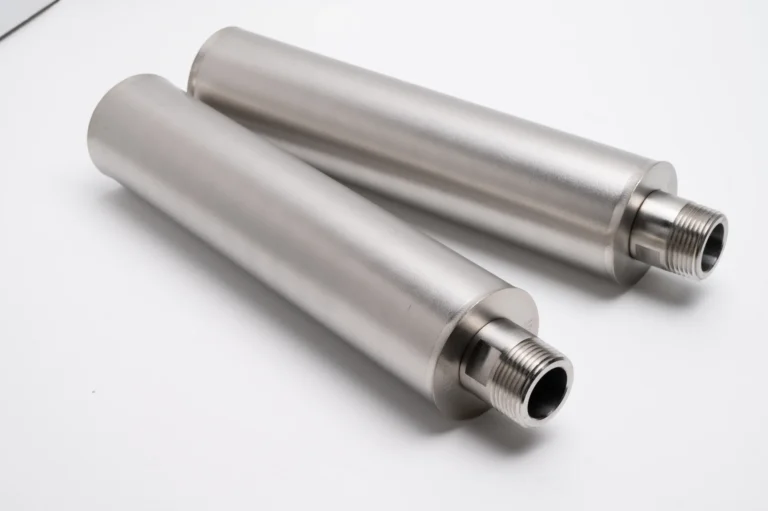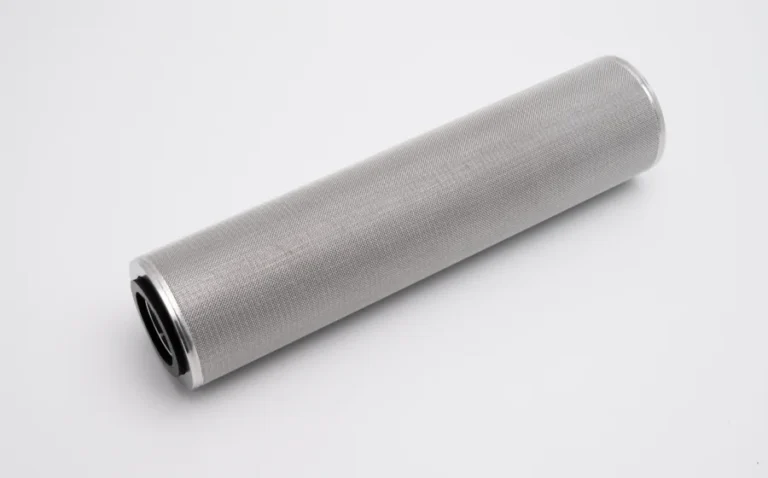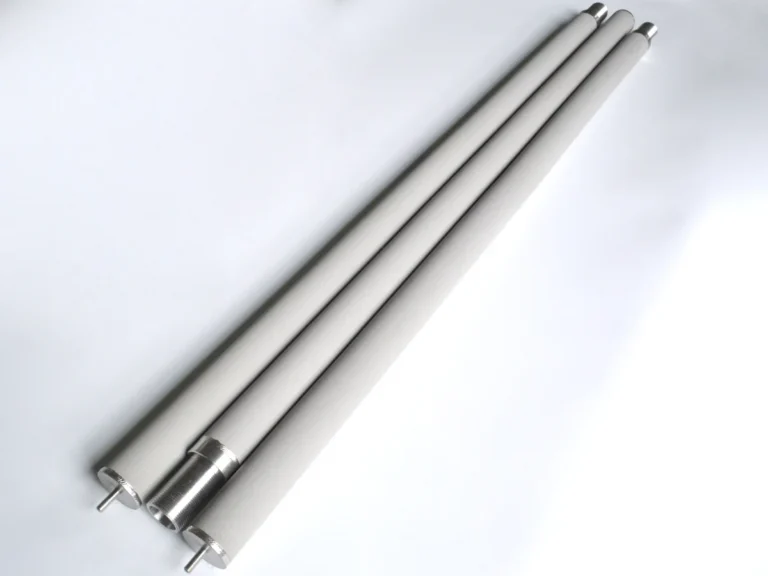
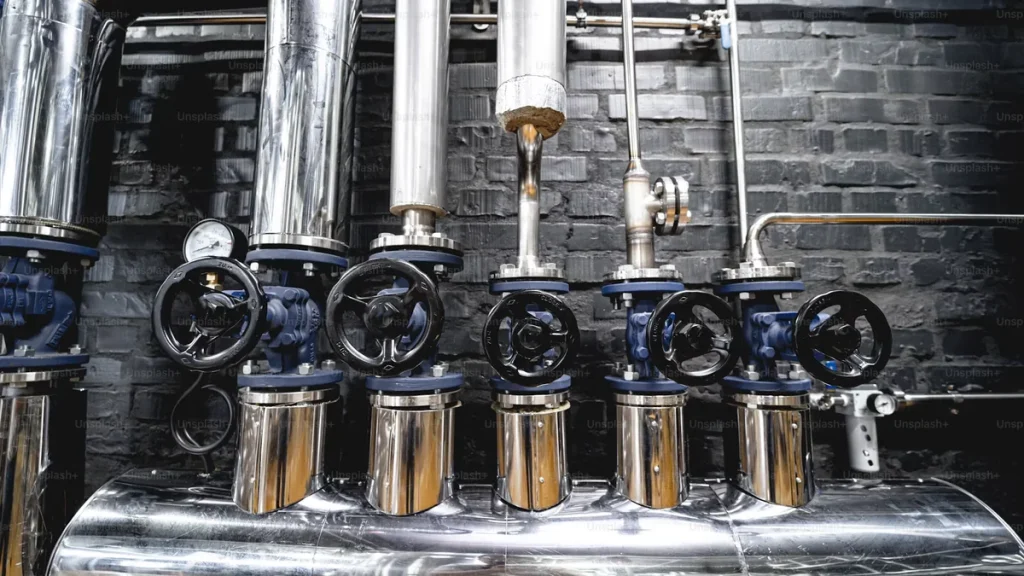
Some industrial environments are hard on filter cartridges. High temperatures, aggressive chemicals, high pressure, radiation, and heavy particulate loading can destroy standard filter media in weeks.
Sintered stainless steel wire mesh cartridges are designed specifically for these conditions. This article explains why — covering the manufacturing process, the specific environments where they perform best, and the long-term cost case for using them.
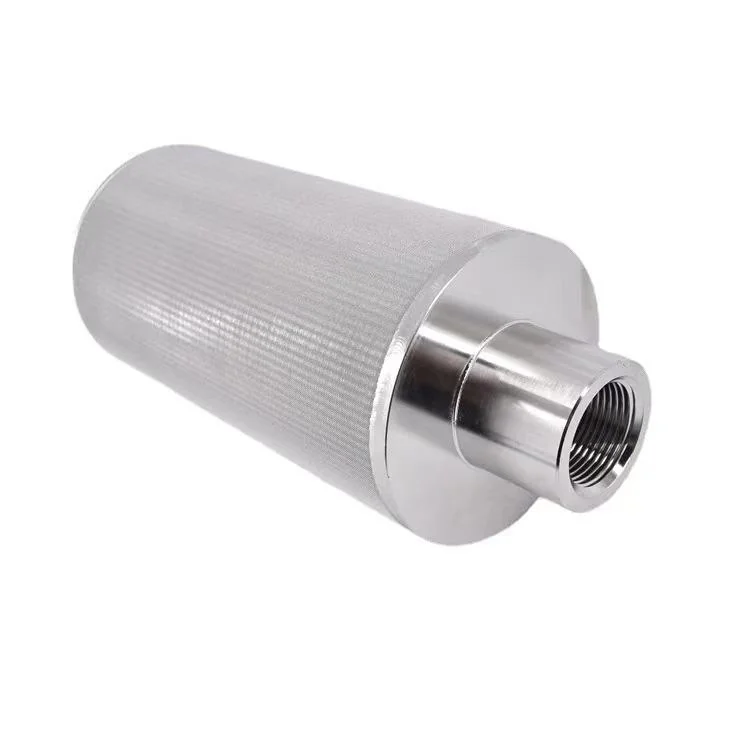
Why Sintering Makes the Difference
Standard wire mesh cartridges are made by weaving wire into a screen — the wire intersections aren’t bonded, they’re just held by tension. Under repeated pressure, thermal cycling, or aggressive backwashing, these intersections can shift. Pore size changes. Filtration performance drifts.
Sintered cartridges are different. Multiple mesh layers are stacked and placed in a vacuum furnace at up to 1100°C. At that temperature, the contact points between wires in adjacent layers fuse together through solid-state diffusion. The result is a single rigid porous structure — not a stack of separate layers.
The standard five-layer design:
- Outer protection layers — coarser mesh, provides structural support, catches large particles
- Filtration control layers — precision mesh, defines the actual micron rating
- Inner support layer — maintains structural integrity under reverse flow during backwash
Define pore-size acceptance and any cartridge-integrity requirement in the product specification and validate the method for that design and process; no single pore measurement establishes cartridge integrity.
Applications and Selection Requirements
Chemical Processing with Aggressive Media
Confirm material compatibility for the actual medium, concentration, temperature, exposure and cleaning chemicals; a stainless steel grade is not universally suitable for all chemicals or seawater conditions.
Typical applications: catalyst recovery, process stream filtration, chemical solvent clarification.
High-Temperature Gas Filtration
Confirm continuous and intermittent temperature limits for the exact assembly, alloy, seals, medium, pressure and exposure time using applicable test evidence; no universal cartridge temperature rating is stated here.
Agree the qualification, inspection and acceptance plan for the exact assembly and application, and review the available test records before making a performance or compliance claim.
Pharmaceutical Manufacturing
Steam sterilization or sanitization requires confirmation for the exact assembly, alloy, seals and medium, with validated temperature, exposure time, cycle count and post-cycle acceptance evidence.
Metal construction does not by itself prove zero particle release or contamination; verify cleanliness, surface condition and downstream particle limits for the complete assembly.
Hydraulic System Protection
Confirm operating pressure and allowable differential pressure separately for the complete assembly, flow direction, temperature and medium; use the agreed design and test evidence.
The rugged construction handles vibration and pressure surges that destroy conventional pleated media. Equipment operators who switch to sintered metallic cartridges typically report extended intervals before hydraulic component wear becomes a maintenance issue.
Food and Beverage Processing
Confirm the applicable product-contact requirements, cleaning compatibility, surface finish and order-specific documentation. Alloy choice alone does not establish FDA or other regulatory compliance, and no approval or certificate is promised here.
Beverage clarification, yeast removal in fermentation, and water treatment in bottling plants are all common applications.
Water Treatment — Municipal and Industrial
Municipal water treatment plants deal with variable contamination loads. Seasonal runoff, algae blooms, or industrial discharge changes what’s in the water. Sintered cartridges handle fluctuating particulate without blinding (sudden severe clogging) as readily as fiber depth filters do.
The backwash capability is significant: you clean the cartridge in place without removing it, which matters in large-scale installations where taking a filter offline has operating consequences.
Aerospace and Defense
Agree the qualification, inspection and acceptance plan for the exact assembly and application, and review the available test records before making a performance or compliance claim.
Material Selection for Harsh Environments
Grade
When to use it
SS304
General duty — water, non-aggressive chemicals, moderate temperatures
SS316L
Chloride environments, seawater, chemical processing — better pitting resistance
904L
Highly aggressive acid service, seawater desalination
Hastelloy C-276
Severe corrosion environments where 316L or 904L are insufficient
The ‘L’ in 316L matters in harsh environments: the low carbon content prevents sensitization during welding and high-temperature operation, preserving corrosion resistance at weld zones.
Evaluating Long-Term Costs
Sintered SS wire mesh cartridges cost more than disposable options upfront. The total cost picture over 2–3 years usually looks very different:
- Reusable design: clean and restore rather than replace
- Select a compatible cleaning method and verify post-cleaning flow, pressure drop and required retention against agreed acceptance criteria; recovery and reuse are not guaranteed.
- Service life and reuse count depend on fouling, corrosion, operating loads and cleaning; confirm replacement criteria from application-specific inspection and performance records.
- Fewer changeouts = less maintenance labor and less planned downtime
- Predictable maintenance schedule instead of reactive emergency changeouts
Include waste handling, disposal, changeout labor and downtime for both options.
Installation and Maintenance
A few practices that extend service life:
- Torque end caps to manufacturer specification — overtightening can distort the seal
- Verify gasket material compatibility with the process fluid before installation
- Select a compatible cleaning method and verify post-cleaning flow, pressure drop and required retention against agreed acceptance criteria; recovery and reuse are not guaranteed.
- Use the right cleaning method for the fouling type — backflush for surface deposits, ultrasonic for embedded particles, chemical soak for scale
- For critical service, use a post-cleaning inspection and performance-verification plan agreed for the process
Frequently Asked Questions
What’s the difference between sintered and pleated wire mesh?
Define pore-size acceptance and any cartridge-integrity requirement in the product specification and validate the method for that design and process; no single pore measurement establishes cartridge integrity.
How do cleaning cycles affect filtration performance?
Select a compatible cleaning method and verify post-cleaning flow, pressure drop and required retention against agreed acceptance criteria; recovery and reuse are not guaranteed.
Can the same cartridge filter both gas and liquid?
Yes, sintered SS cartridges handle both. The flow rate and pressure parameters differ between gas and liquid service — gas filtration typically runs at higher volumetric flow with lower pressure drop. If you’re switching a cartridge between gas and liquid service, verify that the flow conditions in both cases are within the cartridge’s rated operating range.
Talk to FILTURE About Your Filtration Needs
Every filtration job is different. If you’re not sure which cartridge fits your system, see the full specifications for our SS Pleated Mesh Filter Element and SS Sintered Mesh Filter Element, or request a quote with your dimensions, micron rating, and operating conditions.
Prefer email? Reach us at sam.young@filturemetal.com — we’ll get back to you with a straight answer, no sales pitch.