Choosing a filter cartridge for an industrial system isn’t just about which one fits the housing. It’s about what happens six months from now — whether the filter is still running clean, whether it’s been replaced three times, or whether it caused a production shutdown.
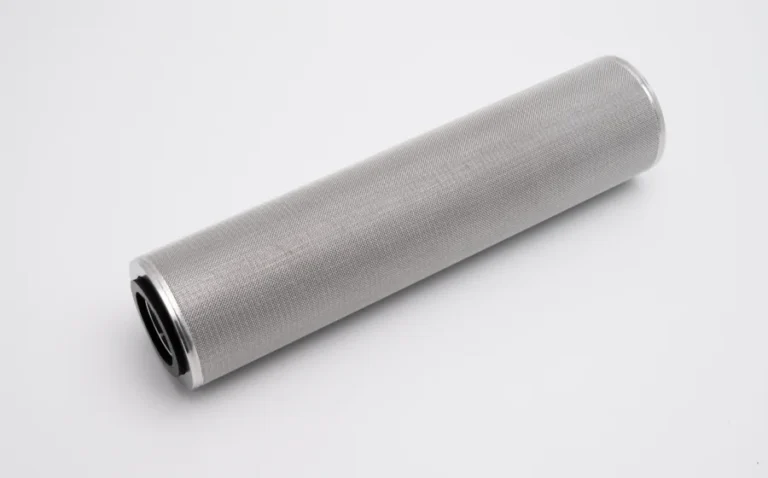
Here’s why pleated SS wire mesh cartridges are the go-to choice for demanding industrial filtration.
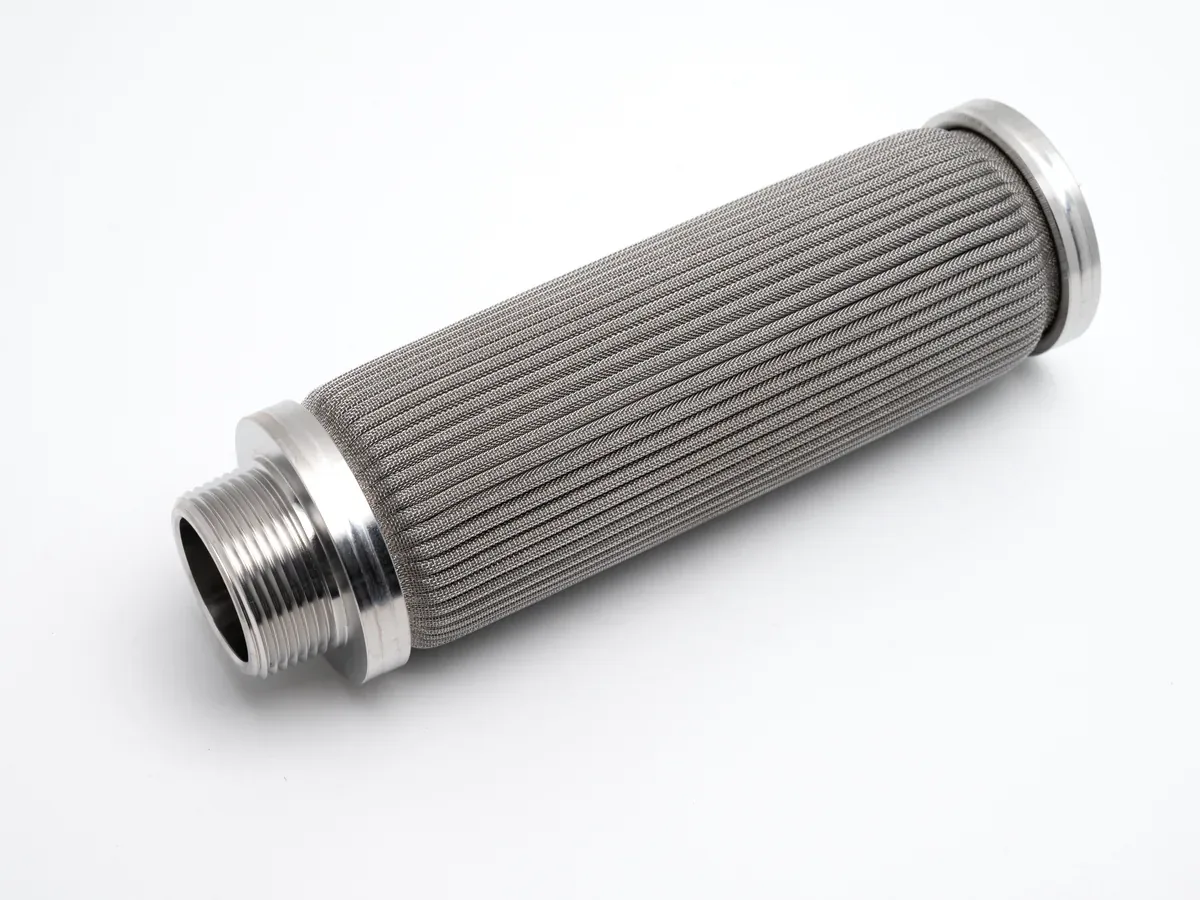
1. Assessing Structural Durability
Define pore-size acceptance and any cartridge-integrity requirement in the product specification and validate the method for that design and process; no single pore measurement establishes cartridge integrity.
What this means practically:
- Confirm alloy, seals, medium and duty against assembly-specific temperature evidence.
- Confirm operating pressure and allowable differential pressure separately for this assembly.
- Confirm material compatibility for the actual medium, concentration, temperature, exposure and cleaning chemicals; a stainless steel grade is not universally suitable for all chemicals or seawater conditions.
- No adhesive, no binder, no organic component to degrade over time
Metal construction does not by itself prove zero particle release or contamination; verify cleanliness, surface condition and downstream particle limits for the complete assembly.
2. Filtration Area, Flow and Available Space
Pleating can increase filtration area within the same envelope; the usable increase depends on pleat geometry, spacing and flow conditions rather than a fixed percentage.
The practical effect:
- Higher flow rates without increasing pressure drop
- More dirt-holding capacity — the filter runs longer before it needs cleaning
- No need to upsize the filter housing to handle higher throughput
Engineers in high-volume processing applications — chemical plants, water treatment, polymer filtration — find that switching to pleated SS cartridges often eliminates the need for parallel filter housings they were running as a workaround.
3. Verifying Retention for the Application
- Nominal rating: most particles at the rated size are captured, but some pass through
- Define nominal or absolute retention in the product specification, including particle size, required capture efficiency, test method and operating conditions; the rating alone does not establish a universal capture percentage.
Define pore-size acceptance and any cartridge-integrity requirement in the product specification and validate the method for that design and process; no single pore measurement establishes cartridge integrity.
Multi-stage setups are also possible: a 100 μm pre-filter to remove coarse debris, followed by a 5 μm polishing filter. This protects the fine filter and extends the life of the whole system.
4. Evaluating Long-Term Operating Cost
Compare total cost for the same duty and throughput using confirmed purchase prices, replacement frequency, cleaning, validation, labor, downtime and waste costs; no fixed savings or payback period is guaranteed.
Here’s what drives that calculation:
- Service life and reuse count depend on fouling, corrosion, operating loads and cleaning; confirm replacement criteria from application-specific inspection and performance records.
- Select a compatible cleaning method and verify post-cleaning flow, pressure drop and required retention against agreed acceptance criteria; recovery and reuse are not guaranteed.
- Labor costs: Fewer changeouts mean less technician time spent on filter swaps and less planned downtime.
- Inventory: One stainless steel cartridge replaces multiple spares you’d otherwise need to keep on the shelf.
- Energy: Lower pressure drop means the pump does less work. In high-flow systems, this saving is measurable on the electricity bill.
For facilities where production downtime costs thousands of dollars per hour, the predictability of a cleanable metallic filter is worth a significant premium.
5. Confirming Temperature and Pressure Limits
Polymer-based filter media has a fundamental limitation: it softens, distorts, or chemically degrades at elevated temperatures. This rules it out entirely for many industrial processes.
Pleated SS wire mesh cartridges are designed for the conditions that eliminate polymer options:
- Validate cycle conditions, seals and post-cycle acceptance before SIP use.
- Confirm the continuous-duty limit for the specified assembly and medium.
- Confirm operating pressure and allowable differential pressure separately for this assembly.
- Cryogenic duty: verify low-temperature suitability of alloy, joints and seals.
- Agree the qualification, inspection and acceptance plan for the exact assembly and application, and review the available test records before making a performance or compliance claim.
For supercritical fluid processes and high-pressure hydrogen systems, where the combination of extreme temperature and pressure rules out virtually everything else, all-metal sintered construction is the standard solution.
Quick Reference: Application Selection Factors
Advantage
Best suited for
Durability
Chemical processing, oil & gas, offshore platforms
High flow capacity
Water treatment, polymer filtration, chemical plants
Filtration accuracy
Pharmaceuticals, fine chemicals, semiconductor manufacturing
Low TCO
Any high-volume application with frequent filter changes
Temperature/pressure resistance
Steam systems, hot oil, cryogenics, high-pressure hydraulics
Frequently Asked Questions
What micron ratings are available?
Standard wire mesh cartridges are available from 3 μm to 200 μm. If you need finer filtration — 0.2 μm to 2 μm — we recommend sintered metal powder or sintered fiber felt cartridges instead. The right choice depends on your fluid, flow rate, and required cleanliness level.
How many times can these be cleaned and reused?
Service life and reuse count depend on fouling, corrosion, operating loads and cleaning; confirm replacement criteria from application-specific inspection and performance records.
What cleaning method works best?
For surface-loaded particles, backwash with clean fluid is usually enough. For particles embedded deeper in the mesh, ultrasonic cleaning in a compatible solvent is more effective. Discuss your specific contaminant type with us and we’ll recommend the right protocol.
Talk to FILTURE About Your Filtration Needs
Every filtration job is different. If you’re not sure which cartridge fits your system, see the full specifications for our SS Pleated Mesh Filter Element and SS Sintered Mesh Filter Element, or request a quote with your dimensions, micron rating, and operating conditions.
Prefer email? Reach us at sam.young@filturemetal.com — we’ll get back to you with a straight answer, no sales pitch.