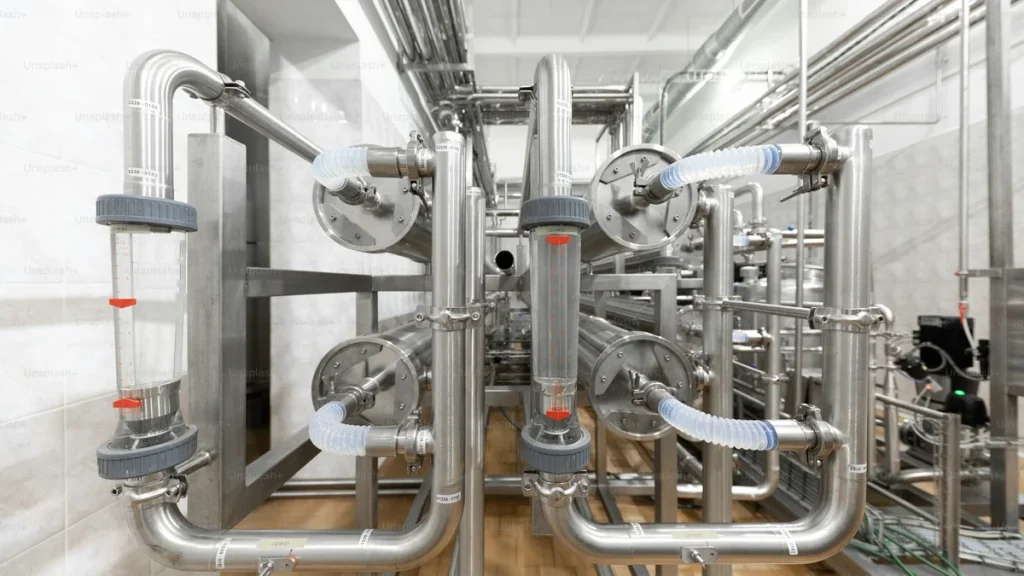
Water filtration sounds simple. In practice, the fluid is rarely just clean water — it’s produced water from oil wells, process water in chemical plants, cooling water in power stations, or purified water in pharma cleanrooms. Each application puts very different demands on the filter.
Sintered stainless steel wire mesh cartridges handle these demands where standard filters can’t. This article covers how they work, where they’re used, and what specs to look for.
Standard Technical Specifications
Parameter
Specification
Primary material
AISI 316L stainless steel (EN 1.4404)
Construction
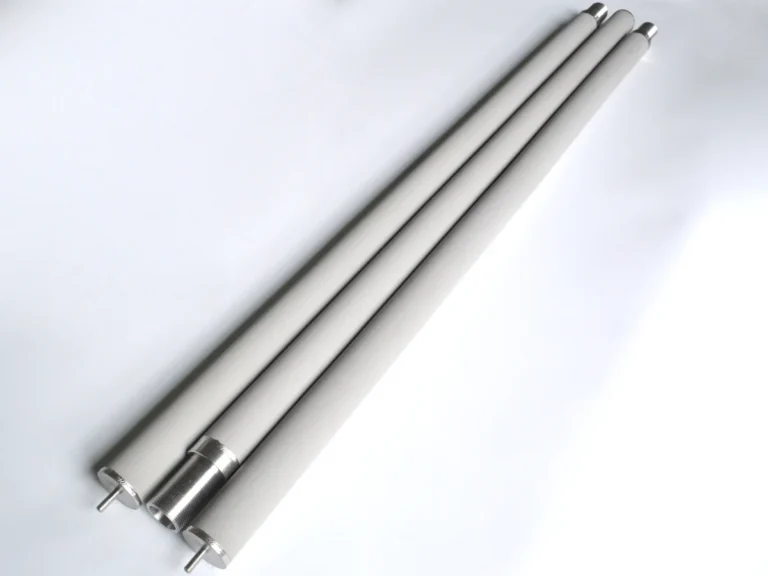
5-layer vacuum diffusion sintered mesh
Filtration rating (absolute)
1 μm, 2 μm, 5 μm, 10 μm, 20 μm, 40 μm, 75 μm, 100 μm, 200 μm
Operating temperature
-200°C to +480°C continuous; up to 600°C intermittent
Max differential pressure
1.0 MPa (10 bar / 145 psi)
Porosity
35%–50% (varies by micron rating)
Standard OD
30 mm, 50 mm, 60 mm, 65 mm (custom available)
Standard lengths
10″, 20″, 30″, 40″ (254–1016 mm)
End cap styles
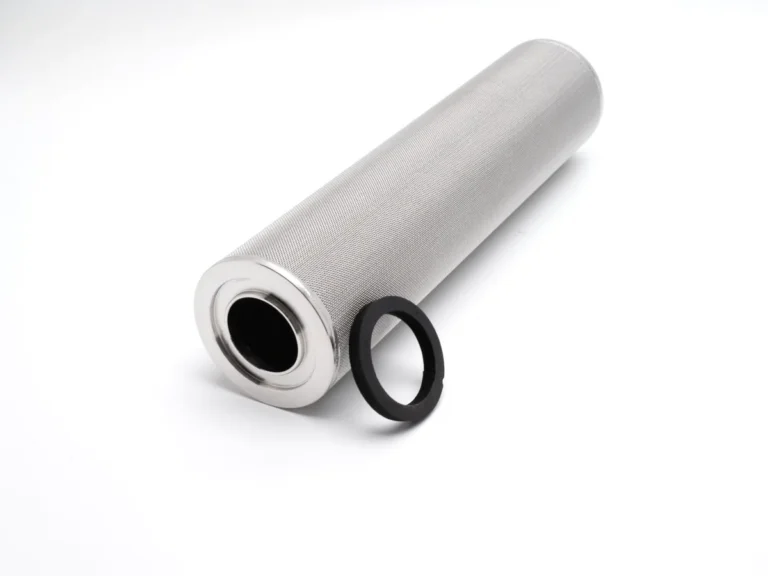
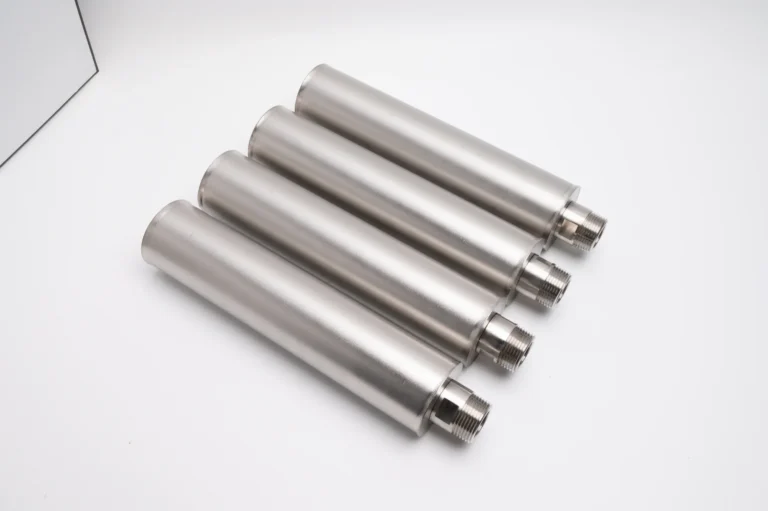
DOE, SOE with 222/226 O-ring, threaded NPT/BSP
O-ring materials
PTFE, Viton, Silicone, EPDM
Cleaning methods
Backpulse, backflush, ultrasonic, acid/base soak
Testing standards
Dimensional inspection and flow / pressure-drop characterization as specified
How Sintered Wire Mesh Is Made
The filter is built from 5 layers of stainless steel mesh, each with a different wire diameter and weave pattern. These layers are stacked and then bonded together in a vacuum furnace at up to 1100°C through a process called diffusion sintering.
At that temperature, the contact points between wires fuse at a molecular level. The result is a single rigid porous structure — not a stack of separate layers that could shift or separate. This is what gives sintered cartridges their mechanical strength and consistent pore size.
The fine inner layers do the actual filtration. The coarser outer layers provide structural support and act as a pre-filter to catch larger particles before they load the fine mesh. This layered approach lets the cartridge hold more dirt before it needs cleaning.
Where These Filters Are Used
Chemical Plant Process Water
Chemical plants need to filter process water that contains reactive catalysts, solids from reactions, and recycled fluid streams. Standard filters degrade quickly in these environments.
Sintered SS cartridges handle acidic and alkaline fluids without material breakdown. They catch catalyst particles precisely and can be cleaned with chemical soaks without damaging the mesh. This makes them a reliable choice for catalyst recovery and process water recirculation systems.
Pharmaceutical Water Systems
Pharma-grade water systems — whether purified water (PW) or water for injection (WFI) — require filters that meet USP standards and don’t introduce contamination. Sintered 316L cartridges filter down to 1 micron absolute and can be steam-sterilized multiple times.
Unlike disposable filters, the rigid sintered mesh holds its pore dimensions after repeated sterilization cycles. This makes validation easier: the filter performs consistently, and that consistency can be documented for regulatory audits.
Oil & Gas Produced Water Treatment
Offshore platforms and refineries treat large volumes of produced water — water that comes up with oil and gas from the well. This water contains sand, scale, oil droplets, and microbial contaminants. It’s also high in chloride, which corrodes standard stainless steel grades quickly.
316L stainless steel resists chloride-induced pitting far better than 304 grade. For seawater applications, 904L or duplex grades are available. These filters are designed to handle high-pressure systems and continuous operation with minimal downtime.
Power Plant Cooling Water
Steam turbine and condenser cooling systems need filtration that removes debris and biological contaminants without starving the system of flow. The low pressure drop of sintered mesh cartridges is important here — these are high-volume systems where a restrictive filter costs real money in pumping energy.
In nuclear and radiation environments, all-metal construction is required because polymer media degrades under radiation. Stainless steel is unaffected.
Food & Beverage Processing
Food-contact filtration must meet FDA requirements and survive CIP (clean-in-place) cycles using hot caustic solutions and steam. Sintered SS cartridges are compatible with these cleaning regimes and don’t harbor bacteria in surface pores the way fibrous media can.
Beverage producers use them for clarifying process water and removing yeast particles after fermentation.
Municipal Water Treatment
Municipal plants deal with fluctuating contamination levels — seasonal runoff, algae blooms, industrial discharge. Sintered cartridges handle variable particulate loads without blinding (sudden blockage) as easily as fiber filters do. Their backwash capability means cleaning without removing the cartridge, which reduces labor significantly. See our water treatment industry page for more on filter selection for municipal systems.
Key Performance Advantages Over Standard Filters
Advantage
What it means in practice
Temperature resistance
Runs at up to 480°C continuously. Standard polymer media fails above 150°C.
Chemical compatibility
316L withstands acids, caustics, oxidizers, organic solvents.
Reusable design
Cleanable with backflush, ultrasonic, or chemical soak. Reduces waste and replacement cost.
Absolute filtration rating
Consistent pore size gives precise, repeatable particle retention — not nominal.
No fiber shedding
All-metal construction — nothing to contaminate the downstream product.
Radiation resistance
Metal is unaffected by radiation; suitable for nuclear applications.
Choosing the Right Grade
Material selection depends on what the filter will be exposed to:
- SS304 — General-purpose water filtration, lower chloride environments
- SS316L — Seawater, high-chloride cooling water, chemical process streams
- 904L or Hastelloy — Highly aggressive acid environments where 316L may pit
If you’re not sure which grade fits your application, the engineering team at FILTURE can review your fluid composition and operating conditions and make a recommendation.
Frequently Asked Questions
How many times can sintered cartridges be cleaned?
With proper care, sintered stainless steel cartridges can typically be cleaned 50–100 times. In applications with mild contaminants and careful cleaning procedures, that number can exceed 200 cycles. Regular performance review against an agreed flow or pressure-drop baseline will indicate when the filter is approaching end of life.
What’s the best cleaning method?
It depends on the type of fouling:
- Surface deposits → backflush or backpulse with clean fluid
- Embedded particles → ultrasonic cleaning in an appropriate solvent
- Organic or chemical scale → chemical soak in compatible acid or base solution
- Stubborn carbon fouling → thermal treatment (calcination) to burn off residue
Are sintered cartridges better than pleated wire mesh?
They’re different rather than better or worse. Sintered cartridges have a rigid bonded structure that maintains pore size under high pressure and thermal shock. Pleated cartridges offer more surface area in the same footprint, which is better for high-flow, lower-pressure applications. For water filtration involving aggressive chemicals, high temperatures, or strict validation requirements, sintered is usually the better choice.
Talk to FILTURE About Your Filtration Needs
Every filtration job is different. If you’re not sure which cartridge fits your system, see the full specifications for our SS Pleated Mesh Filter Element and SS Sintered Mesh Filter Element, or request a quote with your dimensions, micron rating, and operating conditions.
Prefer email? Reach us at sam.young@filturemetal.com — we’ll get back to you with a straight answer, no sales pitch.