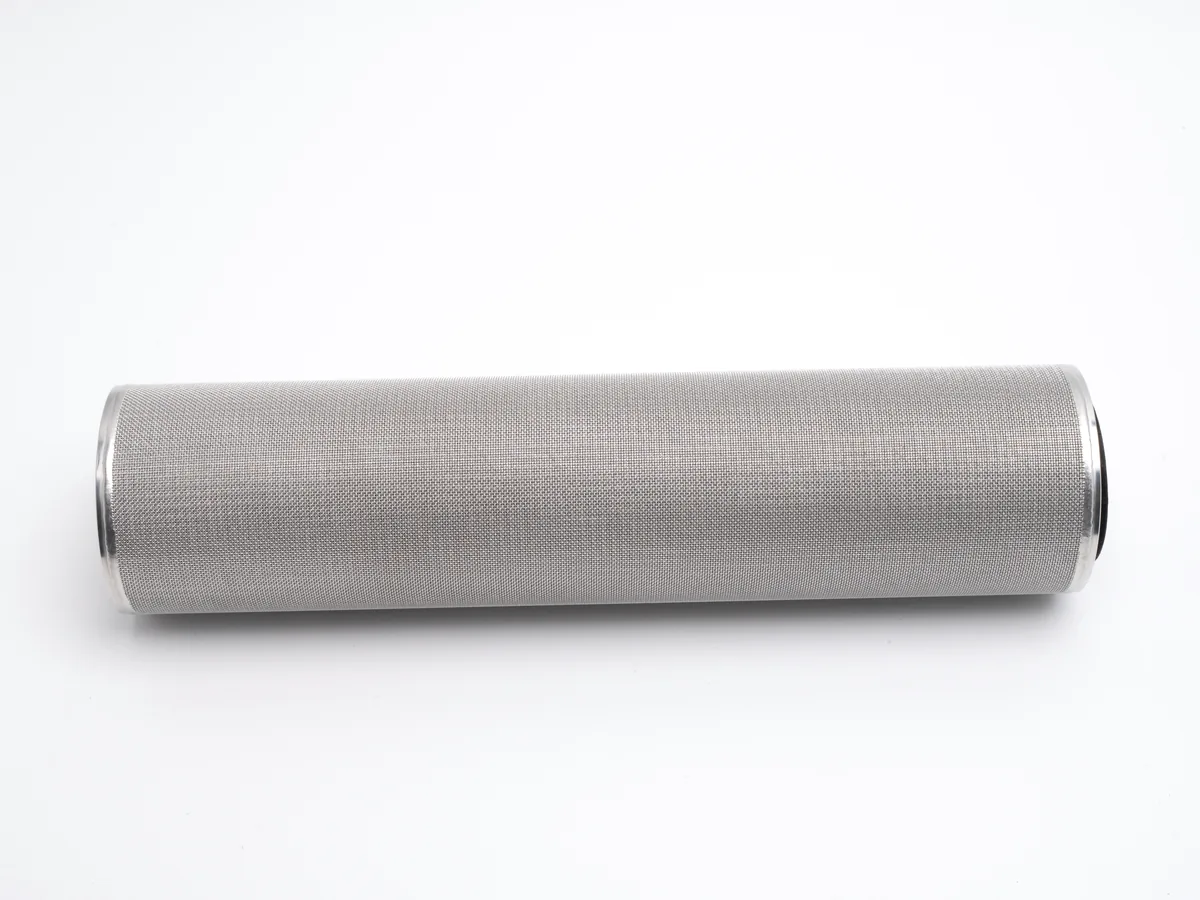
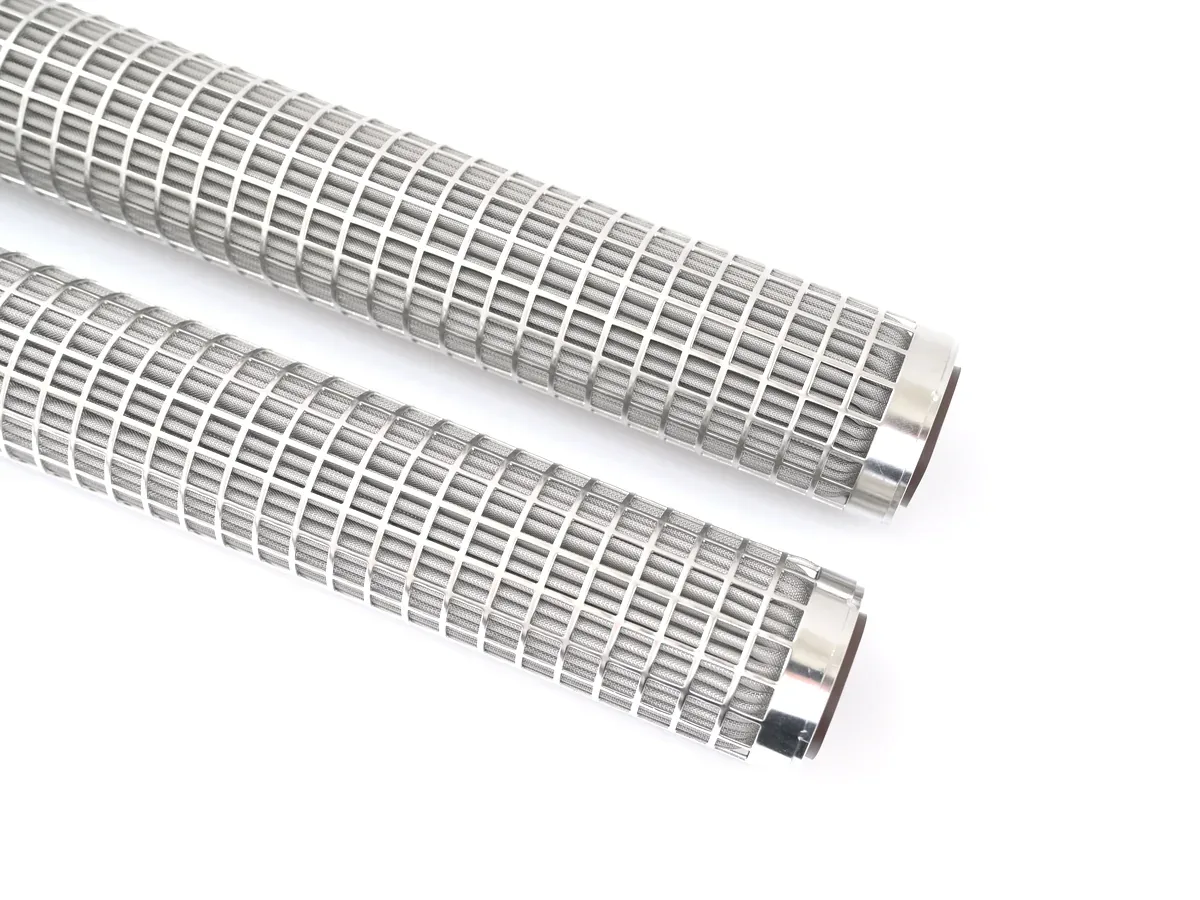
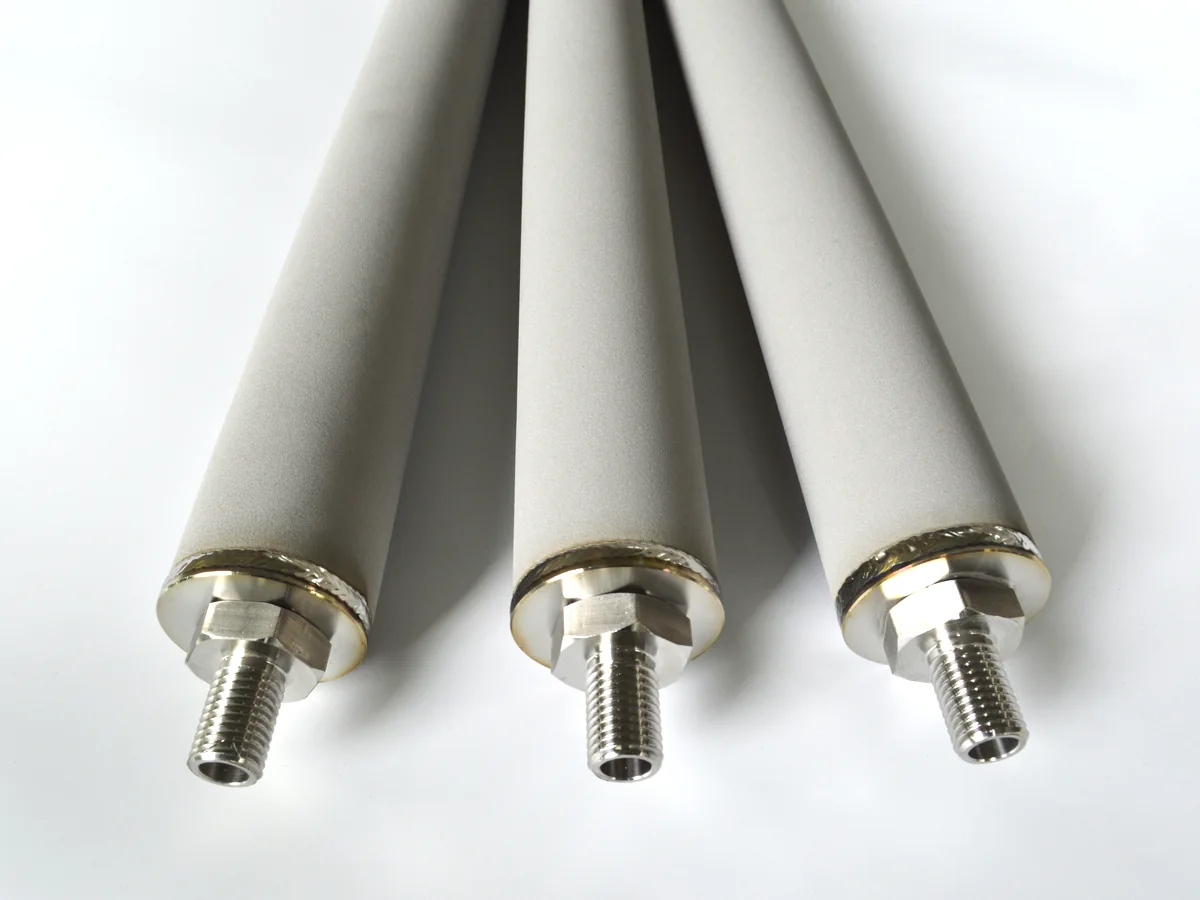
Pleated multi-layer sintered mesh — 3–5× the filtration area of a flat-tube element in the same housing (depending on pleat depth), with the same consistent pore rating.
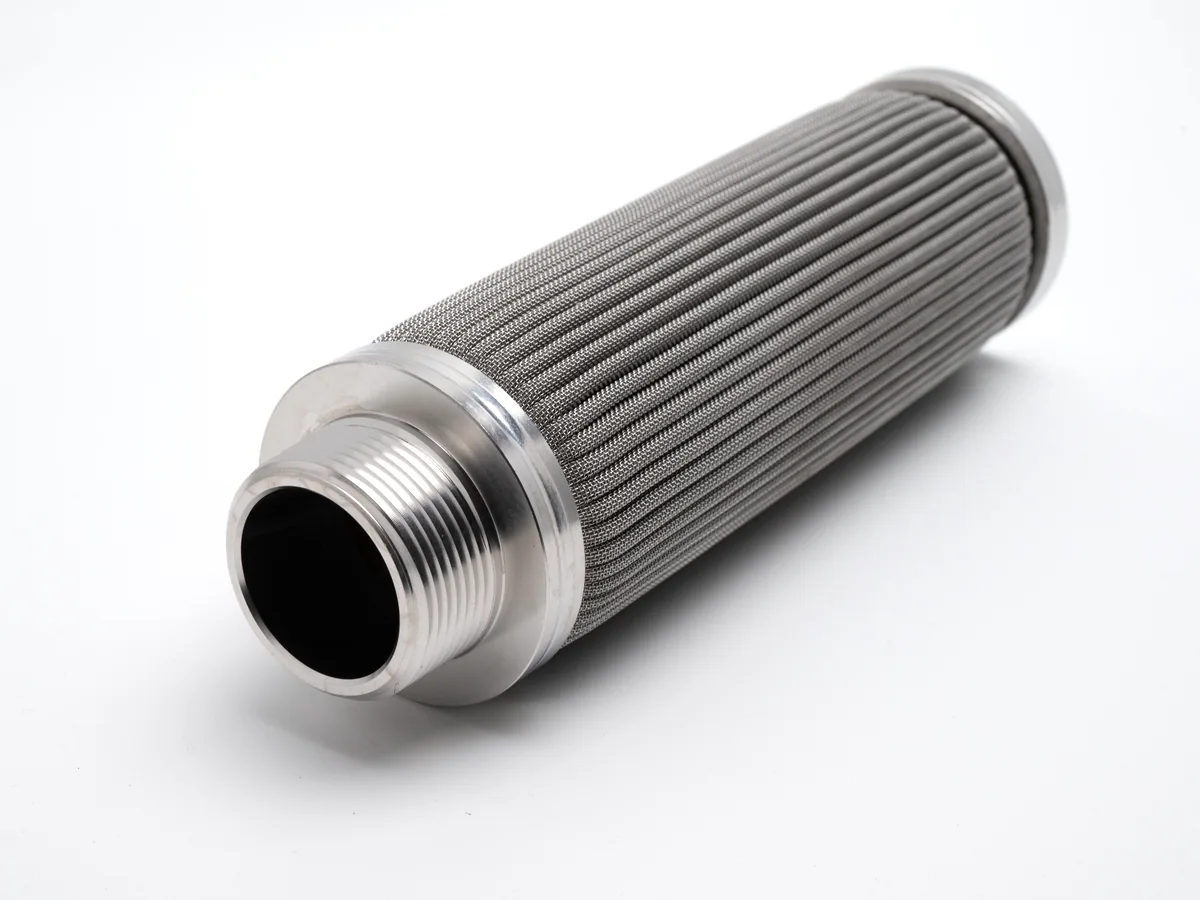
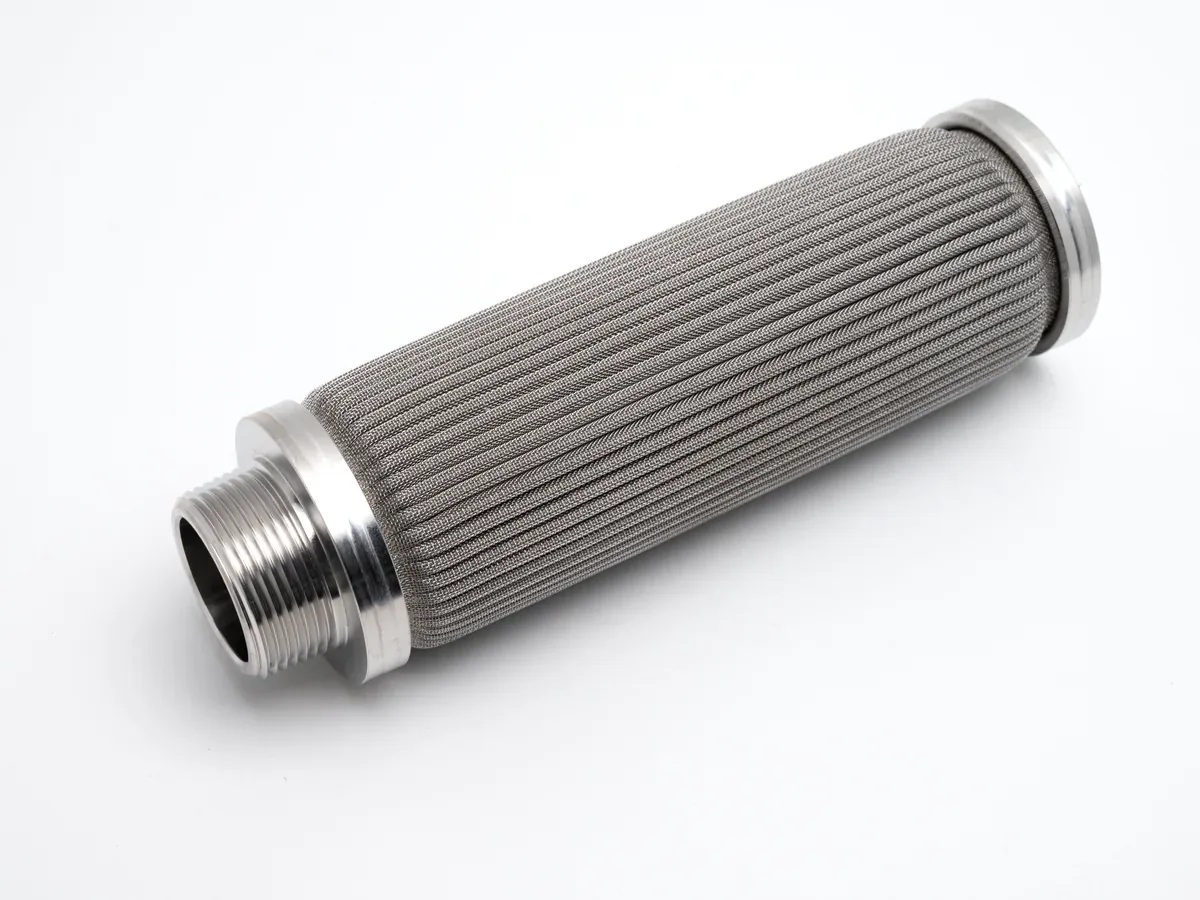
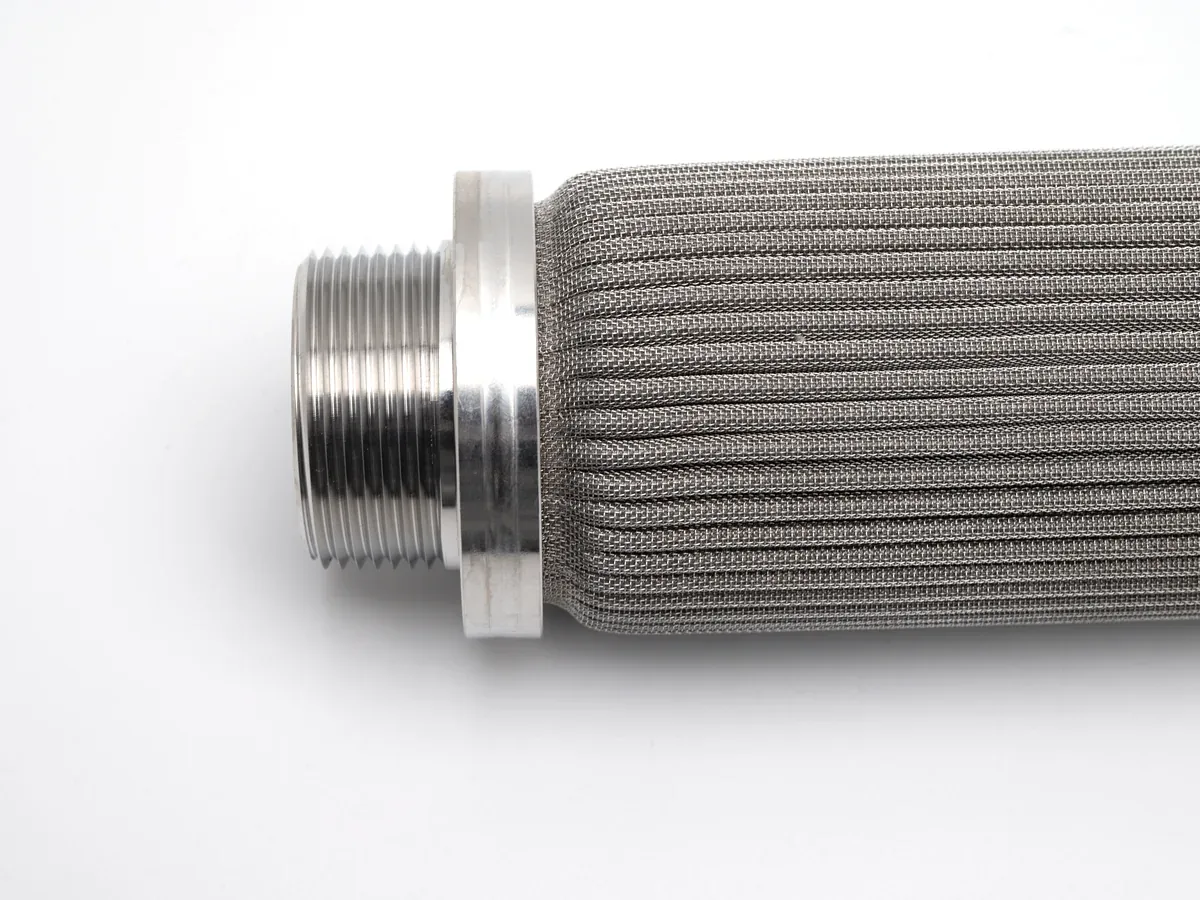
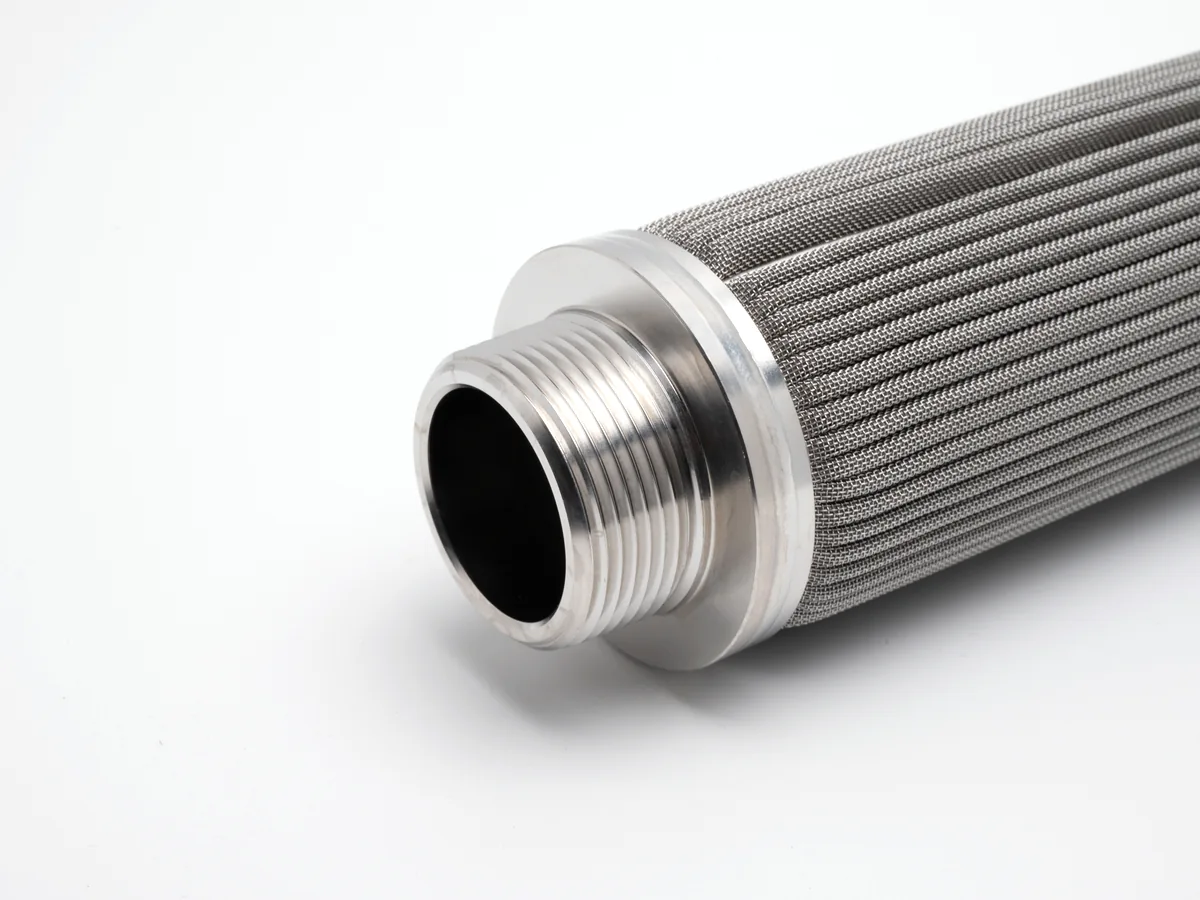
More filtration area in the same housing means lower face velocity at the filter surface, which extends service intervals before a differential-pressure-triggered cleaning cycle. The pleated geometry also distributes solids loading more evenly across the filtration surface, avoiding the localised plugging that limits flat-tube element life when solids loading is moderate-to-high.
All pleats are sintered — not folded and glued. There is no adhesive to fail at temperature or in aggressive solvents, and no pleat collapse under backwash. Standard material is 316L; other alloys on request (same range as the flat-tube sintered mesh element).
Pleated geometry fits more filtration surface into the same housing bore and length (typically 3–5× a flat-tube element, depending on pleat depth) — directly extends service life before cleaning is required.
Same sintered mesh construction as the flat-tube sintered mesh element — Dutch-weave for fine ratings, plain/twill-weave for coarser nominal ratings. Uniform pore size at the rated aperture.
Pleats are bonded by sintering, not by glue or mechanical fastening. No pleat collapse under backwash and no adhesive failure in solvents or at temperature.
More surface area spreads solids loading more evenly, delaying differential pressure rise. Fewer cleaning cycles per unit of process volume filtered.
All-metal sintered construction — no organic components with a temperature limit. Suitable for hot process streams and steam cleaning.
OD and end-cap configurations matched to standard filter housings — 222, 226, fin, and flat end caps, or custom to drawing.
Upstream protection for heat exchangers, control valves, and instrumentation. Higher area per element reduces cleaning frequency in high-solids crude and product streams.
10–50 µm · High flow · 316LExtended service intervals reduce cleaning frequency on high-throughput production lines. Consistent pore rating limits product contamination.
5–50 µm · 316LHigher dirt-holding capacity handles variable solids loading in chemical reactor effluents and intermediate product streams.
5–100 µm · Chemical resistantIntermediate bulk liquid filtration in API manufacturing — longer service intervals between cleanings.
5–20 µm · 316LPre-filtration ahead of membranes. Lower operating pressure drop vs flat-tube at the same flow rate.
5–25 µm · BackwashableHigh area-to-volume ratio recovers fine catalyst particles efficiently at low differential pressure.
5–25 µm · Alloy optionsProvide your housing bore size, element length, and end-cap type. We'll confirm the equivalent area increase and delivery schedule.
FILTURE is a supplier and exporter of sintered metal filter elements — parts are made to order and shipped worldwide.