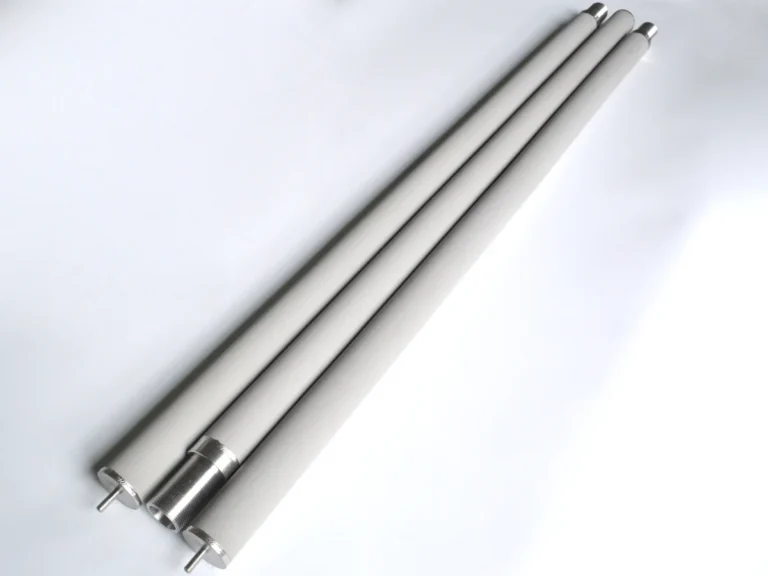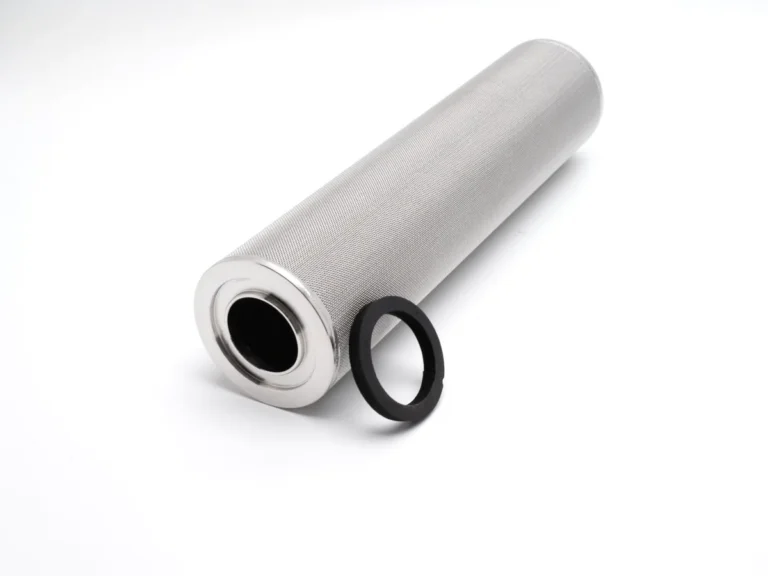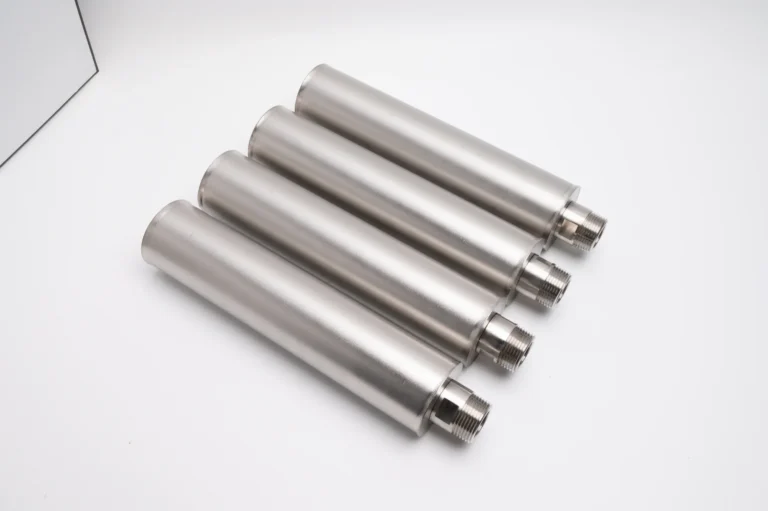
If your filter is clogging too fast or your pump is working harder than it should, the problem often comes down to one thing: not enough filter surface area.
Pleated SS wire mesh cartridges fix this by folding the filter media into accordion-style pleats. You get up to 300% more filtration area inside the same housing — without changing your system layout.
Why Surface Area Matters
A standard cylindrical filter can only use its outer surface to catch particles. Once that surface is full, pressure builds up quickly and the filter needs to be replaced or cleaned.
The pleated design spreads that load across multiple fold surfaces. Particles collect more evenly, pressure builds up more slowly, and the filter runs longer between maintenance cycles.
In chemical and petrochemical plants, engineers switching from flat-surface cartridges to pleated wire mesh regularly report 35% lower pressure drop across the filter — meaning less energy for the pump and better flow rates at the same time.
What ‘Sintered’ Construction Actually Means
The wire mesh in these cartridges isn’t just woven — it’s sintered. That means every wire intersection is permanently bonded through a high-temperature vacuum process (up to 1100°C).
The result is a filter that holds its shape. No delamination, no fiber shedding, no weak spots. This is why pleated SS cartridges can be backwashed and reused dozens to hundreds of times without losing filtration accuracy.
How Long Do They Last?
Standard filter cartridges are typically swapped out every 30–90 days. Pleated SS wire mesh cartridges, cleaned regularly, can run 12–24 months before replacement.
In petrochemical facilities, maintenance teams have reported service life extensions of 200–400% compared to conventional disposable filters. The key factor: the pleated design distributes particle loading evenly, so no single area clogs first.
The filters can be cleaned with backwash, ultrasonic treatment, or chemical soaking. Once cleaned, flow performance is essentially restored to its original level.
What Industries Use These Filters
Industry
Why pleated SS cartridges work here
Chemical processing
Corrosive solvents, acids, high temperatures
Pharmaceutical manufacturing
Sterile water systems, solvent recovery, FDA-validated processes
Oil & gas
Produced water treatment, cooling systems, seawater intake
Power generation
Cooling water circuits, chloride exposure environments
Food & beverage
CIP-compatible, FDA-compliant surface contact
Key Specifications
Parameter
Specification
Material
AISI 316L stainless steel (standard); 304, 904L, Hastelloy, Titanium available
Filtration range
3 μm to 200 μm
Temperature range
-200°C to +480°C continuous; up to 600°C intermittent
Max pressure
Up to 250 bar (depending on housing and reinforcement)
Surface area gain
Up to 300% vs. equivalent cylindrical cartridge
Outer diameter
30 mm to 350 mm (custom available)
Length options
10″, 20″, 30″, 40″, 60″ (custom available)
End cap options
DOE, SOE, 222/226 O-ring, threaded NPT/BSP, flange
Cleaning methods
Backwash, backpulse, ultrasonic, acid/base soak
Filtration Efficiency: What the Numbers Show
Independent lab testing shows pleated SS wire mesh cartridges maintain above 99.9% particle retention at their rated micron level — even after multiple cleaning cycles. Standard synthetic filters typically drop to around 97% efficiency after comparable use.
This consistency matters in pharmaceutical and fine chemical applications where one oversized particle can contaminate an entire batch.
Frequently Asked Questions
What’s the difference between absolute and nominal filtration ratings?
An absolute rating means 99.9%+ of particles at or above the stated micron size are captured. A nominal rating is less strict — some particles at the rated size will pass through. The applicable retention rating should be defined in the product specification and verified using a method agreed for the application.
Can these cartridges replace my existing disposable filters?
In most cases, yes. Standard OD and length configurations are designed to fit common filter housings without modifications. If you have a non-standard housing, custom dimensions are available.
How do I know when to clean vs. replace?
Monitor the pressure differential (ΔP) across the filter. When ΔP reaches 0.5–0.8 bar above baseline, it’s time to clean. Replacement is needed when post-cleaning flow performance no longer recovers to an acceptable level, or when physical inspection shows mesh deformation.
Talk to FILTURE About Your Filtration Needs
Every filtration job is different. If you’re not sure which cartridge fits your system, see the full specifications for our SS Pleated Mesh Filter Element and SS Sintered Mesh Filter Element, or request a quote with your dimensions, micron rating, and operating conditions.
Prefer email? Reach us at sam.young@filturemetal.com — we’ll get back to you with a straight answer, no sales pitch.