When you’re selecting a filter cartridge, the first question is usually about price. Standard disposable filters cost less upfront. Pleated stainless steel cartridges cost more. So is the premium worth it?
The short answer: it depends on your operating conditions. For light-duty, low-temperature applications with non-aggressive chemicals, standard filters do the job. For anything tougher, stainless steel pleated mesh cartridges are almost always the better long-term choice — see our material selection guide for a full alloy comparison.
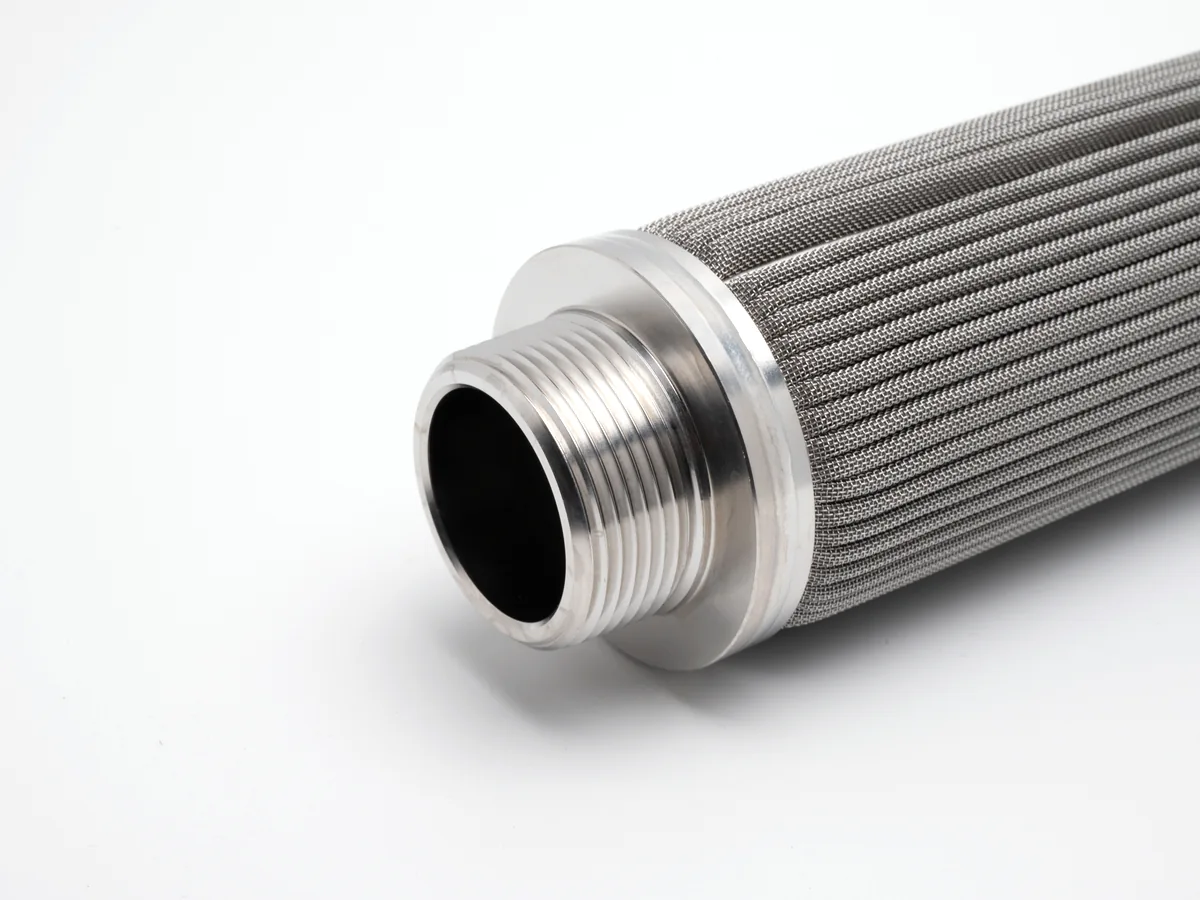
Side-by-Side Comparison
Comparison point
Standard disposable filter
Material
Stainless steel 316L (sintered mesh)
Synthetic fiber, paper, or fabric
Max temperature
Confirm alloy, seals, medium and duty against assembly-specific temperature evidence.
Check the specified medium, support, adhesive and seal limits in the manufacturer’s data.
Chemical resistance
Acids, caustics, solvents, oxidizers
Limited — degrades in aggressive media
Pressure rating
Confirm operating pressure and allowable differential pressure separately for this assembly.
Use the manufacturer’s limits for the selected cartridge and housing.
Filtration accuracy
Specify target particle size, efficiency and an agreed test method.
Degrades over time and under stress
Cleanable
Yes — backwash, ultrasonic, chemical soak
No — single use, then disposed
Typical service life
Application-dependent; establish inspection and replacement criteria.
Use the selected product’s service limits and observed loading history.
Initial cost
Higher
Lower
Total cost over 3 years
Include cleaning, inspection, spares and eventual replacement.
Include purchase frequency, changeout labor, downtime and disposal.
Particle shedding risk
Verify particle release and cleanliness for the complete assembly.
Yes — fiber release possible
Where Standard Filters Still Make Sense
Not every application needs a stainless steel cartridge. Standard filters work fine if:
- The process fluid is non-corrosive and runs at ambient or low temperatures
- The system is low-pressure (under 5 bar)
- Contamination levels are very low and filter changeouts are infrequent anyway
- Budget is the primary constraint and downtime risk is low
When to Consider Pleated SS Wire Mesh Cartridges
Chemical Processing
Confirm material compatibility for the actual medium, concentration, temperature, exposure and cleaning chemicals; a stainless steel grade is not universally suitable for all chemicals or seawater conditions.
Pharmaceutical Manufacturing
Steam sterilization or sanitization requires confirmation for the exact assembly, alloy, seals and medium, with validated temperature, exposure time, cycle count and post-cycle acceptance evidence.
High-Temperature Applications
Confirm continuous and intermittent temperature limits for the exact assembly, alloy, seals, medium, pressure and exposure time using applicable test evidence; no universal cartridge temperature rating is stated here.
Operations That Need Predictable Maintenance
If you want to schedule filter cleaning during planned shutdowns rather than reacting to emergency blockages, a cleanable metallic cartridge makes that possible. You clean it on your schedule, not the filter’s schedule.
Comparing Total Operating Costs
Compare total cost for the same duty and throughput using confirmed purchase prices, replacement frequency, cleaning, validation, labor, downtime and waste costs; no fixed savings or payback period is guaranteed.
- Purchase cost: use the quoted unit price and confirmed replacement quantity.
- Include waste handling, disposal, changeout labor and downtime for both options.
For the reusable option, also confirm these costs:
- Cleaning cost: labor, chemicals, utilities and cleaning equipment.
- Inspection and validation: include acceptance testing, records, spares and eventual replacement.
Compare total cost for the same duty and throughput using confirmed purchase prices, replacement frequency, cleaning, validation, labor, downtime and waste costs; no fixed savings or payback period is guaranteed.
How to Decide
Ask yourself three questions:
- Agree the qualification, inspection and acceptance plan for the exact assembly and application, and review the available test records before making a performance or compliance claim.
- Confirm the applicable product-contact requirements, cleaning compatibility, surface finish and order-specific documentation. Alloy choice alone does not establish FDA or other regulatory compliance, and no approval or certificate is promised here.
- Compare total cost for the same duty and throughput using confirmed purchase prices, replacement frequency, cleaning, validation, labor, downtime and waste costs; no fixed savings or payback period is guaranteed.
Talk to FILTURE About Your Filtration Needs
Every filtration job is different. If you’re not sure which cartridge fits your system, see the full specifications for our SS Pleated Mesh Filter Element and SS Sintered Mesh Filter Element, or request a quote with your dimensions, micron rating, and operating conditions.
Prefer email? Reach us at sam.young@filturemetal.com — we’ll get back to you with a straight answer, no sales pitch.