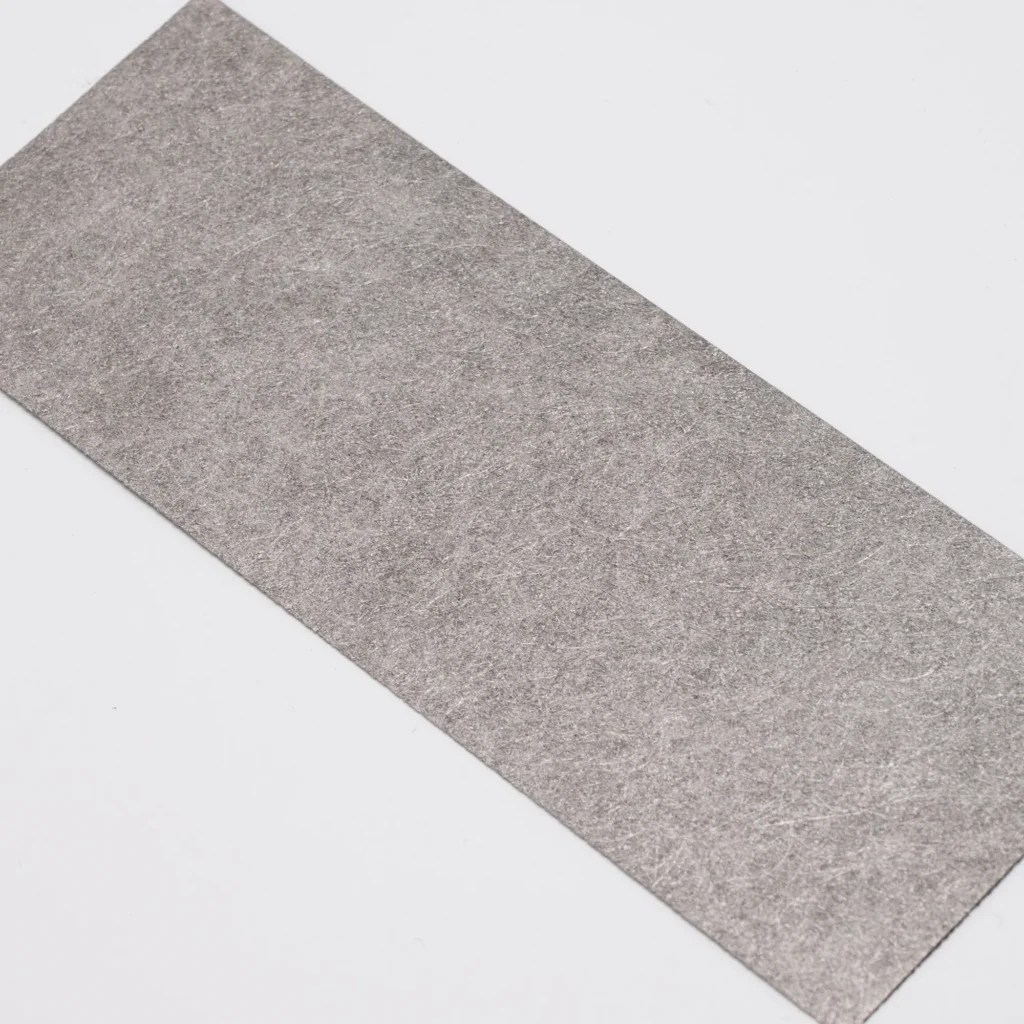
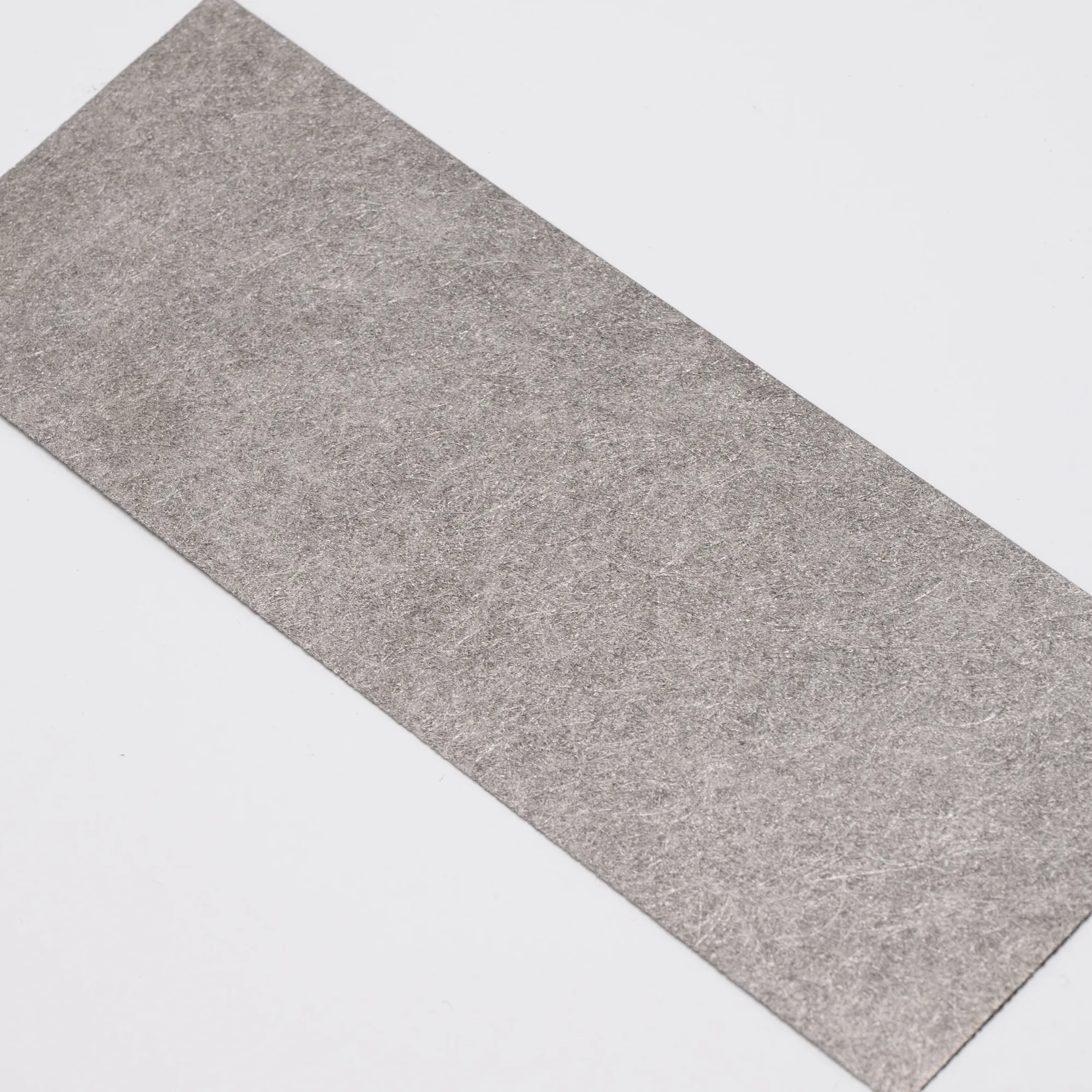
Titanium fiber felt is commonly evaluated as a porous transport layer in PEM water electrolyzer stacks because it combines electrical conductivity, corrosion resistance in the intended operating environment, and an open porous structure. Selecting the right felt requires more than choosing a nominal thickness: pore structure, porosity, compression behavior, flatness, surface condition, and interface requirements must be defined for the stack design.
Define the function in the stack
The porous transport layer helps distribute water, transport product gas, support the catalyst-coated membrane, and conduct current. Its suitable characteristics depend on the flow-field architecture, catalyst layer, coating strategy, compression window, and operating conditions. A material that performs well in one stack geometry may not be interchangeable with another without validation.
Core specification fields
- Commercially pure titanium grade and material certificate requirement
- Thickness before and after compression, including tolerance
- Porosity and pore-size range, with the requested measurement method
- Width, length, flatness, edge condition, and cut-part geometry
- Surface preparation or coating compatibility
- Electrical resistance and compression-test requirements where applicable
Use representative testing
Bench measurements should reflect the final use case. Discuss compression load, test fixture, fluid, and temperature when comparing samples. Buyers should also state whether they need batch traceability, dimensional records, pore-structure data, or incoming-inspection samples before production.
From prototype to production
FILTURE supplies titanium fiber felt and porous titanium components for relevant electrochemical applications. A productive RFQ includes the drawing, target dimensions, compression window, expected environment, annual volume, and validation plan. This creates a clear path from trial parts to controlled production rather than relying on a generic material description.