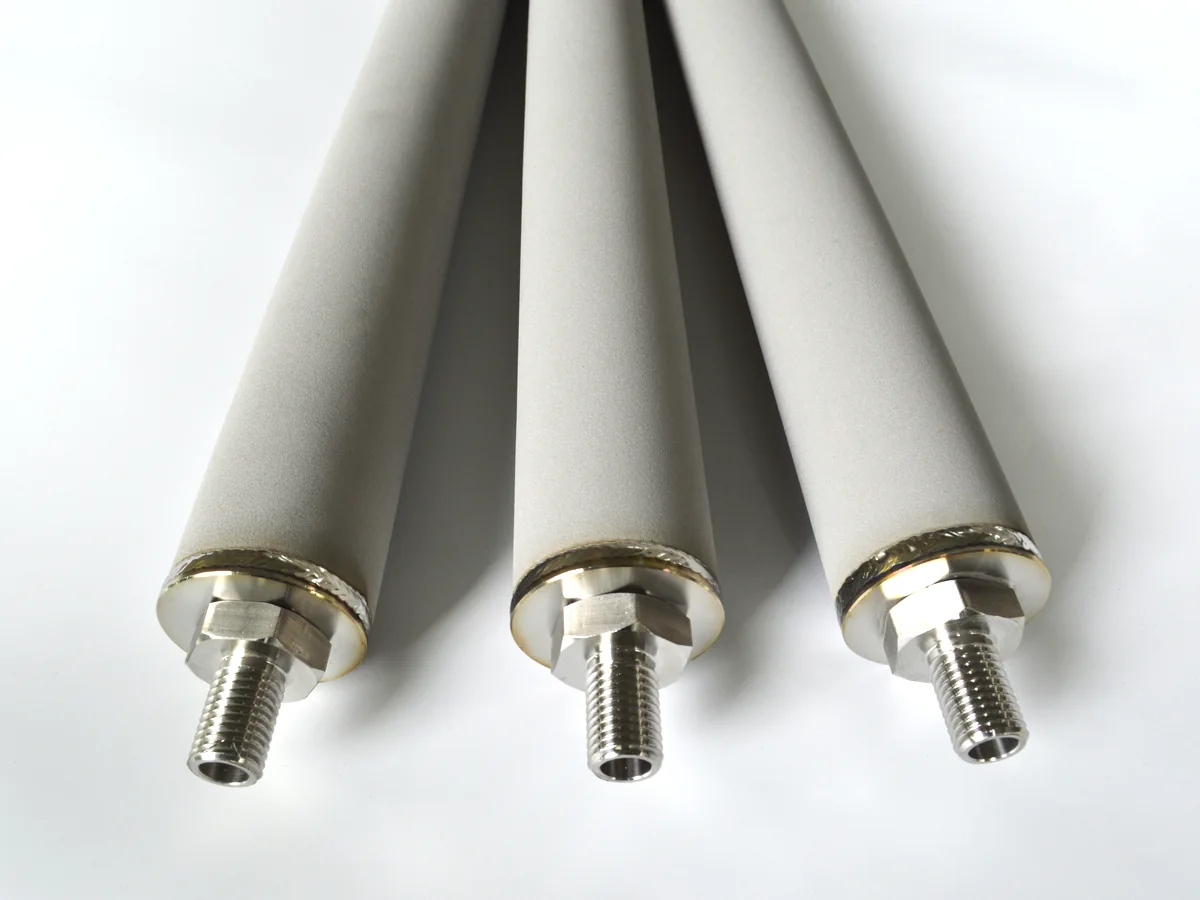
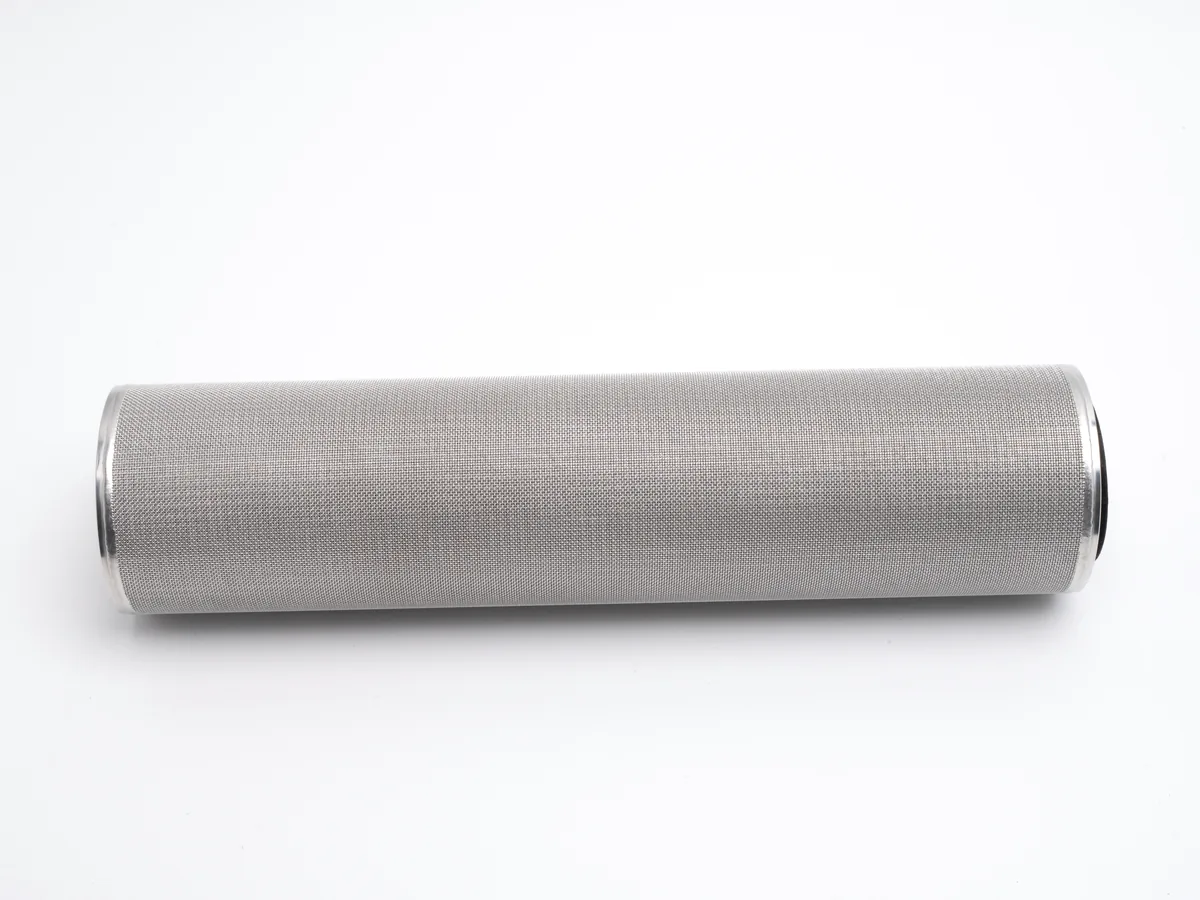
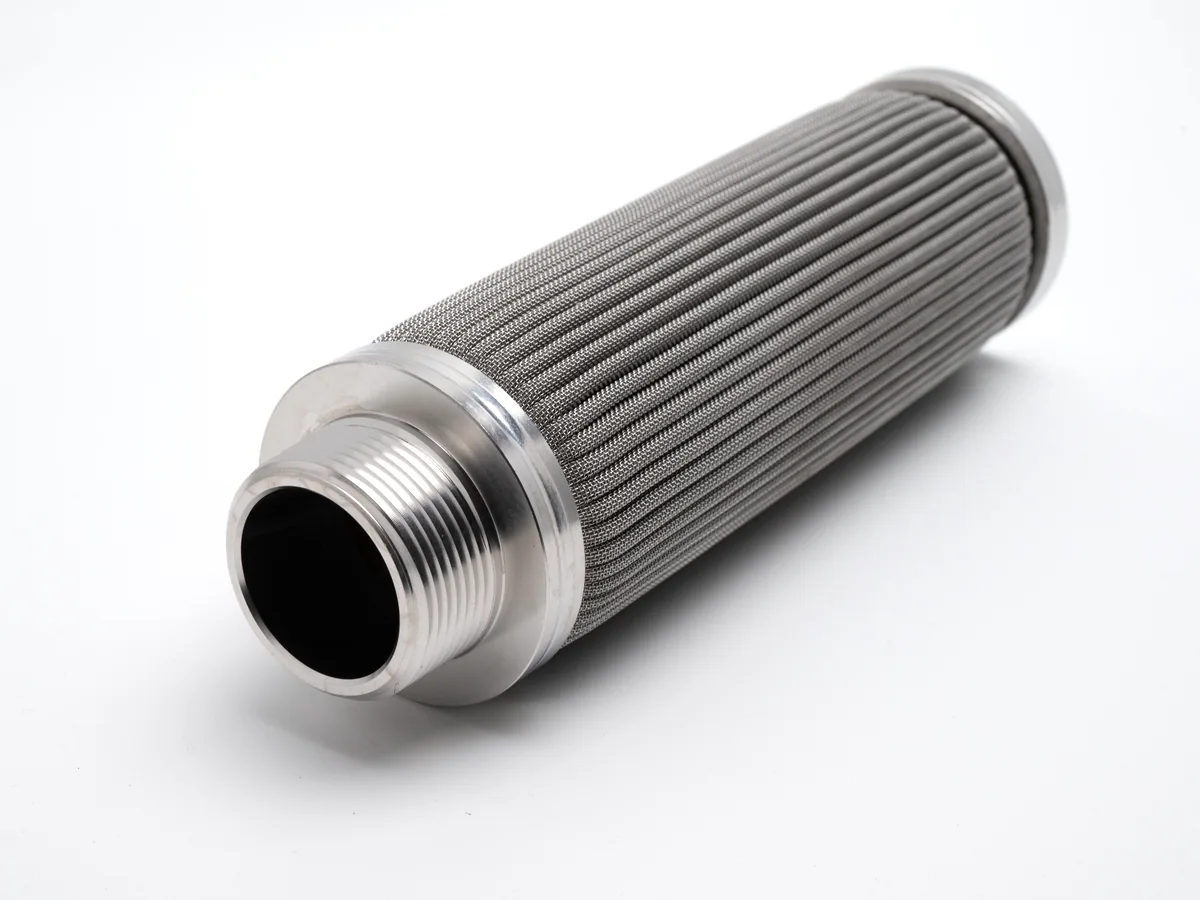
Sintered 316L stainless steel fiber felt, pleated for maximum area. High-porosity structure — low pressure drop even at high flow rates and with viscous feeds.
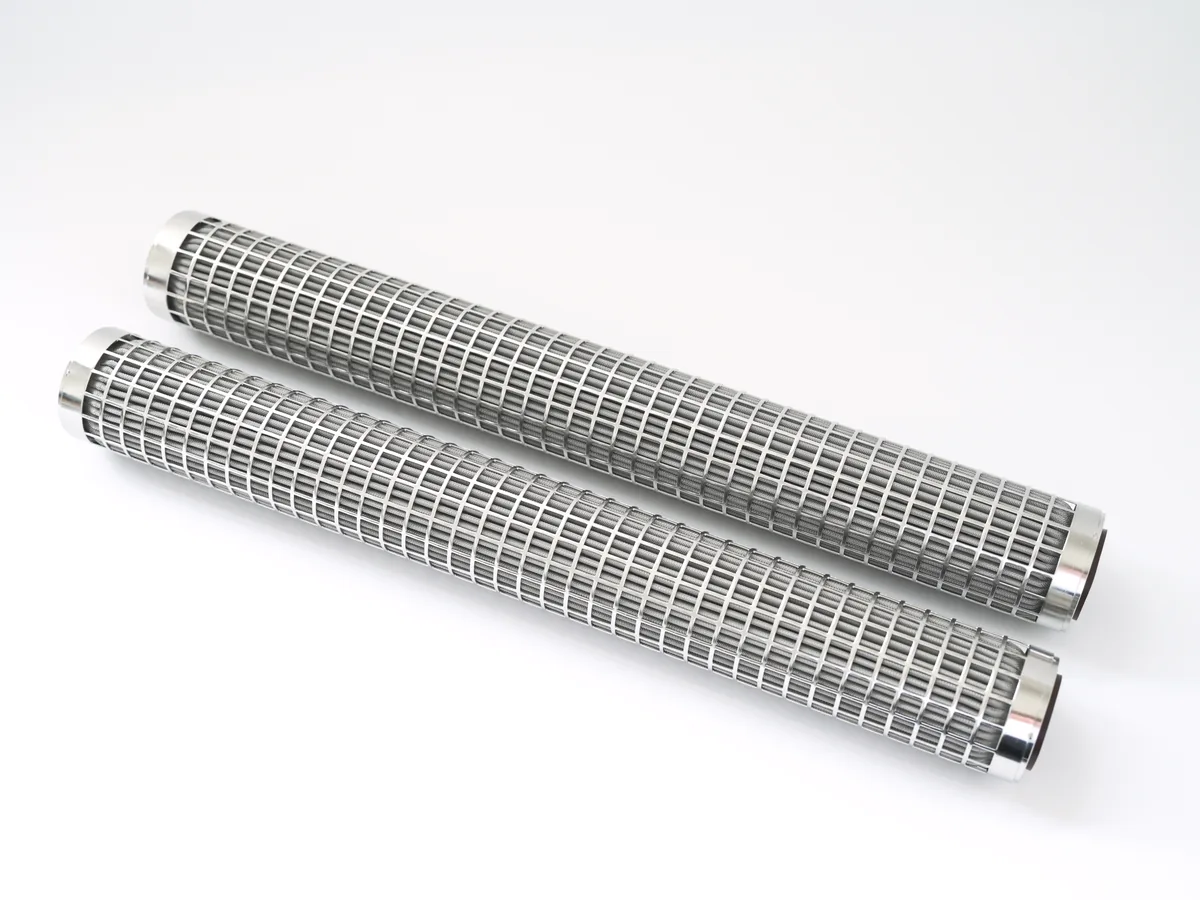
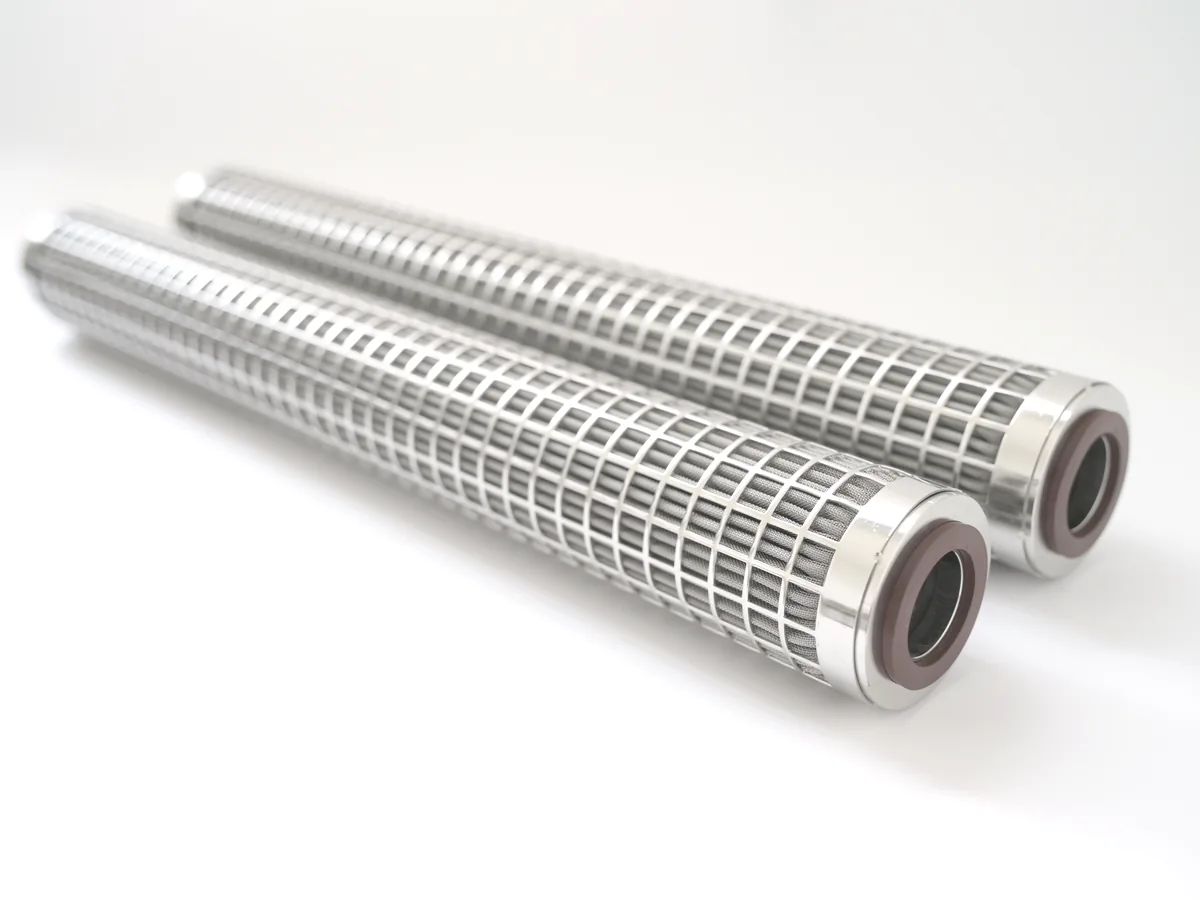
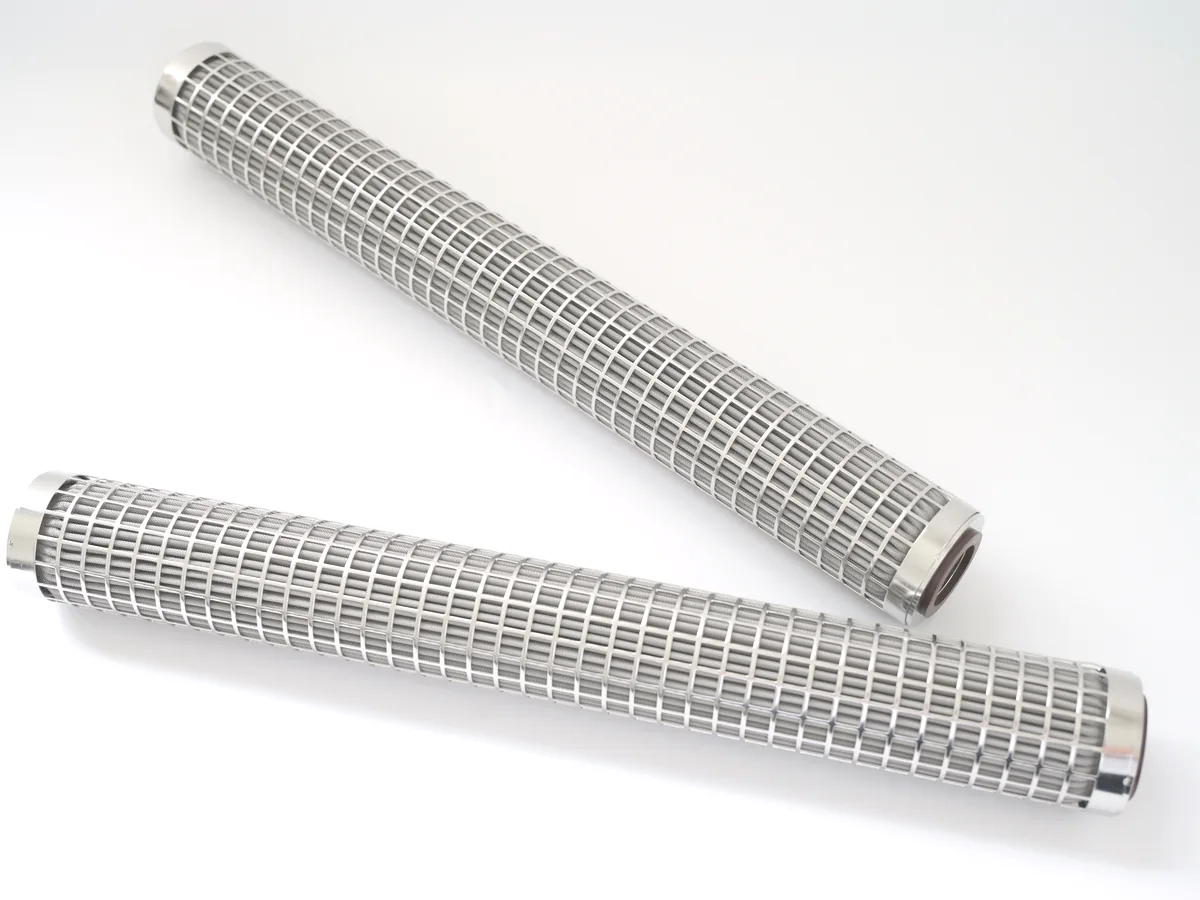
Depth filtration: particles are captured throughout the full wall thickness rather than only at the entry face. This makes performance less sensitive to particle size distribution and gives the element a large dirt-holding capacity before blinding. At the same flow rate, pressure drop is significantly lower than a sintered powder element of equivalent pore rating.
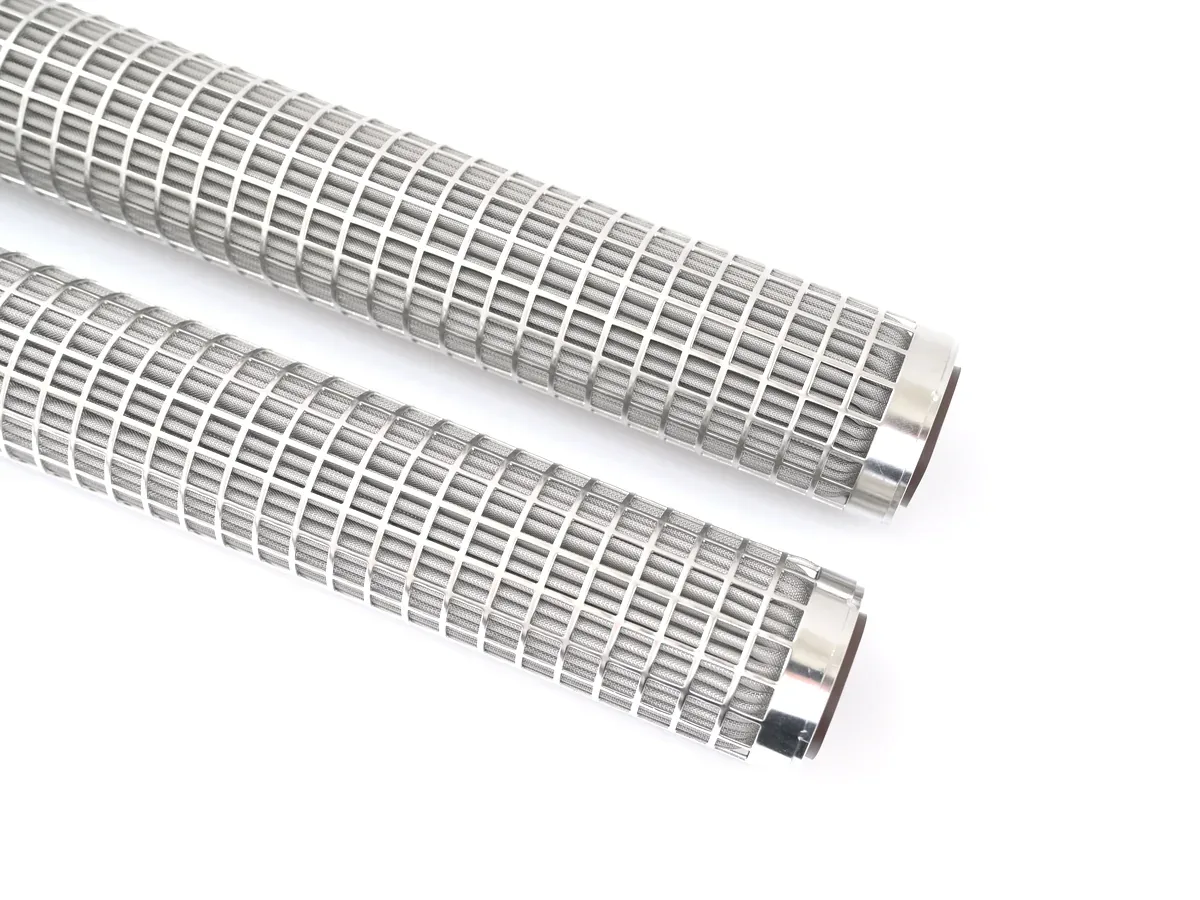
The pleated geometry multiplies effective filtration area 3–5× (depending on pleat depth) within a standard housing length. Fiber-to-fiber sintering — no binder, no adhesive — means there is nothing to fail in solvents or at temperature, and no fiber shedding into the filtrate stream. Standard 316L; 304 stainless steel fiber is available on request.
Fiber felt typically offers higher void volume than sintered powder media — the open structure handles high-viscosity fluids and high-solids feeds with lower differential pressure. Porosity varies by specification.
Particles are captured throughout the wall thickness, not just at the surface. Large dirt-holding capacity extends service intervals in variable-quality feed streams.
Fibers are sintered together — not bonded with adhesive. The structure cannot shed fibers into the filtrate, even under backwash pressure or temperature cycling.
Backwash, ultrasonic cleaning, or solvent/acid soak restores original flux. Rated for extended service life in continuous industrial processes.
Standard 316L elements rated to 400 °C, not recommended above. 304 fiber felt available on request.
Pleated geometry in standard DOE, 222/226, and custom end-cap configurations to fit existing installed housings.
High void volume handles viscous polymer melts in PET, PP, and nylon film and fiber production without excessive pressure drop.
10–50 µm · High viscosity · 304 optionDepth structure captures fine catalyst particles from reactor effluents with high capacity before cleaning is needed.
3–25 µm · 316L · Depth filtrationHigh dirt-holding capacity handles fermentation broths and cell debris. Cleanable for pharmaceutical service.
5–50 µm · 316LFiltration of spinning dope and fiber solutions in chemical fiber manufacturing — consistent filtration prevents spinnerette blockage.
5–25 µm · Low ΔP · DepthCoalescence and separation of oil from water in produced water and industrial effluent treatment.
10–100 µm · 316L · High voidClarification filtration for edible oils, syrups, and food-grade liquids. 316L meets food-contact requirements.
5–50 µm · 316LSpecify your pore size, flow rate, and process fluid viscosity. We'll recommend the right fiber grade and porosity for your application.
FILTURE is a supplier and exporter of sintered metal filter elements — parts are made to order and shipped worldwide.