
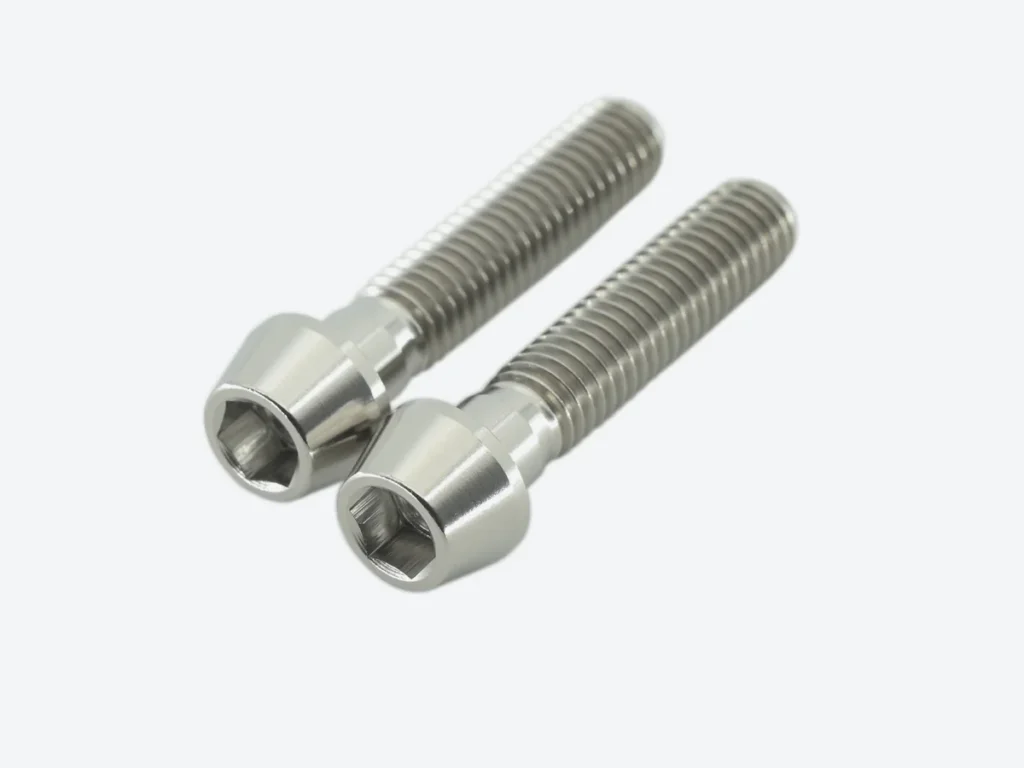
This guide explains the selection of Grade 5 Ti-6Al-4V fasteners. FILTURE’s titanium fastener supply is Grade 5 only, not commercially pure titanium. Material selection, finished-part mechanical requirements and the connection design must be reviewed together; the alloy name alone does not establish compliance or suitability.
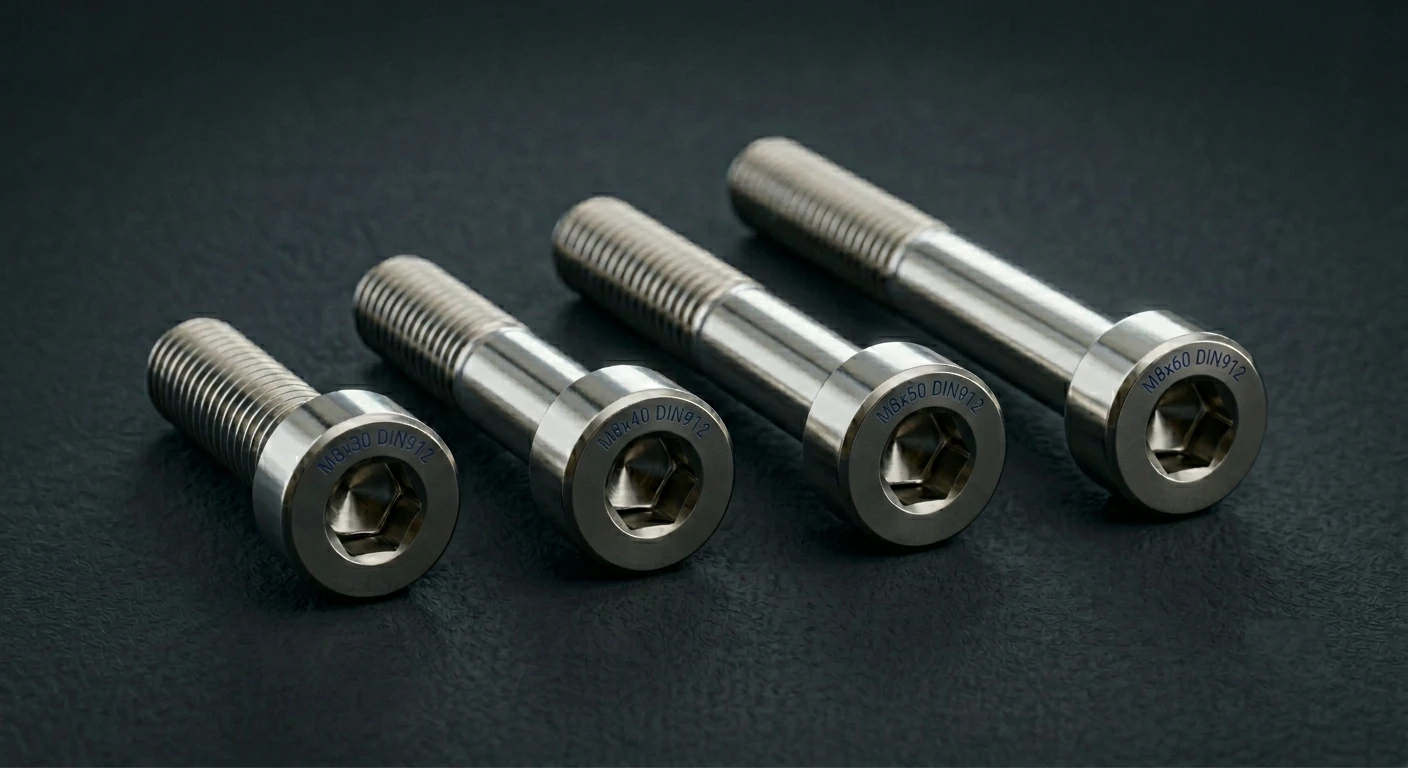
Why Ti-6Al-4V for Fasteners
Grade 5 combines relatively low density with high specific strength. It is not correct to claim nearly twice the tensile strength of A4-80 using a 900–1100 MPa comparison against 800 MPa. Compare values for the same product form, condition and test basis. Corrosion resistance depends on the medium, concentration, temperature and crevice geometry, not just the alloy name.
Available Head Types and Configurations
Selection may involve hex bolts, socket-head screws, button-head or countersunk screws, studs and nuts. Specify the head geometry, thread, length, mating component and drawing standard. A head-style designation does not establish load capacity or stock availability. Confirm sizes and quantities with FILTURE; no fixed M3–M24 availability range is promised here.
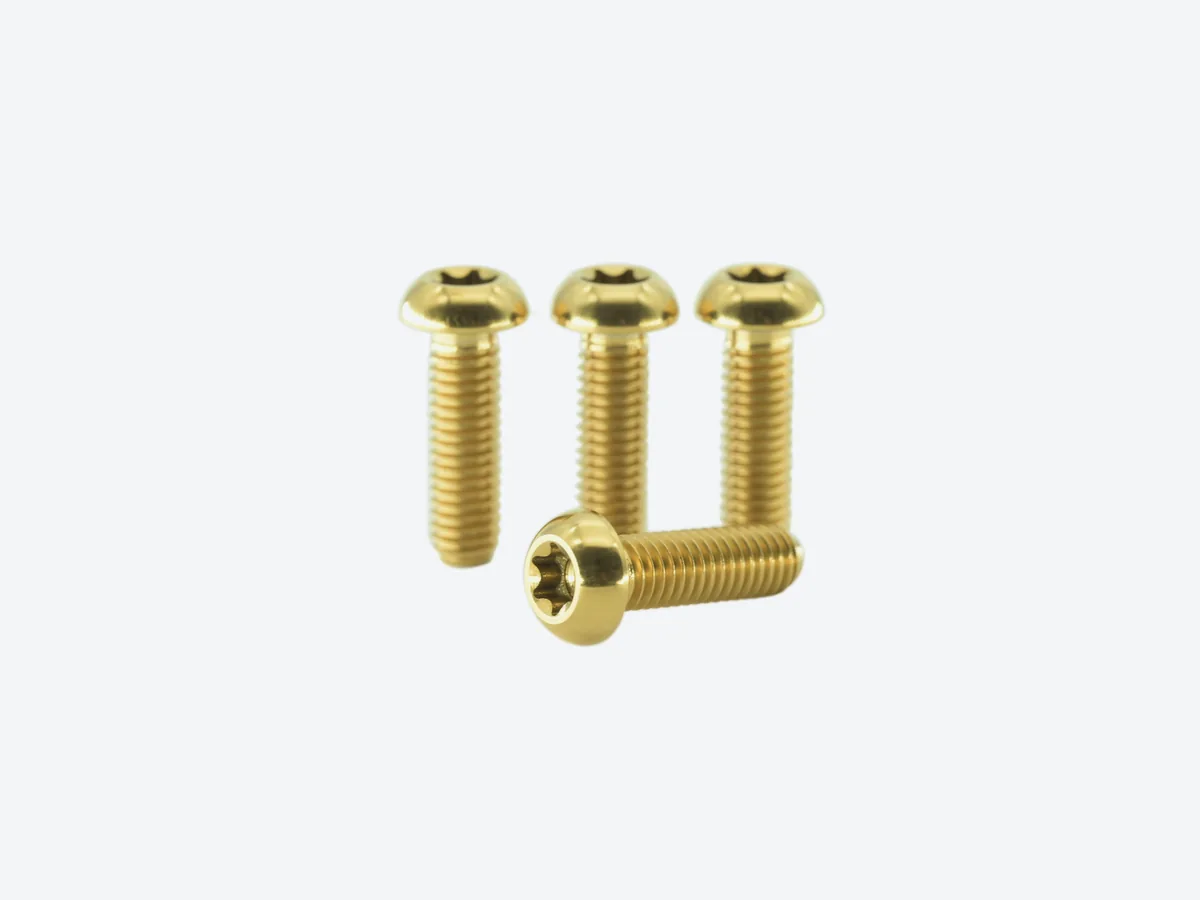
Thread Standards
State whether the thread is metric or inch-based, including pitch, fit class and engagement length. ASTM F468 and F467 cover inch-series fasteners and nuts respectively; F468M and F467M are the metric counterparts. Do not use an inch standard as a blanket specification for metric sizes. Confirm the applicable edition and finished-part requirements before ordering.
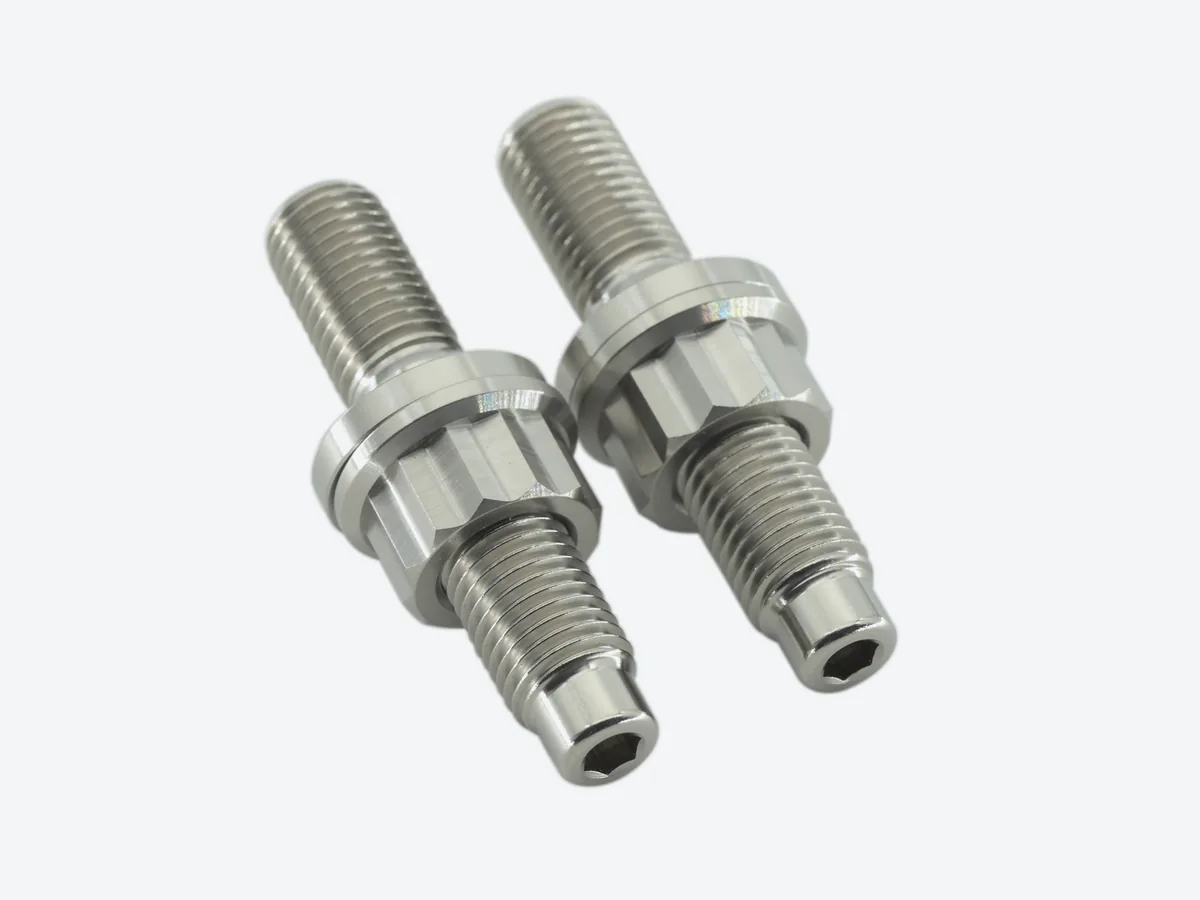
Mechanical requirements for Grade 5 fasteners
Grade 5 has a typical density of about 4.43 g/cm³. Tensile strength, proof or yield strength, elongation and hardness must be specified for the finished fastener’s standard, size and condition, and verified by the agreed documentation. Generic bar properties do not establish bolt load capacity. Temperature limits require assessment of preload, creep, exposure time, environment and any locking insert.
Comparison: Ti Grade 5 vs Stainless Steel vs Inconel 718
A2 and A4 are stainless fastener material groups, not interchangeable labels: A2 is commonly associated with 304-type stainless, and A4 with 316-type stainless. Property classes such as 70 and 80 describe strength requirements, not the alloy alone. Compare Grade 5, stainless and Inconel 718 against the same mechanical duty and environment; a bulk-metal oxidation temperature is not a fastener service-temperature rating.
Applications by Industry
Marine, chemical and lightweight mechanical applications each require assessment of load, fatigue, corrosion, temperature and mating materials. Aerospace or medical use requires separate qualification, traceability and project-specific approval; an industrial Grade 5 product is not automatically an aerospace or implant-grade product. Review the entire joint for galvanic effects and galling, including washers, inserts and the surrounding structure.
Surface Finish Options
Specify the required cleanliness, surface roughness and any coating on the drawing. Cleaning, anodizing, plating and PVD are different processes and must not be treated as interchangeable. Treatment availability, thickness, dimensional allowance and compatibility with the service medium require order-specific confirmation; no silver, nickel or PVD coating capability is promised here.
Anti-Galling: A Practical Note
Titanium galls easily. If you torque a dry titanium bolt into a titanium nut without lubrication, there is a high risk of seizure — the thread surfaces can cold-weld together under pressure. In practice, titanium threaded connections are usually assembled with an anti-seize compound, an appropriate plated finish, or a wax/PTFE lubricant chosen to suit the service environment.
FILTURE supplies titanium fasteners and machined parts in Grade 5 Ti-6Al-4V only. Send the drawing, quantity, service conditions and required inspection documents for review. Dimensions, tolerances, finishes and compliance requirements are confirmed in the quotation, not guaranteed by this general guide.
